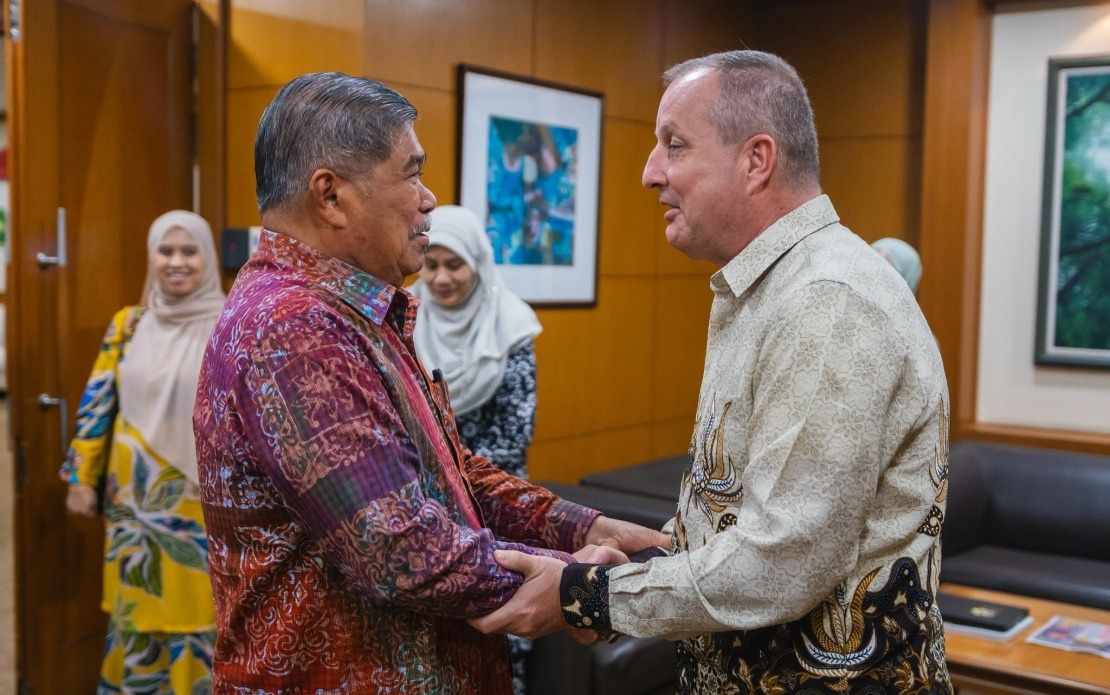
Malaysia and Hungary are deepening their agricultural partnership in a strategic move aimed at bolstering food security and opening new commercial opportunities across the agri-food sector. Agriculture and Food Security Minister Datuk Seri Mohamad Sabu announced the intensified collaboration following discussions with Hungarian Ambassador to Malaysia Dr. Sándor Sipos, signalling Budapest's commitment to strengthening ties with Southeast Asia's largest economy through shared agricultural expertise.
The bilateral engagement extends beyond ceremonial diplomacy, encompassing concrete initiatives that will directly impact farmers, researchers, and agribusiness operators in both nations. Among the key developments is Hungary's confirmed participation in the Malaysian Agriculture, Horticulture and Agrotourism Exhibition (MAHA) 2026, a flagship event that attracts regional and international stakeholders and serves as a vital platform for showcasing agricultural innovations and fostering trade relationships. This participation underscores Hungary's strategic interest in the Malaysian and broader Southeast Asian markets.
Central to the partnership framework is the establishment of the first Malaysia-Hungary Joint Working Group (JWG) meeting, a mechanism designed to coordinate policy dialogue and identify areas for mutual benefit. The working group will facilitate structured engagement between government agencies, industry representatives, and research institutions, ensuring that cooperation efforts remain aligned with the developmental priorities of both countries and responsive to emerging challenges in global food production.
Scientific collaboration forms the backbone of this agricultural alliance, with particular emphasis on research initiatives between Malaysia's Agricultural Research and Development Institute (MARDI) and Hungary's University of Agriculture and Life Sciences (MATE). The partnership encompasses technical exchanges through the Erasmus+ Researcher exchange programme, creating channels for Malaysian and Hungarian scientists to work collaboratively on critical agricultural challenges. These exchanges specifically target genetics and breeding technology—fields where Hungary possesses established expertise—while also focusing on the development of high-quality livestock products, an area of growing importance for both nations facing rising protein demands.
The research collaboration signals recognition by both governments that agricultural advancement requires cross-border knowledge transfer and institutional partnerships. By tapping into Hungary's established agricultural research capabilities, particularly in temperate crop production and livestock management, Malaysia can accelerate its own scientific capacity while simultaneously offering Hungarian institutions access to tropical agriculture expertise and emerging market opportunities in Southeast Asia. This reciprocal arrangement reflects the practical benefits accruing to both parties rather than a one-directional technology transfer.
Expanding trade and investment in the agri-food sector represents another pillar of the strengthened relationship. Both countries view the partnership as a mechanism to unlock commercial opportunities for their respective agribusinesses, creating pathways for Malaysian agricultural exports to reach European markets while facilitating Hungarian investment in Malaysia's growing agri-food processing industry. For Malaysia, deepening ties with Hungary—a country with well-established agricultural export networks and quality certifications—could enhance the credibility and market access of Malaysian agricultural products within the European Union and beyond.
The emphasis on knowledge sharing, technology transfer, and experience exchange reflects broader trends in how developing and emerging economies approach agricultural development in an era of climate variability and resource constraints. Rather than pursuing isolated national strategies, Malaysia and Hungary recognise that collaborative approaches—pooling research resources, sharing best practices, and coordinating on food security challenges—yield superior outcomes. This philosophy particularly benefits farmers, breeders, and agri-entrepreneurs who gain access to innovations and methodologies that might otherwise remain confined within single national systems.
For Malaysia specifically, the partnership arrives at a critical juncture as the country navigates food security challenges exacerbated by climate change, land constraints, and the need to enhance productivity across multiple agricultural subsectors. Hungarian expertise in high-value crop production, advanced breeding techniques, and efficient livestock management offers practical solutions to Malaysian agricultural challenges. Conversely, Hungary gains insights into tropical agriculture and access to Asian supply chains, positioning Hungarian companies and research institutions for expanded commercial engagement with Southeast Asia.
The bilateral relationship also carries geopolitical significance within the context of Malaysia's broader foreign policy objectives. Strengthening ties with Central European countries like Hungary diversifies Malaysia's international partnerships beyond traditional engagements and demonstrates commitment to building bridges across diverse regions and political systems. Agricultural cooperation, being less politically contentious than other bilateral issues, provides a foundation for broader diplomatic engagement and mutual understanding between the two nations.
Government officials have signalled that the cooperation framework will be sustained and deepened in coming years, with the stated intention to continuously enhance food security at both national and regional levels. This commitment reflects understanding that food security represents a shared challenge transcending national borders, and that collaborative multilateral approaches yield more resilient solutions than isolated national efforts. The Malaysia-Hungary agricultural partnership thus exemplifies how technical cooperation can serve as an instrument for achieving sustainable development while simultaneously advancing national food security objectives and creating commercial opportunities for stakeholders across both agricultural sectors.

