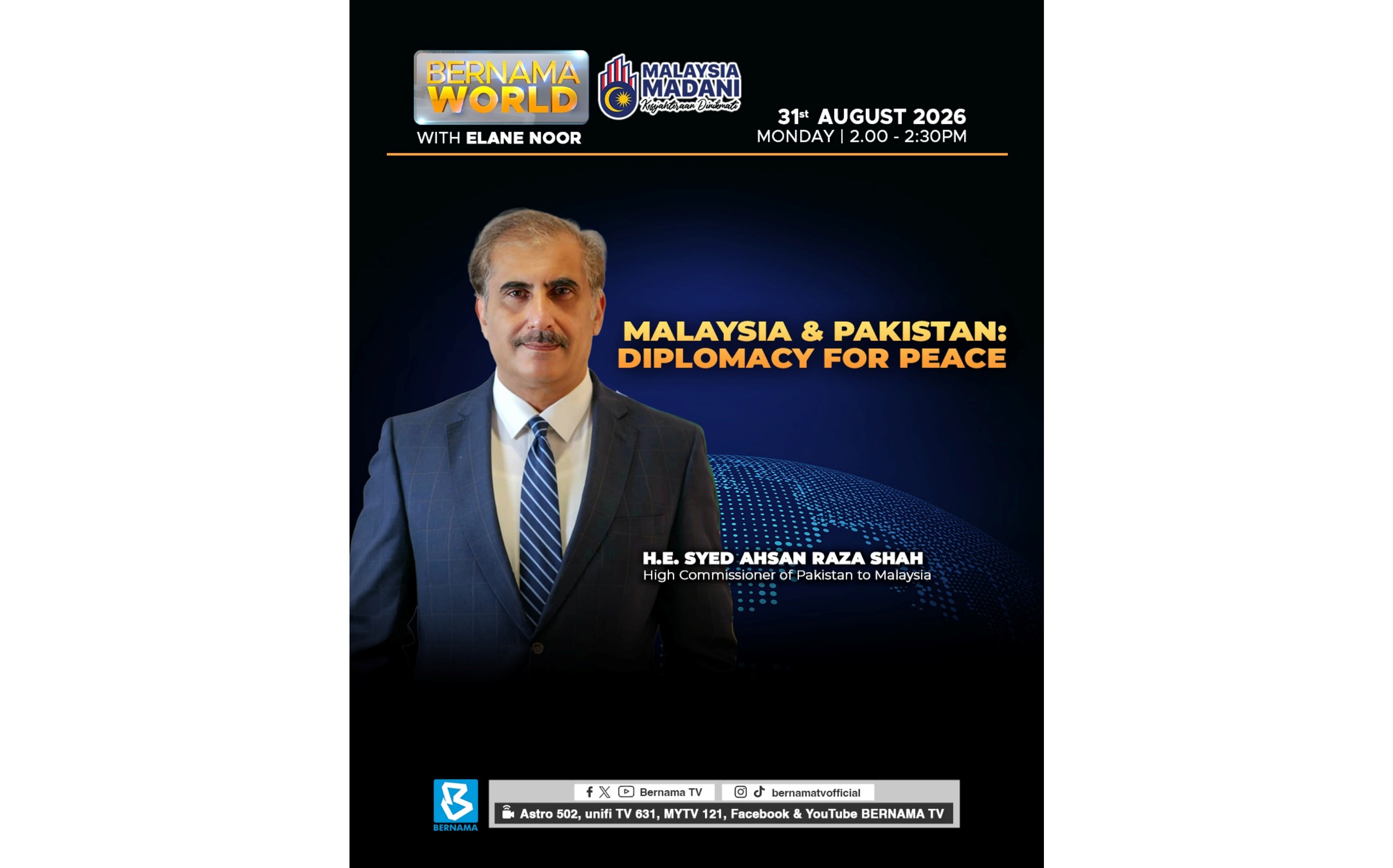
Escalating geopolitical tensions worldwide demand that Malaysia and Pakistan pool their mediation capabilities and diplomatic expertise, according to Pakistan High Commissioner to Malaysia Syed Ahsan Raza Shah. Speaking in an interview on Monday, he characterised such collaboration as a "strategic necessity" given both nations' locations at critical junctures of global affairs and their proven capacity to broker peace in intractable disputes.
The High Commissioner highlighted Malaysia's and Pakistan's respective contributions to resolving two major regional conflicts that threatened to destabilise their respective neighbourhoods. Malaysia, under Prime Minister Datuk Seri Anwar Ibrahim's stewardship, intervened during heightened tensions between Thailand and Cambodia when conventional ASEAN forums struggled to produce results. Anwar's measured diplomatic intervention proved instrumental in securing a ceasefire and paving the way for the Kuala Lumpur pact, demonstrating Malaysia's ability to navigate delicate inter-state relations with finesse and credibility.
Pakistan's position as a trusted intermediary between the United States and Iran similarly reflects its unique geopolitical standing in South and Western Asia. As a nation sharing a border with Iran and maintaining close ties with Washington, Islamabad possessed the dual credibility necessary to facilitate dialogue when American-Iranian relations reached a critical impasse. Syed Ahsan expressed pride in Pakistan's role in brokering the Islamabad accord, noting that when the dispute reached its nadir with both parties seemingly irreconcilable, Pakistan's intervention proved decisive in reopening channels of communication.
These parallel experiences suggest a broader principle applicable across contemporary international relations. Both Malaysia and Pakistan have demonstrated that successful mediation requires more than good intentions or formal diplomatic credentials. Syed Ahsan emphasised that mediators must cultivate genuine trust among conflicting parties, a process that cannot be expedited or manufactured through rhetoric alone. Without parties perceiving the intermediary as genuinely impartial and acting in good faith, negotiation frameworks collapse regardless of structural design.
The High Commissioner articulated a mediation philosophy grounded in patience and realistic expectations. Rather than pursuing comprehensive settlements in single high-stakes meetings, effective mediators must embrace incremental progress, accepting modest gains and maintaining composure when setbacks occur. This approach requires diplomatic resilience—the capacity to absorb criticism and provocative rhetoric without responding in kind or abandoning the process. Prime Minister Anwar's personal diplomatic style exemplifies this discipline, his ability to establish authentic relationships with international counterparts providing Malaysia with a subtle but invaluable asset in mediation efforts.
Syed Ahsan's emphasis on adapting diplomatic methodology to what Anwar has termed "post-normal times" reflects recognition that traditional frameworks for conflict resolution may prove insufficient in an era characterised by fluid alliances, non-state actors, and cascading crises. The distinction between diplomacy, conflict, and mediation demands careful articulation and differentiated approaches. What works for facilitating dialogue in one context may prove counterproductive elsewhere, necessitating continuous learning and mutual exchange of best practices between experienced actors.
For Malaysia specifically, this cooperation framework carries strategic significance. The nation's aspiration to enhance its regional standing and contribute to global stability depends partly on developing and demonstrating mediation capacity. Partnership with Pakistan, which commands respect in South Asian and Middle Eastern circles, could amplify Malaysia's reach and credibility in regions where Southeast Asian perspectives carry less weight. Conversely, Pakistan gains opportunities to strengthen ties with a major Southeast Asian player while showcasing its own diplomatic capabilities.
The broader geopolitical context underscores why such cooperation matters urgently. Conflicts no longer remain compartmentalised within their originating regions. Instability in one theatre inevitably generates ripple effects—economic disruptions, refugee flows, supply chain disruptions, and security challenges that eventually reach distant shores including Malaysia's. The US-Iran tensions, Thai-Cambodian friction, and myriad other disputes elsewhere cannot be dismissed as peripheral to Southeast Asian interests. By developing stronger mediation capabilities, Malaysia and Pakistan invest in global stability that benefits all nations.
Syed Ahsan's framing of mediation as a cooperative discipline rather than a competitive arena also carries implicit lessons for the region's major powers. The emphasis on trust, incrementalism, and patience suggests that power projection and military posturing often prove counterproductive in resolving disputes. Nations seeking to enhance their influence and shape regional outcomes may achieve more through patient diplomatic engagement than through coercive strategies. This perspective, grounded in both Malaysia's and Pakistan's recent experiences, offers valuable insights for smaller and medium powers navigating a multipolar landscape.
The proposal for structured sharing of mediation experience between Malaysia and Pakistan could take various institutional forms—working groups, training exchanges, joint analysis of past cases, or coordinated diplomatic initiatives in emerging disputes. Such mechanisms would formalise the informal learning that occurs whenever experienced diplomats from different nations interact. Institutionalised cooperation could accelerate capacity building and create durable frameworks for collaboration even as personnel change and administrations transition.
For Malaysian policymakers, Syed Ahsan's call arrives at a moment when the nation reasserts its diplomatic profile following internal political stabilisation. Malaysia possesses untapped potential as a regional and global mediator, yet realising this potential requires sustained investment in diplomatic infrastructure, personnel development, and strategic partnerships. Collaboration with Pakistan, a nation with deep experience in navigating complex geopolitical challenges, offers a practical avenue for enhancing Malaysian capabilities while contributing to broader regional security and stability objectives.

