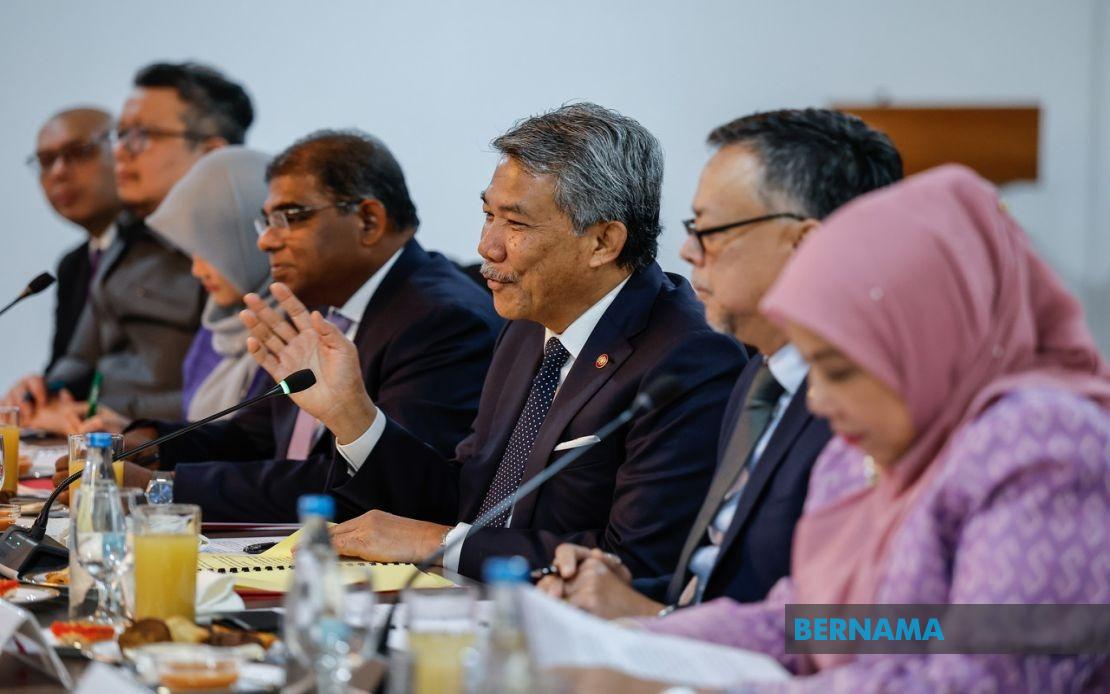
Malaysia and the Philippines have moved to intensify their security partnership, elevating collaborative efforts aimed at suppressing cross-border criminal activity that threatens stability across Southeast Asia. The commitment emerged from the ninth Malaysia-Philippines Joint Commission Meeting held in Manila this week, where officials from both nations outlined an expanded agenda covering intelligence sharing, maritime operations, and coordinated law enforcement initiatives. The timing underscores regional concerns about organised crime networks that exploit porous borders and maritime passages, particularly in areas crucial to ASEAN's security framework.
Foreign Minister Datuk Seri Mohamad Hasan underscored that tackling cross-border crime ranks among the highest priorities for ASEAN nations, as criminal syndicates operating across multiple jurisdictions can destabilise economies and undermine public confidence. The meeting gave particular attention to security dynamics in waters off the east coast of Sabah, a strategically significant maritime zone where Malaysia and the Philippines share overlapping interests and ongoing collaborative concerns. Mohamad stressed that uncontrolled transnational crime would generate cascading problems for all ASEAN member states, making bilateral and multilateral action essential rather than optional.
One notable achievement highlighted by Malaysian officials is the dramatic decline in kidnap-for-ransom incidents along the east coast of Sabah since early 2020, a troubling phenomenon that previously deterred international tourism and investment. The absence of major kidnapping cases reflects the success of sustained coordinated patrols, intelligence operations, and joint task forces established between Malaysian and Philippine security agencies. This improvement has visibly restored confidence among European and American tourists to visit the region, providing both economic and diplomatic benefits. The case demonstrates how intensive bilateral cooperation can produce measurable results in addressing specific transnational threats that affect both national and regional prosperity.
Beyond immediate security concerns, Malaysia has signalled support for the Philippines' efforts to advance the Code of Conduct in the South China Sea during its chairmanship of ASEAN this year. Finalising the Code of Conduct represents a long-sought diplomatic objective that would establish clearer rules governing maritime activities and disputes in one of the world's busiest shipping lanes. By endorsing this initiative at the bilateral meeting, Malaysia reinforces ASEAN's collective intent to create binding frameworks that reduce tensions and provide stability for all stakeholders operating in contested waters.
The Philippines' Foreign Secretary Ma. Theresa P. Lazaro highlighted the deepening military-to-military relationships between the two nations, noting expanded camaraderie among armed forces personnel across naval, aerial, and ground operations. These interpersonal connections, cultivated through joint exercises and capacity-building programmes, strengthen trust and operational effectiveness when security crises demand rapid coordination. Such relationships prove invaluable during emergency responses, intelligence operations, and combined military deployments that require seamless communication and shared understanding of tactical objectives.
A cornerstone of regional cooperation is the Trilateral Cooperative Arrangement involving Malaysia, the Philippines, and Indonesia, which marks its tenth anniversary this year. The TCA has evolved into a proven mechanism for maintaining security across the common operational area where the three nations' territories intersect, particularly in the waters of the Sulu-Celebes region historically plagued by piracy, human trafficking, and armed robbery. Philippine officials credited the arrangement with making substantial contributions to regional stability, demonstrating the value of institutionalised frameworks that commit member states to sustained joint operations and information sharing.
Both sides reaffirmed their commitment to expanding law enforcement partnerships through targeted capacity-building programmes that enhance technical capabilities and enable technology transfer. These initiatives recognise that developing nations often require advanced tools, training, and expertise to effectively investigate and prosecute sophisticated transnational crimes. By establishing structured programmes for technology transfer and skills development, Malaysia and the Philippines strengthen each other's institutional capacity to respond to evolving criminal methodologies, from drug trafficking networks to maritime smuggling operations.
Intelligence exchange mechanisms occupy a central place in the renewed security architecture, with both nations acknowledging that meaningful cooperation depends on timely sharing of operational data, investigative findings, and threat assessments. Enhanced intelligence cooperation allows law enforcement agencies to map criminal networks spanning both countries, identify key nodes for intervention, and coordinate targeted operations against organised crime groups. The commitment to expanded intelligence exchanges reflects recognition that siloed national security operations prove less effective than integrated regional approaches.
Transnational drug trafficking emerged as a particular focus, with both governments proposing new bilateral agreements specifically targeting illicit drug production, trafficking, and consumption. The Philippines and Malaysia recognise that narcotics networks exploit regional geography and porous borders to move product across Southeast Asia toward lucrative markets. Coordinated enforcement against drug syndicates requires synchronised legal frameworks, harmonised prosecution standards, and joint task forces capable of pursuing suspects across national boundaries. By establishing agreements on combating drug abuse and trafficking, both nations aim to disrupt supply chains and reduce the destabilising effects of drug-fuelled crime in their respective territories.
The meeting also addressed broader transnational criminal activities including human trafficking, arms smuggling, and cybercrime, reflecting the multifaceted nature of modern cross-border criminal enterprises. These partnerships position Malaysia and the Philippines as anchors for security cooperation in Southeast Asia, demonstrating that effective regional governance depends on bilateral relationships that function as building blocks for larger ASEAN initiatives. As regional powers continue investing in maritime security and law enforcement cooperation, they establish precedents for sustained collaboration that benefit the entire organisation's stability and prosperity.

