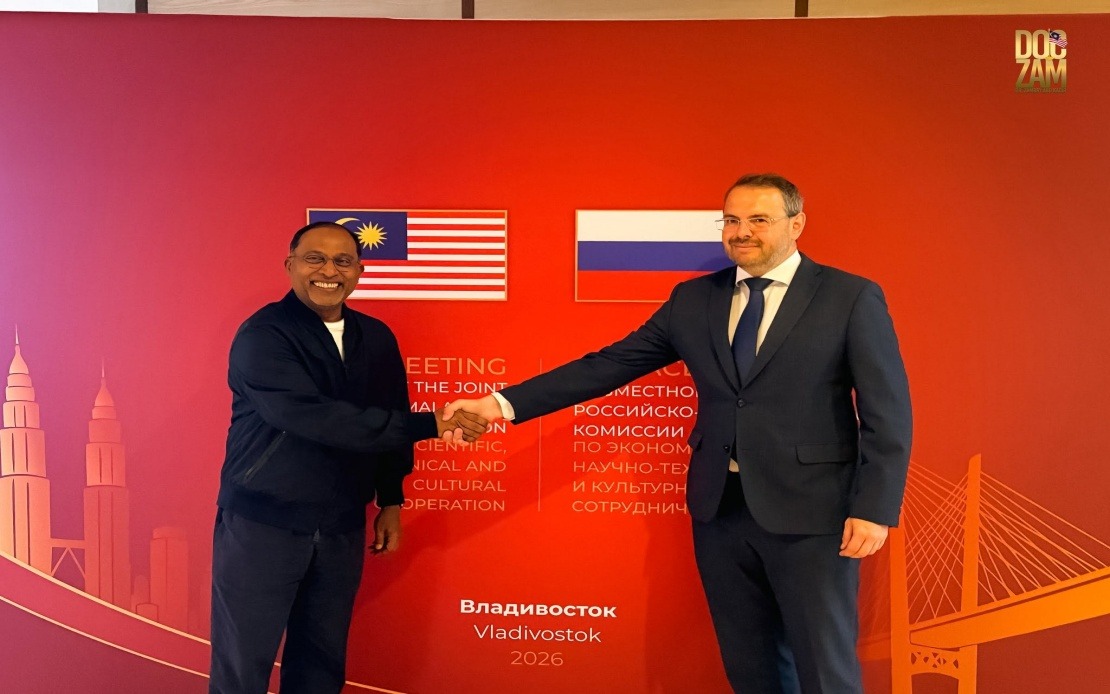
Malaysia's Higher Education Minister Datuk Seri Dr Zambry Abd Kadir is leading a comprehensive delegation to Vladivostok, Russia, for the Fifth Malaysia-Russia JC-ESTC Meeting from tomorrow through Saturday, Aug 15, where both nations will deliberate on expanding their economic footprint and exploring collaboration in cutting-edge strategic sectors. The gathering represents a significant moment in bilateral relations, with discussions set to encompass broadened trade and investment frameworks alongside opportunities in science, technology, and innovation—areas where both countries see mutual advantage and complementary strengths.
The delegation's composition underscores the ambitious scope of this engagement. Representatives from 17 Malaysian ministries and agencies will participate, spanning economy, trade, investment, energy, science and technology, higher education, agriculture, and social and cultural domains. This institutional breadth reflects how Malaysia views the relationship not as narrowly focused on a single sector but as a multi-faceted partnership requiring coordinated effort across government. Zambry will co-chair proceedings alongside Russian Minister of Science and Higher Education Valery Falkov, and was received upon arrival by Russian Deputy Minister of Science and Higher Education Konstantin Mogilevsky—protocol reflecting the seriousness with which Moscow approaches the engagement.
Within the education sphere, Malaysia's strategy centers on fostering substantive people-to-people connections. The nation aims to expand student and academic mobility arrangements, facilitate joint research initiatives, and cultivate university-to-university partnerships that leverage both countries' academic ecosystems. Talent development in science, technology, and emerging strategic fields forms a cornerstone of this approach, suggesting Malaysia recognises that lasting diplomatic ties rest on building a generation of professionals familiar with and invested in bilateral cooperation. This educational dimension carries particular resonance for Southeast Asia, where brain drain and capacity gaps remain persistent challenges; Malaysia's emphasis on reciprocal talent development signals a pragmatic commitment to creating tangible benefits beyond government-to-government declarations.
The Joint Commission on Economic, Scientific and Technical Cooperation, or JC-ESTC, was formally established in 2015, providing a structured institutional framework through which the two nations systematically review and advance shared priorities. Zambry's stated desire to make this platform action-oriented and outcomes-focused reflects a frustration evident across Asia—that bilateral mechanisms often accumulate agreement documents without translating them into investment flows, joint ventures, or measurable economic activity. By emphasising projects, investments, expertise exchanges, and technology development as concrete metrics of success, Malaysia is signalling that the Vladivostok meeting should produce not rhetoric but implementation roadmaps with accountability mechanisms.
The strategic logic animating this deepened engagement rests on a straightforward premise: Malaysia and Russia possess complementary comparative advantages. Russia's scientific establishment and energy sector expertise align with Malaysia's growing emphasis on energy transition and research capacity-building. Russia's higher education and human capital development capabilities mirror Malaysia's own institutional strengths and aspirations. Neither nation seeks to displace existing partners or forge an exclusive arrangement; rather, both appear to recognise that selective deepening of cooperation in non-competitive domains creates mutual prosperity. This calculus holds particular importance for Malaysia, which simultaneously maintains substantive ties with the United States, China, Japan, and India—demonstrating that bilateral relationship development with Russia need not entail strategic realignment.
Energy cooperation warrants specific attention for Malaysian observers. Russia remains a global energy superpower with sophisticated expertise in fossil fuels, renewables, and energy security infrastructure. As Malaysia navigates its energy transition toward greater renewable capacity while managing existing hydrocarbon interests, Russian technical knowledge and potential partnership in hybrid energy systems could prove valuable. The inclusion of energy explicitly within the meeting's agenda suggests both delegations view this sector as ripe for expanded collaboration, potentially through joint research ventures, technology transfer arrangements, or investment partnerships.
The Fifth JC-ESTC convening also affords both nations opportunity to audit progress on previously negotiated commitments and identify impediments to implementation. Bilateral relationships accumulate obligations; without periodic stocktaking, initiatives languish. By incorporating this review function into the Vladivostok agenda, both sides signal commitment to accountability and continuous improvement. This diagnostic aspect often receives insufficient attention in media coverage but underpins successful long-term partnership management.
For Malaysia specifically, advancing cooperation with Russia carries secondary but meaningful benefits. It diversifies Malaysia's strategic partnerships beyond the traditional Western and East Asian alignments that have dominated the country's foreign policy calculus. It demonstrates to other regional powers that Malaysia conducts independent foreign policy unbeholden to any single centre of power. It also positions Malaysia as a bridge-builder capable of facilitating cooperation between Russia and Southeast Asia more broadly—a soft power dividend that enhances Malaysia's diplomatic standing within ASEAN and beyond.
The timing of this summit, occurring amid broader geopolitical realignments and tensions elsewhere globally, carries symbolic weight. Both Malaysia and Russia have experienced international isolation or restriction in various domains. This meeting implicitly demonstrates that bilateral engagement persists and deepens despite external pressures. For Malaysia's government, it reinforces that the nation maintains room for diplomatic manoeuvre and that relationships with non-traditional partners yield real benefits for economic development and technological advancement.
Zambry's articulation that Malaysia and Russia relations must rest on mutual interests and respect provides the philosophical foundation for this engagement. Absent these twin pillars, bilateral cooperation becomes transactional and fragile. By grounding the relationship in reciprocal benefit and genuine regard for each other's legitimate interests, Malaysia articulates a vision of partnership durable enough to withstand inevitable disagreements and political shifts in either capital.
The concrete outcomes of the Vladivostok meeting remain to be seen. Typically, such gatherings produce joint statements reaffirming commitment to cooperation, establishment of new working groups, and specific agreements on particular sectoral initiatives. Whether the ambitious framework articulated by Zambry translates into measurable investment flows, student enrollments, and joint research publications will determine whether this Fifth JC-ESTC Meeting represents a genuine inflection point in bilateral relations or another ceremonial affirmation of ties that remain largely potential rather than actualised. Malaysia's emphasis on action-oriented outcomes and direct benefits to ordinary citizens suggests the delegation travels to Vladivostok with serious expectations for tangible results.

