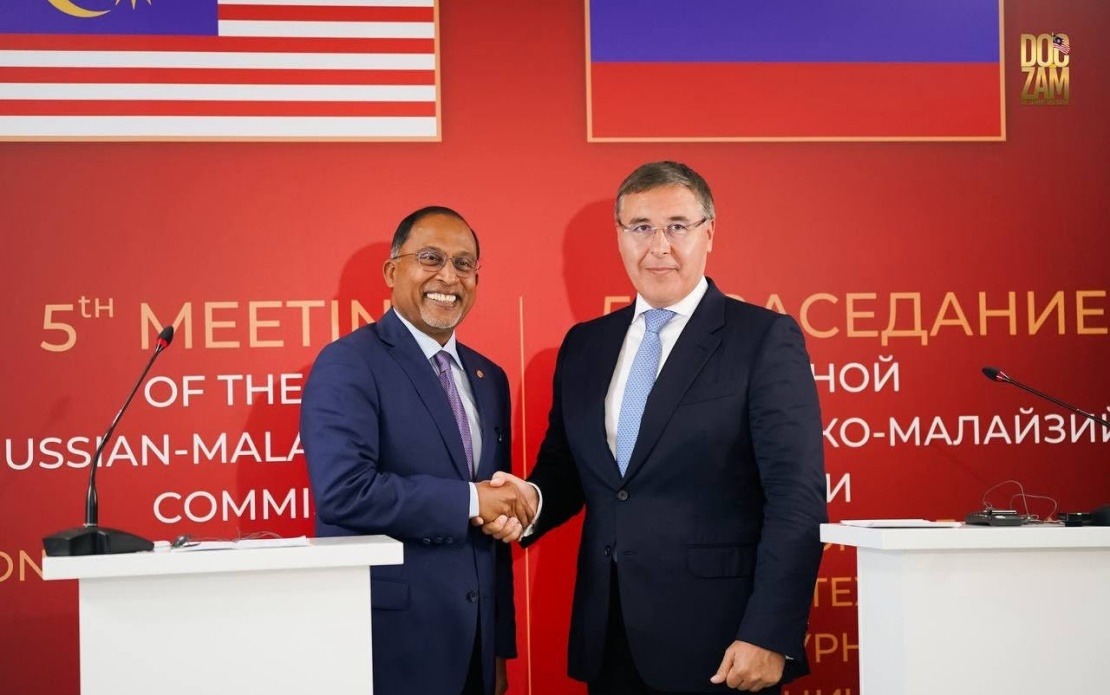
Malaysia and Russia are moving to crystallise their bilateral relationship through a comprehensive joint action plan that will take shape over the final months of this year, according to Higher Education Minister Datuk Seri Dr Zambry Abd Kadir. The agreement emerged from the Fifth Meeting of the Malaysia-Russia Joint Commission for Economic, Scientific, Technical and Cultural Cooperation, held in Vladivostok with Russian Minister of Science and Higher Education Valery Falkov. This strategic framework aims to transform the momentum generated by high-level diplomatic exchanges into tangible, measurable cooperation that benefits both nations across multiple sectors.
The timing of this initiative reflects a broader regional shift toward deeper Malaysia-Russia engagement at a moment when both nations are repositioning their international relationships. The underlying diplomatic momentum stems from interactions involving His Majesty Sultan Ibrahim, King of Malaysia, Russian President Vladimir Putin, and Prime Minister Datuk Seri Anwar Ibrahim, suggesting that partnership is treated as a priority at the highest governmental levels. By establishing a structured joint action plan, Malaysia and Russia are essentially creating an institutional framework that can sustain cooperation regardless of personnel changes or shifting political priorities in either capital.
Within the critical sphere of higher education and human development, Russia will maintain its commitment to provide 40 government scholarships annually for Malaysian students. This steady pipeline of educational opportunity serves multiple purposes for Malaysia: it develops human capital in fields where Russia possesses particular expertise, creates diplomatic goodwill through direct people-to-people contact, and potentially positions graduates as bridges between the two economies. The proposed Malaysia-Russia Rectors' Forum in 2027 would elevate these connections beyond individual student exchanges to institutional partnerships between universities, fostering research collaboration and academic networks that could endure for decades.
The expansion of existing programmes reveals strategic thinking about building on established foundations rather than starting from scratch. The MAI-UniKL Russian Aerospace Programme already exists as a channel for technology transfer and skills development; broadening it signals confidence in outcomes and a desire to deepen Malaysia's capacity in aerospace engineering and related fields. This aligns with Malaysia's own ambitions to develop high-technology manufacturing and aerospace capabilities as part of its industrial diversification beyond traditional sectors. Similarly, the proposed Malaysia-Russia Youth Leadership Summer Camp addresses a gap in bilateral engagement by involving young people who will shape both nations' futures, building personal relationships and understanding that often prove more durable than formal state-to-state connections.
Commercial and agricultural cooperation takes on heightened significance in the context of Southeast Asian food security challenges. The explicit discussion of fertiliser supply, particularly urea, reflects Malaysia's strategic interest in securing stable inputs for its agricultural sector while Russia seeks reliable export markets for its commodity production. This is not merely transactional—it represents mutual vulnerability and opportunity. Malaysia depends on reliable fertiliser access to maintain food production; Russia benefits from predictable export demand. The framework of discussing agricultural cooperation within a broader bilateral structure provides stability that ad-hoc commercial dealings cannot guarantee, particularly amid global supply chain disruptions.
The breadth of strategic sectors now encompassed in Malaysia-Russia cooperation reflects changing global priorities and technological trajectories that both nations must navigate. Artificial intelligence and digital technology represent frontier domains where collaboration could position both countries advantageously; neither is content to remain passive in a technology landscape being shaped by larger powers. Smart cities and information security address practical governance challenges that developing and middle-income nations increasingly confront. The inclusion of renewable energy and LNG cooperation reflects energy transition dynamics affecting the region, where Malaysia seeks diversified supply sources while Russia seeks markets for its energy products beyond traditional Western-aligned buyers.
The exploration of peaceful nuclear energy cooperation, carefully hedged by reference to both nations' legal and regulatory requirements, illustrates how Malaysia and Russia navigate shared interests while respecting international frameworks. Neither country pursues atomic power currently, yet both maintain strategic interest in advanced energy technologies. The regulatory language suggests serious intent tempered by recognition that such cooperation requires careful management, particularly given international scrutiny of Russia's activities.
Financial services cooperation through Bank Negara Malaysia and the Bank of Russia opens pathways for deeper economic integration that extend beyond trade in goods. The particular emphasis on Labuan's potential role as an ASEAN gateway reflects Malaysia's ambitions to position itself as a financial hub serving the broader region, not merely serving bilateral needs. Islamic finance cooperation is particularly intriguing, as it offers Russia a window into financial instruments increasingly important across Asia and Africa, while it offers Malaysia a non-Western financial partner in an increasingly multipolar economic landscape. Digital asset cooperation reflects both nations' recognition that financial technology is reshaping commerce at fundamental levels.
Three new cooperation agreements signed between Malaysian and Russian higher education institutions during the meeting demonstrate that abstract commitments translate into concrete institutional relationships. The partnerships linking UiTM with Moscow Power Engineering Institute and the Institute of Experimental Medicine, and UTHM with the State University of Land Use Planning, identify specific fields—power engineering, medical research, and urban planning—where knowledge exchange creates mutual benefit. These arrangements typically involve faculty exchanges, joint research projects, and student mobility, creating multifaceted engagement that goes well beyond ceremonial gestures.
The decision to host the sixth JC-ESTC meeting in Malaysia during 2027, coinciding with the 60th anniversary of diplomatic relations, serves symbolic and strategic purposes. The anniversary milestone provides a natural focal point for reflecting on bilateral history while reaffirming commitment to the future. Hosting the joint commission meeting on Malaysian soil also reverses the flow of diplomacy, positioning Malaysia as an equal partner setting the agenda rather than always travelling to Moscow. The four-year gap between this meeting and the next allows time to implement agreements from the current session, assess results, and identify new areas for cooperation.
For Malaysian policymakers, deepening the Russia relationship serves multiple strategic objectives. It diversifies Malaysia's great-power partnerships at a time when geopolitical competition between the United States and China shapes regional stability. It provides access to Russian expertise in specific technologies and fields where Western suppliers may impose restrictions or political conditions. It opens markets for Malaysian products and services, particularly in the resource and technology sectors where Russia has purchasing power. For the broader ASEAN region, Malaysia's cultivation of strong Russia ties illustrates how Southeast Asian nations pursue strategic autonomy through multifaceted engagement, neither wholly aligned with Western institutions nor dependent on Chinese patronage.
The emphasis on "mutual respect and benefit" in Zambry's closing statement encapsulates the framework through which Malaysia approaches the Russia relationship. This principle-based language distinguishes Malaysia's approach from transactional partnerships driven by immediate political or military interests. It positions cooperation as fundamentally reciprocal, with both parties gaining advantage rather than one extracting value from the other. For a region historically wary of great-power domination, this framing matters deeply.
As Malaysia and Russia work toward finalising their 2027 joint action plan in coming months, the real test will lie in implementation. Bilateral cooperation frameworks exist across the developing world, yet many remain declaratory rather than delivering tangible results. Success in this instance would require sustained political commitment, adequate funding, institutional capacity to execute complex technical cooperation, and patience as collaborative projects navigate inevitable bureaucratic and technical obstacles. The breadth of sectors covered—from aerospace to artificial intelligence to Islamic finance—suggests ambition that may challenge implementation capacity. Yet the willingness to establish an overarching framework through which cooperation is structured, monitored, and evolved demonstrates that both Malaysia and Russia perceive enduring mutual interest worth investing in institutionally.

