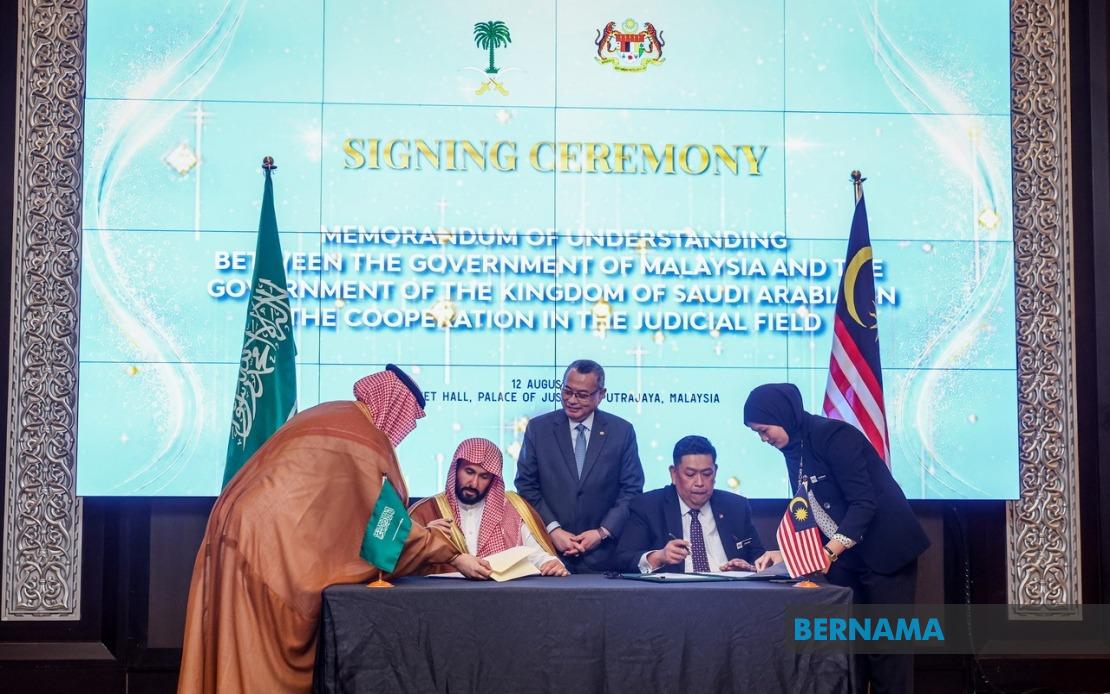
Malaysia and Saudi Arabia have taken a significant step in deepening their institutional relationships through a judicial cooperation agreement signed at the Palace of Justice in Putrajaya. The memorandum of understanding, inked between Chief Registrar Azhaniz Teh Azman Teh and Saudi Arabian Minister of Justice Sheikh Dr Waleed Mohammed Alsmani, represents a structured commitment to collaborative efforts in the administration of justice and court operations. Chief Justice Tun Wan Ahmad Farid Wan Salleh witnessed the signing ceremony during the Saudi minister's official visit to Malaysia, underscoring the formal significance of the bilateral engagement.
The agreement establishes a comprehensive framework addressing multiple dimensions of judicial administration and institutional development. Both countries have committed to exchanging expertise in civil case management, recognising that procedural efficiency and fair case handling remain universal challenges in the global judiciary. The partnership also emphasises judicial technology and digitalisation—areas where Malaysia has made considerable progress through its e-Court system. By codifying these cooperation areas in a formal document, the two nations have created mechanisms for sustained institutional dialogue rather than ad-hoc exchanges.
One particularly noteworthy element of the arrangement involves dedicated focus on handling sexual offences against children. During the visit programme, Malaysian judicial officials conducted specialised sessions examining the domestic approach to these sensitive matters. This thematic concentration reflects international recognition that child protection cases require specialised training, procedural safeguards, and institutional expertise. For Saudi Arabia, exposure to Malaysia's methodologies could inform enhancements to their own judicial protocols in this critical area, contributing to improved child protection outcomes across both jurisdictions.
The digitalisation component speaks to contemporary challenges facing courts throughout Southeast Asia and the Middle East. Malaysia's e-Court system has evolved significantly over recent years, offering potential lessons for Saudi Arabia as it modernises its judicial infrastructure. Digital court management systems enhance transparency, reduce case backlogs, and improve access to justice for citizens. By facilitating technical exchanges and institutional visits focused on digitalisation, the MoU positions both countries to benefit from each other's experiences navigating the complexities of technological integration in traditional judicial environments.
The agreement also facilitates the sharing of publicly available judicial information and practical experience between institutions. This dimension enables judges, administrators, and legal professionals from both countries to understand comparative approaches to recurring judicial challenges. Such exchanges build professional networks that transcend formal diplomatic channels and create grassroots connections among practitioners. These relationships often prove durable and productive, generating insights that influence policy development and institutional reform far beyond the initial engagement.
From Malaysia's perspective, this agreement reinforces the country's position as a respected judicial actor within Muslim-majority nations and the broader international community. The partnership with Saudi Arabia, a regional and global leader among Islamic nations, elevates Malaysia's judicial profile and demonstrates its capacity to contribute meaningfully to international dialogue on justice administration. For Malaysian courts and legal professionals, the arrangement provides opportunities to learn from Saudi Arabia's considerable experience managing cases within an Islamic legal framework while maintaining engagement with common law principles.
The agreement also reflects broader patterns of institutional diplomacy increasingly prevalent across Southeast Asia. Rather than focusing exclusively on traditional bilateral economic or political relationships, countries are now systematically building parallel structures for professional exchanges in specialised domains. These judicial and administrative partnerships complement traditional diplomatic engagement and create multiple touchpoints for government-to-government cooperation. The sustainability of such arrangements often exceeds conventional diplomatic initiatives because they are anchored in professional communities with vested interests in continued collaboration.
Implementation of this MoU will require sustained commitment from both judiciaries' administrative apparatus. Regular exchanges of judicial officials, scheduled institutional visits, and coordinated training programmes will need concrete resourcing and logistical support. The success of the arrangement will likely depend on whether both countries' judicial systems institutionalise these collaborative mechanisms rather than treating them as one-off diplomatic gestures. Establishing permanent working groups or regular bilateral judicial conferences could ensure the MoU generates tangible outcomes rather than remaining a symbolic agreement.
For Malaysian readers and legal professionals, this partnership offers practical benefits through expanded learning opportunities and exposure to alternative judicial approaches. Malaysian judges and court administrators may gain insights into case management strategies and technological implementations applicable to domestic challenges. The emphasis on knowledge-sharing creates potential pathways for Malaysian expertise in areas like e-Court technology to benefit partner nations, positioning Malaysia as a contributor to regional judicial development rather than merely a recipient of international best practices.
The timing and substance of this agreement also signal both nations' commitment to maintaining robust institutional relationships amid broader geopolitical considerations. Judicial cooperation represents a relatively depoliticised domain where countries can achieve meaningful collaboration regardless of other tensions or disagreements. By investing in these professional networks, Malaysia and Saudi Arabia strengthen the resilience of their bilateral relationship and create channels for dialogue that exist independently of electoral cycles or political transitions in either country. This institutional approach to bilateral relations offers stability and continuity often lacking in purely political engagement.
Looking forward, the success of this MoU may establish a template for similar arrangements with other judicial systems, both within the Islamic world and among Commonwealth nations. If implemented effectively, the Malaysia-Saudi Arabia agreement could demonstrate the value of structured judicial cooperation and encourage other Southeast Asian countries to pursue comparable arrangements. This would contribute to the gradual development of regional standards and best practices in judicial administration while respecting the autonomy and distinctiveness of individual legal systems.

