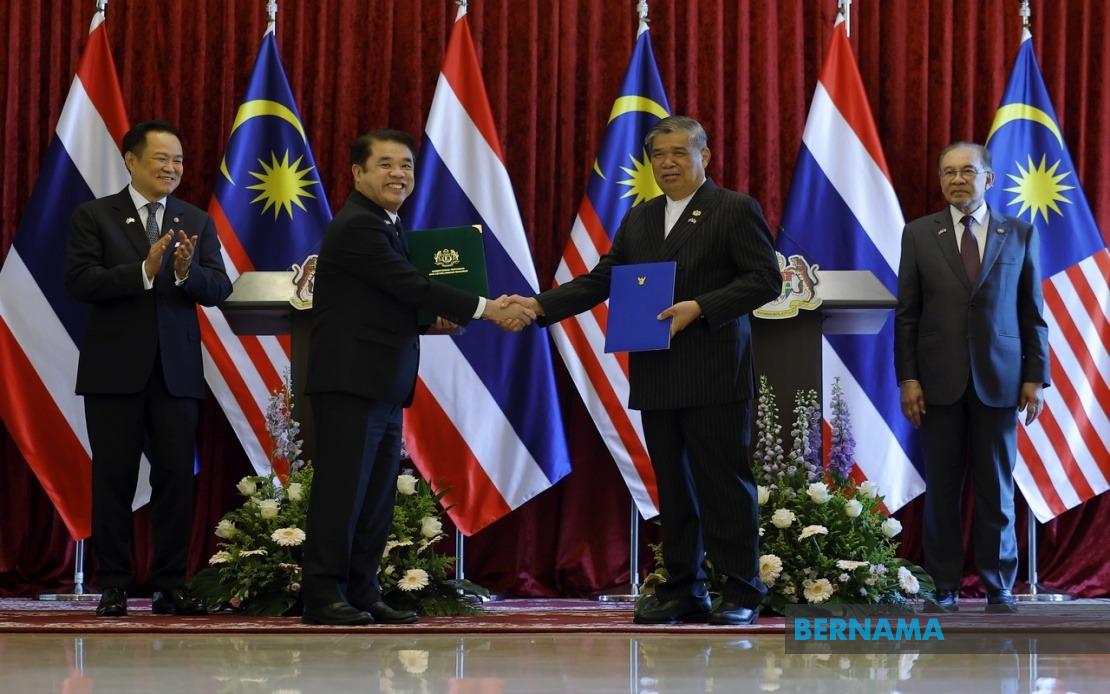
Malaysia and Thailand have moved swiftly to settle lingering fisheries market access disputes and committed to bringing a comprehensive agricultural cooperation agreement into force within seven days, signalling renewed momentum in bilateral relations. The breakthrough came during Thai Prime Minister Anutin Charnvirakul's inaugural official visit to Malaysia, where senior officials from both nations gathered in Putrajaya to formalise the Memorandum of Understanding on Agricultural Cooperation. The accelerated timeline represents a significant concession from Thailand's initial proposal of one and a half months, reflecting both countries' determination to prioritise food security and regional trade stability amid global supply chain uncertainties.
Prime Minister Datuk Seri Anwar Ibrahim and Anutin jointly witnessed the signing of the MoU between Agriculture and Food Security Minister Datuk Seri Mohamad Sabu and Thai Agriculture Minister Suriya Juangroongruangkit. During the joint press conference, Anwar emphasised that the agreement underscored Malaysia and Thailand's shared commitment to bolstering food security frameworks across the region and strengthening their economic partnership. The resolution of fisheries complications appeared particularly significant, given the sector's importance to both economies and the tensions that such trade barriers can create. Anwar highlighted that the ministers' willingness to compress implementation timelines demonstrated their dedication to resolving technical issues expeditiously.
Thai Prime Minister Anutin echoed the sentiment, characterising food security as a paramount concern in the bilateral discussions. He specifically acknowledged the progress made by both agriculture ministers in identifying mutually acceptable solutions to the outstanding market access difficulties affecting fishery and agricultural exports. This diplomatic language masks what had become a substantive friction point in the bilateral relationship, particularly given the importance of agricultural trade to both nations' rural economies and foreign exchange earnings. By framing the resolution as a collaborative achievement rather than a concession, both leaders managed expectations whilst cementing their commitment to deepening ties.
The agricultural cooperation framework itself encompasses a substantially broader remit than fisheries alone. According to the Ministry of Agriculture and Food Security, the MoU establishes a comprehensive institutional architecture covering crop production, livestock management, fisheries, trade facilitation, and the promotion of agricultural and agri-food products across both markets. The agreement extends into technical domains including research and development partnerships, capacity building initiatives, biosecurity protocols, and the harmonisation of sanitary and phytosanitary standards—areas where regulatory alignment can significantly reduce transaction costs for exporters and importers. These provisions are particularly relevant for Malaysian and Thai stakeholders, who operate within an increasingly complex web of food safety requirements across ASEAN and beyond.
Perhaps most significantly, the MoU establishes a structured mechanism for ongoing communication and coordination between the relevant authorities in both countries. This institutional framework aims to transform agriculture and agri-food cooperation from ad-hoc negotiations into a transparent, continuous dialogue. Such mechanisms prove invaluable in preventing disputes from escalating and enabling technical experts to resolve emerging issues before they reach the level of political tension. For Malaysia and Thailand, both of which maintain substantial agricultural sectors employing millions of workers, such institutional stability carries tangible economic implications.
The context for this agreement includes Malaysia's tightening of import controls on Thai fisheries products on June 1, when the country introduced requirements for Certificates of Analysis for barramundi and imposed temporary restrictions on five specific shrimp species. These measures, ostensibly based on food safety and biosecurity concerns, had created friction in bilateral trade relations and prompted Thai officials to seek swift resolution. The rapid negotiation of the MoU and accelerated implementation timeline suggest that both capitals recognised the potential for these disputes to undermine broader economic cooperation if left unresolved.
Bilateral agricultural and agri-food trade between Malaysia and Thailand has demonstrated considerable dynamism, with combined trade reaching RM20.33 billion across the twelve-month period from January through December 2025. This substantial volume underscores the economic weight of the agricultural relationship and the significant consequences that protectionist measures or trade barriers can impose on both economies. Malaysia's principal agricultural exports to Thailand encompass coffee, cocoa, tea, spices, and processed food products—sectors that employ significant numbers of workers, particularly in rural Peninsular Malaysia and Sabah. Conversely, Thai meat and meat-based products constitute the largest category of agricultural imports into Malaysia, reflecting Thailand's substantial livestock and meat processing industries.
The timing of this agreement coincides with broader efforts by both nations to enhance regional food security in the face of climate challenges and supply chain volatility. Southeast Asia's increasing demographic growth and urbanisation have created mounting pressure on regional food systems, prompting governments to strengthen domestic agricultural bases whilst simultaneously deepening trade relationships that enable efficient resource allocation. Malaysia and Thailand, as two of ASEAN's largest agricultural traders, play pivotal roles in regional food stability. Their cooperation signals to other ASEAN members a commitment to maintaining open agricultural trade routes and collaborative approaches to addressing shared challenges.
The bilateral talks held between Anwar and Anutin the previous week had reportedly focused on broader cooperation spanning trade, investment, agriculture, food security, and matters of regional and international concern. This wider diplomatic engagement provided the backdrop for the agricultural negotiations, suggesting that fisheries market access represented one component of a more comprehensive relationship reset. The timing of Anutin's first official visit as Thai Prime Minister to Malaysia carries symbolic significance, indicating that Bangkok views deepening ties with Kuala Lumpur as a priority for his administration. For Malaysia, the successful resolution of agricultural disputes with a major neighbour and trading partner demonstrates diplomatic effectiveness and commitment to maintaining stable, mutually beneficial relationships in the region.
For Malaysian importers and exporters alike, the agreement offers both immediate and longer-term benefits. In the near term, the rapid implementation of the MoU should restore confidence in bilateral trade channels and enable the resumption of normal trade flows. Over a longer horizon, the institutional mechanisms established through the agreement promise more predictable regulatory environments and reduced uncertainty regarding market access. Malaysian agribusinesses seeking to expand their footprint in Thai markets will benefit from clearer standards and more transparent procedures, whilst Thai exporters will likewise gain improved access to Malaysian distribution channels and consumer markets.
The resolution also carries implications for ASEAN's broader trade integration agenda. As the regional bloc continues efforts to deepen the ASEAN Economic Community and negotiate trade agreements with external partners, the ability of member states to resolve bilateral agricultural disputes through dialogue and institutional cooperation strengthens the overall credibility of ASEAN commitments. Malaysia and Thailand's relatively quick settlement of their fisheries complications demonstrates that disagreements can be addressed through good-faith negotiation, a positive signal for other potential trade friction points within the region.
Moving forward, the success of the agricultural cooperation framework will depend on effective implementation by both governments' technical agencies. The Ministry of Agriculture and Food Security and its Thai counterpart will need to establish working committees, develop operational protocols, and ensure that political commitments translate into concrete changes in regulatory practices and trade facilitation procedures. Malaysian and Thai businesses will closely monitor whether the promised transparency and efficiency gains materialise in practice. Sustained cooperation in this domain could serve as a foundation for expanding bilateral engagement into other sectors, potentially creating a model for how ASEAN nations can manage trade relationships whilst maintaining necessary standards and protections.

