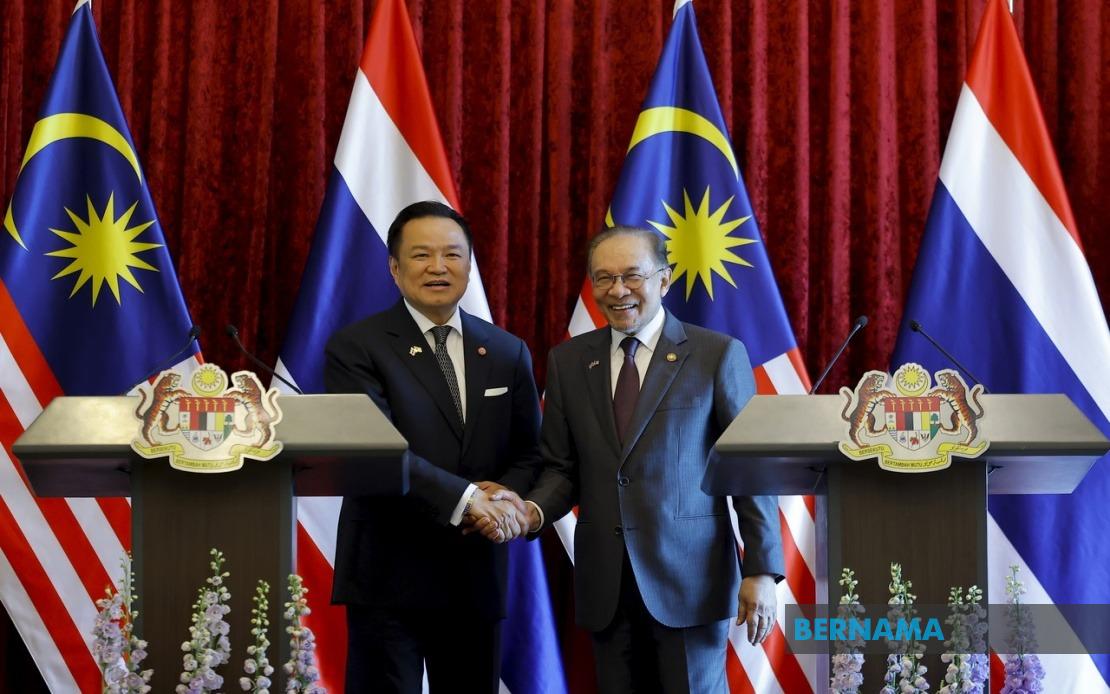
Malaysia and Thailand have committed to fast-tracking a range of cross-border development initiatives designed to deepen economic integration and streamline trade flows between the two nations. The bilateral accord emerged from substantive discussions between Prime Minister Datuk Seri Anwar Ibrahim and Thai Prime Minister Anutin Charnvirakul in Putrajaya on July 9, establishing a clear roadmap toward achieving USD30 billion in bilateral trade by 2027. The agreement signals renewed momentum in Southeast Asian regional cooperation and reflects both governments' recognition that geographic proximity and cultural ties must translate into tangible economic gains for their citizens.
The scope of the partnership encompasses several critical areas that address longstanding infrastructure and logistical constraints along the Malaysia-Thailand border. Both leaders agreed to prioritise the completion and enhancement of border connectivity projects, which represent essential infrastructure for facilitating seamless movement of goods, services, and people. These initiatives extend beyond traditional transport links to encompass digital and financial infrastructure that enables faster commercial transactions. By removing physical and administrative bottlenecks at frontier crossings, the two nations aim to unlock significant trade potential that has historically remained constrained by inefficiencies in border operations.
A cornerstone of the bilateral strategy involves establishing special border economic zones that will operate under relaxed regulatory frameworks designed to attract investment and foster cross-border entrepreneurship. Such zones have proven effective in other regional contexts, creating hubs where businesses benefit from preferential tariffs, simplified customs procedures, and dedicated infrastructure. For Malaysia, particularly the northern states, these zones represent an opportunity to position themselves as gateways for Thai businesses seeking Southeast Asian market access. Similarly, Thai operators gain a strategic foothold closer to Malaysian and broader ASEAN markets, potentially reducing logistics costs and transit times that currently disadvantage their export competitiveness.
The agreement explicitly prioritises streamlining immigration and customs procedures, addressing a perennial source of friction in bilateral commerce. Enhanced cooperation in these areas translates to faster clearance times at border checkpoints, reduced documentation requirements, and harmonised standards for product certification. Such measures prove particularly valuable for small and medium enterprises that lack dedicated customs expertise and are deterred by complex regulatory environments. By facilitating smoother passage of goods and personnel, both nations can expand participation in bilateral trade beyond large multinational corporations to include more local businesses seeking regional expansion opportunities.
Anwar's characterisation of the partnership as addressing historical, cultural, economic, and investment dimensions reflects the comprehensive nature of Malaysia-Thailand relations. The two countries share extensive people-to-people connections, with significant Thai communities in Malaysia and Malaysian residents throughout Thailand. These social bonds provide a foundation for commercial relationships, yet formal trade structures have not always reflected the potential inherent in such connections. The deliberate effort to strengthen collaboration across multiple sectors acknowledges that sustainable bilateral engagement requires balanced development across diverse areas rather than concentration in single industries.
The planned visit to Bukit Kayu Hitam and Sadao represents a strategic choice to ground bilateral cooperation in the communities most directly affected by border policy. By extending engagement beyond Putrajaya's administrative circles to frontier towns, the leaders demonstrate commitment to translating national-level agreements into local economic benefits. Border communities frequently feel disconnected from capital-based policymaking despite bearing the most direct consequences of trade and mobility policies. This visit sends a powerful signal that border development constitutes a priority and that local stakeholders will have voice in implementation processes.
The USD30 billion trade target by 2027 appears ambitious yet achievable given recent bilateral trajectories and the structural improvements outlined in the agreements. Current Malaysia-Thailand bilateral trade operates significantly below this threshold, suggesting substantial untapped potential. Achievement requires not merely removal of trade barriers but active promotion of complementarities between Malaysian and Thai economies. Malaysian strength in petroleum refining, petrochemicals, and electronics manufacturing aligns with Thai capabilities in agricultural processing, automotive components, and light manufacturing. Deliberate supply chain integration in these sectors could drive trade volumes upward while distributing economic benefits across both nations.
The timing of this initiative reflects broader Southeast Asian dynamics and the importance both nations place on maintaining regional relevance amid great power competition. As Malaysia and Thailand navigate complex geopolitical environments, deepening bilateral economic ties serves mutual strategic interests by ensuring neither becomes isolated or overly dependent on non-regional powers. Enhanced intra-ASEAN trade strengthens collective economic resilience and reinforces the bloc's centrality in regional affairs. For Thailand, particular value lies in diversifying economic partnerships following political and economic uncertainties in recent years, while Malaysia benefits from accessing Thai markets and production bases as part of its broader regional integration strategy.
Implementing these agreements requires sustained political will and institutional coordination across multiple agencies within both governments. Success depends on aligning regulatory frameworks, establishing clear timelines for completion, and allocating adequate financial resources for infrastructure development. Both nations must also address potential sensitivities regarding labour mobility, environmental standards, and intellectual property protection that accompany deeper economic integration. Regular high-level dialogue mechanisms and technical working groups will prove essential for resolving implementation challenges and maintaining momentum toward the 2027 targets.
The special economic zones initiative particularly warrants close monitoring as it will establish the template for managing cross-border economic activity. Design and governance structures adopted now will influence long-term patterns of bilateral trade and investment. Malaysian and Thai policymakers must ensure these zones deliver genuine benefits to local economies rather than concentrating gains among large corporations or encouraging exploitative labour practices that could generate political backlash. Success in border zone development could inspire similar initiatives throughout Southeast Asia, positioning both nations as leaders in regional integration while generating proof of concept for other ASEAN members considering comparable arrangements.
Looking forward, the Malaysia-Thailand partnership offers instructive lessons for Southeast Asian regionalism more broadly. At a moment when ASEAN integration efforts sometimes appear stalled by sovereignty concerns and competing interests, bilateral initiatives demonstrate that meaningful cooperation remains possible when leaders prioritise tangible outcomes. The emphasis on border-focused development particularly resonates given that many ASEAN members grapple with underdeveloped frontier regions that could benefit from cross-border integration similar to what Malaysia and Thailand are pursuing. Success could catalyse wider acceptance of special economic zones and harmonised procedures throughout the region, potentially accelerating ASEAN's transformation into a genuinely integrated economic community.

