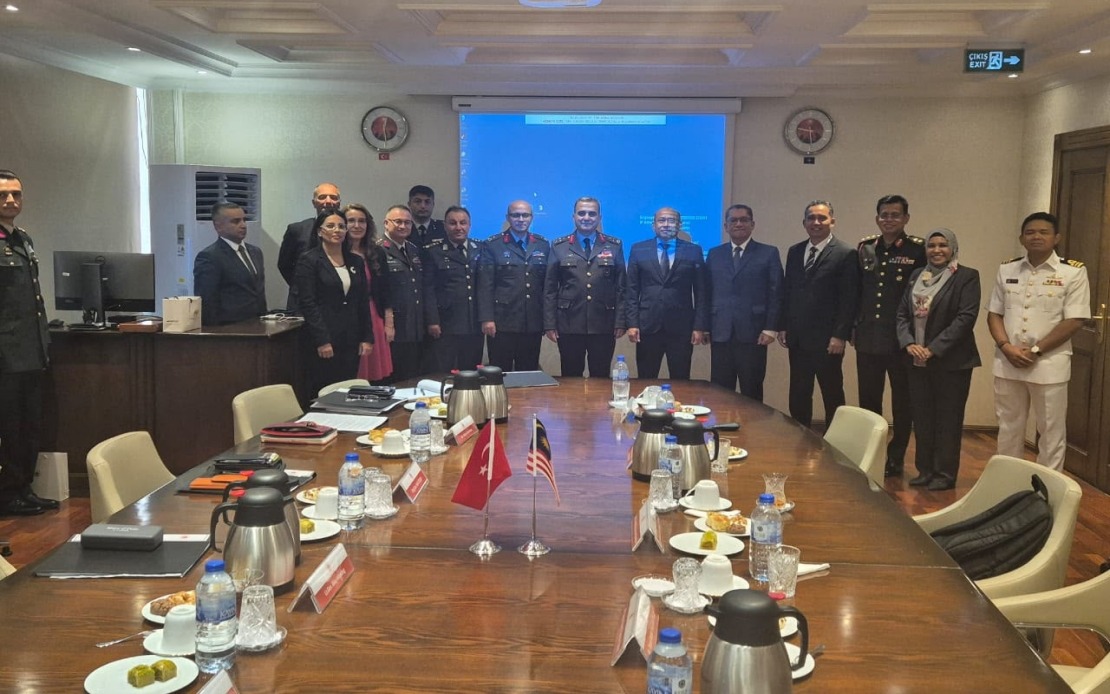
Malaysia and Turkiye have taken a significant step in broadening their defence partnership by conducting their inaugural Malaysia-Turkiye Policy Talk at Turkiye's Ministry of National Defence headquarters in Ankara on Monday. The meeting represents a formal commitment from both countries to engage in structured dialogue on matters of strategic importance, marking a milestone in their bilateral relationship that extends well beyond the Middle East and into Southeast Asia's strategic calculations.
The Malaysian delegation was led by Datuk Yani Daud, deputy secretary-general of policy at the Ministry of Defence, who engaged with Lt Gen Ilkay Altindag, the director-general of defence and security at Turkiye's defence ministry. This level of representation underscores the importance both nations attach to the initiative, suggesting that the talks constitute more than ceremonial engagement but rather substantive policy-level discussions.
The agenda encompassed a broad spectrum of defence matters, ranging from defence policy architecture and strategic planning to current geopolitical security challenges. Notably, both delegations invested considerable effort in exchanging perspectives and information on regional security dynamics, recognising that contemporary threats to stability transcend geographical boundaries. The deliberate focus on information-sharing mechanisms indicates an understanding that effective defence cooperation requires sustained communication channels and mutual understanding of each nation's strategic priorities.
Central to the discussions was the shared conviction that maintaining regional peace and stability serves the interests of both countries and the broader international community. Malaysia specifically acknowledged Turkiye's contributions to peace initiatives in West Asia, particularly in relation to the Makkah Pact, a diplomatic achievement that demonstrates how military and defence establishments can support civilian-led peace efforts. This recognition illustrates Malaysia's diplomatic positioning as a nation attuned to Middle Eastern developments whilst maintaining its core Southeast Asian focus.
A tangible outcome of the meeting was the agreement to establish Terms of Reference for the Policy Talk mechanism. This formalisation is strategically important because it creates predictability and structure for future engagements, transforming what could have been a one-off diplomatic exercise into an institutionalised dialogue framework. The Terms of Reference will serve as a governing instrument through which both defence ministries can discuss cooperation instruments, identify synergies, and explore concrete defence programmes that align with each nation's strategic interests.
The establishment of this framework carries particular significance for Malaysian defence planning. Turkiye's position as a NATO member and its extensive military modernisation programme offer Malaysia potential avenues for learning and cooperation. Conversely, Malaysia's experience in maritime security, counter-terrorism operations in the Southeast Asian context, and regional diplomatic networks provide value to Turkiye's strategic calculations in an increasingly multipolar world.
Looking ahead, Malaysia has formally extended an invitation to Turkiye to participate in the second Policy Talk, scheduled for Kuala Lumpur in 2024. This reciprocal arrangement, with the venue rotating between capitals, establishes a pattern of sustained engagement and signals the institutionalisation of the dialogue. The location choice also matters symbolically, bringing Turkiye deeper into Malaysia's sphere and demonstrating Malaysian confidence in the bilateral relationship.
The ministry views this emerging partnership as instrumental in advancing objectives outlined in the Mid-Term Review of the Defence White Paper, Malaysia's strategic planning document that articulates the nation's defence ambitions and priorities. By anchoring the Malaysia-Turkiye initiative within this official framework, defence planners signal that the partnership is not peripheral to Malaysia's strategic vision but rather integral to how the country envisions its defence posture in the coming years.
For Malaysian readers, this development warrants attention because it reflects how Southeast Asian nations are diversifying their defence partnerships beyond traditional relationships with Western powers or regional neighbours. Turkiye, despite being geographically distant, occupies a unique position in global affairs as a bridge between Europe, the Middle East, and Asia. Building substantive defence ties with Ankara expands Malaysia's options in addressing transnational security challenges, from maritime threats to extremism.
The timing of this initiative also reflects broader geopolitical trends in the region. As Southeast Asia becomes increasingly contested ground in great power competition, nations like Malaysia are strategically expanding their defence partnerships to maintain policy independence and access to diverse expertise and capabilities. Turkiye's military experience in counter-insurgency, naval operations, and defence technology development offers lessons relevant to Malaysian security challenges.
Moreover, the emphasis on policy dialogue rather than immediate arms procurement suggests a measured, long-term approach to defence cooperation. Both countries appear interested in building understanding and trust before embarking on more extensive joint programmes, a mature approach that often proves more durable than transactional military relationships.
The inaugural Policy Talk ultimately signals Malaysia's commitment to engaging strategically with a diverse range of partners globally whilst maintaining its focus on regional stability. As the second dialogue approaches, observers should watch for concrete outcomes such as joint training initiatives, technology-sharing arrangements, or coordinated approaches to maritime security challenges that reflect the strategic substance beneath this diplomatic overture.

