Malaysia and Uzbekistan have signalled their intention to forge a comprehensive agricultural partnership that harnesses the unique capabilities each nation brings to the sector. The two countries are positioning themselves to collaborate across multiple dimensions of food production and security, ranging from cutting-edge farming techniques to traditional agricultural expertise. This deepening relationship marks a strategic shift in how Southeast Asia and Central Asia are beginning to address shared challenges around food production and technological advancement in agriculture.
The foundation for this expanded cooperation was laid during high-level diplomatic visits spanning 2024 and early 2025. Malaysian Prime Minister Datuk Seri Anwar Ibrahim visited Uzbekistan in May 2024, followed by President Shavkat Mirziyoyev's journey to Malaysia in February 2024, both occasions reinforcing agriculture's centrality to bilateral relations. Most recently, Agriculture and Food Security Minister Datuk Seri Mohamad Sabu's official visit to Uzbekistan opened fresh avenues for concrete project development and institutional collaboration between the two governments.
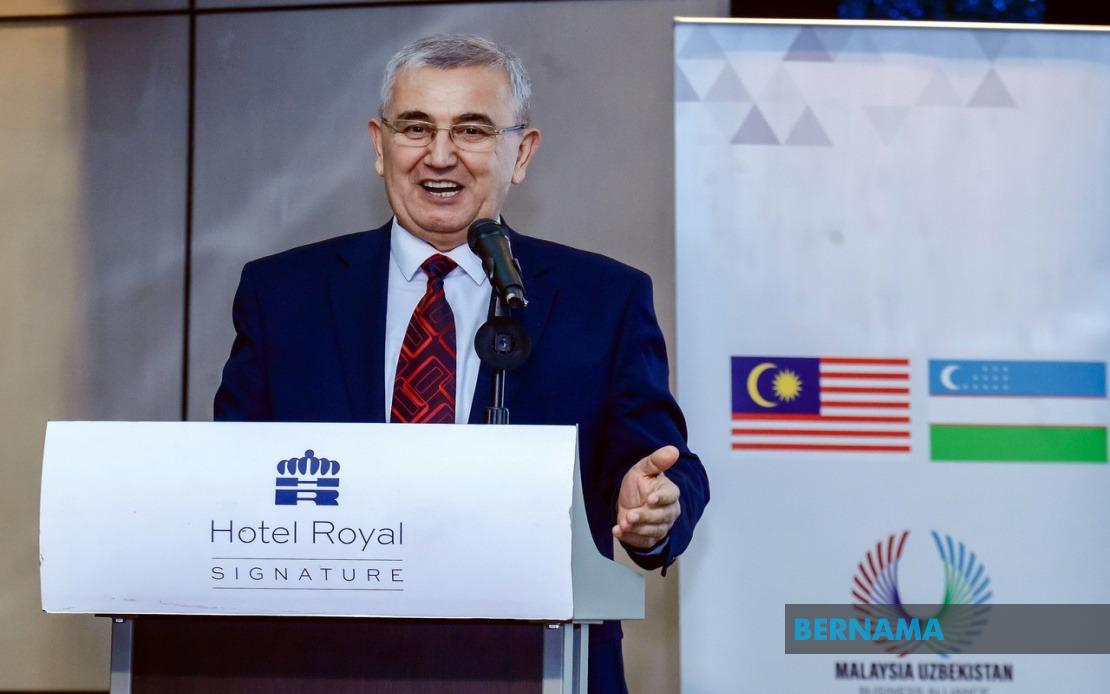
Uzbek Ambassador to Malaysia Dr Karomidin Gadoyev articulated the complementary nature of both nations' agricultural capabilities during recent discussions. Malaysia possesses considerable expertise in paddy cultivation, aquaculture development, fisheries management, and smart farming systems, alongside a strong research ecosystem. Conversely, Uzbekistan brings substantial knowledge in energy-efficient irrigation infrastructure, horticulture production, and agri-food manufacturing and processing capabilities. This natural alignment creates genuine scope for mutual learning and technology transfer across multiple sub-sectors.
The emergence of digital agriculture and artificial intelligence as central pillars of the partnership reflects broader global trends reshaping farming practices. Both countries have recognised that productivity gains and enhanced resilience in food systems increasingly depend on sophisticated technologies. Uzbekistan specifically aims to integrate Malaysian experience and expertise in deploying smart agricultural solutions, viewing such integration as essential for achieving productivity targets amid mounting international pressures on food supply chains. This technological orientation positions the partnership as forward-looking rather than merely exploiting existing comparative advantages.
Institutional frameworks are already facilitating practical collaboration. Malaysia's Agricultural Research and Development Institute (MARDI) is engaged in exploring agricultural innovations with Uzbek counterparts, creating channels for systematic knowledge exchange. Beyond governmental structures, private sector engagement is accelerating the commercialisation of partnership benefits. Malaysian agricultural technology firm Miracule has established Uzbekistan's first agricultural drone showroom, signalling confidence in market potential. The company's expansion plans include increasing drone deployment across Uzbek agricultural fields and establishing local manufacturing capacity for advanced agricultural drones, creating employment and technological capacity-building opportunities.
Aquaculture emerges as a particularly promising collaboration domain given structural conditions in Uzbekistan. With a growing population approaching 40 million people and geographic isolation as a double-landlocked nation, seafood demand in Uzbekistan substantially exceeds domestic production capacity. Malaysia's proven expertise in biofloc technology presents direct utility for Uzbek aquaculture expansion. This technology reduces feed costs by approximately 30 percent whilst simultaneously raising productivity and decreasing overall production expenditures, creating compelling economics for farm operators. Malaysian investors have already commenced preliminary activities in shrimp farming and fisheries ventures within Uzbekistan, laying groundwork for scaled expansion.
Bilateral agri-food commerce currently generates over RM338 million in annual trade value, with palm oil and palm-derived products constituting Malaysia's dominant export category to Uzbekistan. However, both nations regard this current volume as substantially underutilising existing potential. Official projections suggest agri-food trade could feasibly double or even triple within the coming five to ten years through strategic initiatives and targeted investments. Malaysia envisions leveraging Uzbekistan's geographic position as a processing and distribution hub for crude palm oil destined for Central Asian markets, a role that would add significant value to Malaysian exports whilst strengthening Uzbek capabilities in downstream processing sectors.
Uzbek exporters simultaneously see opportunities for expanding shipments of premium fresh fruits and processed food products into Malaysian and Southeast Asian markets. This bidirectional trade expansion would require development of appropriate logistics corridors, quality certification frameworks, and commercial relationships spanning both regions. The agricultural sector's inherent complexity and regulatory nature mean such expansion demands sustained governmental coordination alongside private commercial initiatives.
The partnership's strategic rationale extends beyond immediate commercial considerations to address regional food security objectives. As global supply chain vulnerabilities become increasingly apparent and climate change threatens agricultural stability worldwide, Southeast Asian and Central Asian nations benefit from diversifying supplier relationships and building redundancy into food systems. Malaysia and Uzbekistan's cooperation contributes to this broader resilience agenda by creating alternative production and sourcing capacities within geographic proximity to major consumption centres.
Cultural and diplomatic dimensions further reinforce the partnership. Uzbekistan's acceptance of Malaysia's invitation to participate in the Malaysia Agriculture, Horticulture and Agrotourism Exhibition (MAHA) 2026 represents another platform for showcasing capabilities and forging new commercial relationships. Major agricultural exhibitions function as crucial networking venues where government officials, private companies, and investors converge, accelerating deal formation and partnership development. MAHA 2026 will introduce Uzbek agricultural products, premium fruits, and processed foods to Malaysian business decision-makers and consumers, whilst simultaneously exposing Malaysian agri-technology companies to Uzbek market opportunities.
Ambassador Gadoyev's expression of confidence in achieving complementarity between the two nations reflects realistic assessment of strategic alignment. The partnership succeeds because it addresses genuine deficits in each economy whilst building on legitimate comparative strengths. Rather than competing in overlapping sectors, Malaysia and Uzbekistan have identified domains where genuine mutual advantage exists, suggesting sustainable long-term collaboration prospects. This approach contrasts with partnership models based primarily on political considerations or temporary trade incentives.
For Malaysian stakeholders, the Uzbek partnership offers expansion opportunities into Central Asian markets whilst diversifying geographic risk. For Uzbekistan, Malaysian engagement provides accelerated pathways to agricultural modernisation and technology adoption at a development stage where external partnerships generate substantial returns. The partnership's emphasis on technology transfer and capacity building suggests institutional sustainability beyond individual projects or personalities. Success will ultimately depend on whether both governments maintain political commitment whilst private sectors identify genuine commercial opportunities justifying sustained investment and operational engagement.

