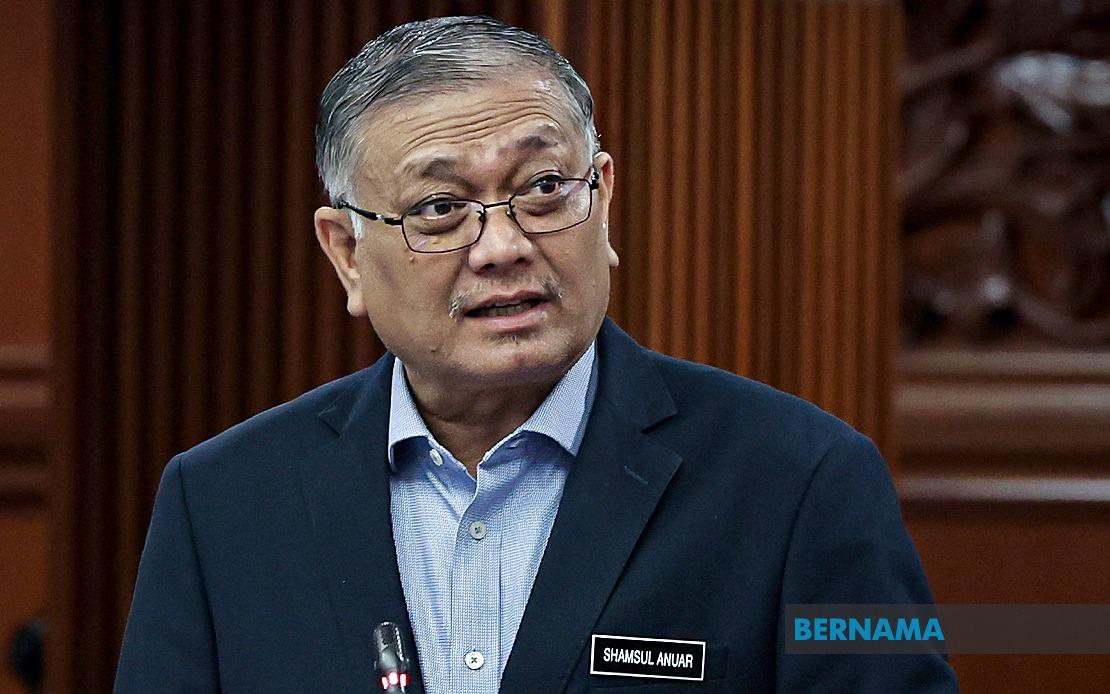
The Malaysian government has reaffirmed its commitment to evaluating citizenship applications on an individual basis, taking into account specific circumstances and relevant constitutional provisions. Speaking during parliamentary proceedings on July 8, Deputy Home Minister Datuk Seri Dr Shamsul Anuar Nasarah emphasised that documentation challenges and familial circumstances do not automatically bar applicants from pursuing Malaysian citizenship, particularly in cases where children have been born overseas to Malaysian mothers.
A significant clarification emerged from the deputy minister's remarks: the passing of a Malaysian mother does not inherently disqualify her offspring from applying for citizenship. This distinction carries particular weight for individuals who may have lost documentation or faced administrative complications following bereavement, a situation that has affected numerous families across the region. The statement addresses longstanding concerns raised by civil society organisations and reflected in reports by the Human Rights Commission of Malaysia (SUHAKAM) regarding barriers faced by vulnerable populations seeking formal citizenship status.
The assessment framework that applicants navigate encompasses multiple layers of scrutiny designed to balance national security interests with individual eligibility. Each case proceeds through comprehensive background verification, documentation validation, and rigorous security clearance procedures. According to the deputy minister, these mechanisms exist to ensure that only genuinely qualified individuals receive citizenship while protecting Malaysia's sovereignty and administrative integrity. The government has established a one-year target for processing applications that contain all required documentation, with compliance metrics being actively monitored to prevent unnecessary delays.
Individuals aged 21 and above who have not previously submitted citizenship applications retain the opportunity to pursue naturalisation under Article 19 of the Federal Constitution. However, the pathway requires meeting several prescribed criteria, including possession of permanent resident status, satisfaction of minimum residency duration requirements, demonstration of good moral character, and possession of adequate Malay language proficiency. These conditions reflect Malaysia's constitutional framework and established immigration policies, though they represent substantial hurdles for populations with limited access to formal education or documentation.
To address the acute documentation challenges particularly affecting Sabah and Sarawak, where historical registration gaps remain widespread, the Home Ministry established a Special Task Force (PPK) comprising personnel from the National Registration Department (JPN) and the Sarawak Premier's Department. Operating through field-based initiatives, this task force conducts ground-level work to resolve documentation deficiencies, facilitate birth registrations, and distribute identification documents to individuals meeting eligibility criteria. This targeted approach acknowledges the distinct administrative circumstances in Malaysia's East Malaysian states, where colonial-era record-keeping and post-independence population movements created ongoing gaps in official documentation.
Complementing the federal task force mechanism, Sarawak has established a state-level Special Committee focused specifically on citizenship status determinations. This committee concentrates particularly on applications submitted under Article 15E of the Federal Constitution, a provision designed to address exceptional circumstances requiring elevated scrutiny and federal-level consideration. The committee's mandate includes expediting review of sensitive cases, particularly applications involving children whose circumstances warrant special governmental attention and determination at the federal level. This two-tiered approach—combining state-level screening with federal oversight—reflects the complexity inherent in citizenship determinations involving constitutional complexity and discretionary provisions.
Beyond the immediate citizenship framework, Malaysia's engagement with regional humanitarian challenges demonstrates broader policy dimensions affecting population management and social cohesion. Deputy Foreign Minister Datuk Lukanisman Awang Sauni articulated the government's ongoing commitment to supporting the Rohingya refugee population within Malaysian territory through ASEAN-coordinated mechanisms and partnerships with the United Nations High Commissioner for Refugees (UNHCR). The refugee and asylum seeker crisis, encompassing the substantial Rohingya displacement, generates significant transnational consequences including irregular migration flows, human trafficking networks, and security vulnerabilities affecting multiple Southeast Asian nations.
Malaysia's policy approach centres on supporting ASEAN's Five-Point Consensus (5PC) as the regional framework for addressing the underlying Myanmar crisis that precipitates Rohingya displacement. This framework emphasises dialogue, humanitarian access, and eventual political resolution within Myanmar rather than permanent resettlement solutions. Simultaneously, Malaysian authorities advocate for expanded international burden-sharing, including greater third-country resettlement opportunities that would distribute global responsibility for refugee protection beyond frontline states bearing disproportionate populations. This dual positioning—supporting regional consensus while advocating international engagement—reflects Malaysia's strategic interests in both regional stability and burden-sharing equity.
The citizenship policy articulation and refugee affairs positioning together illustrate the multifaceted dimensions of Malaysia's migration and belonging governance. Citizenship applications receive individualized consideration through structured processes intended to verify eligibility while maintaining security standards. Concurrently, Malaysia manages substantial refugee populations while advocating for international cooperation mechanisms. For Malaysian society, these policies intersect with questions of national identity, constitutional belonging, and humanitarian responsibility. The emphasis on case-by-case assessment rather than categorical exclusion suggests growing recognition that rigid policy applications may generate injustice for individuals facing documentation barriers through no fault of their own.
For Southeast Asia more broadly, Malaysia's approach to citizenship determination and refugee management establishes precedent within a region where irregular migration, statelessness, and displacement affect millions. The establishment of task forces addressing documentation gaps and the articulation of constitutional provisions for exceptional circumstances indicate governmental awareness that administrative efficiency and humanitarian considerations need not operate in opposition. However, the maintenance of stringent security screening and language requirements underscores that Malaysia's openness to case-by-case review operates within defined constitutional and security parameters rather than representing unlimited discretionary expansion.
The timeline for processing citizenship applications—nominally one year for complete submissions—provides a measurable metric for evaluating government responsiveness, though critics note that documentation delays outside applicants' control frequently extend processing periods. The Special Task Force's field operations in East Malaysia suggest recognition that bureaucratic solutions in Kuala Lumpur prove insufficient when underlying documentation infrastructure remains compromised at the community level. Whether these mechanisms will substantially reduce the population experiencing documentation limbo remains a question for monitoring through forthcoming implementation.
Moving forward, the success of these citizenship and refugee policies depends substantially on resource allocation, training consistency across state-level actors, and genuine commitment to meeting the stated one-year processing target. For individuals affected—Malaysian-born children whose mothers have passed, undocumented residents in Sabah and Sarawak, and Rohingya populations—the translation of policy statements into tangible administrative outcomes will determine whether these commitments translate into meaningful pathways toward formal recognition and protection.

