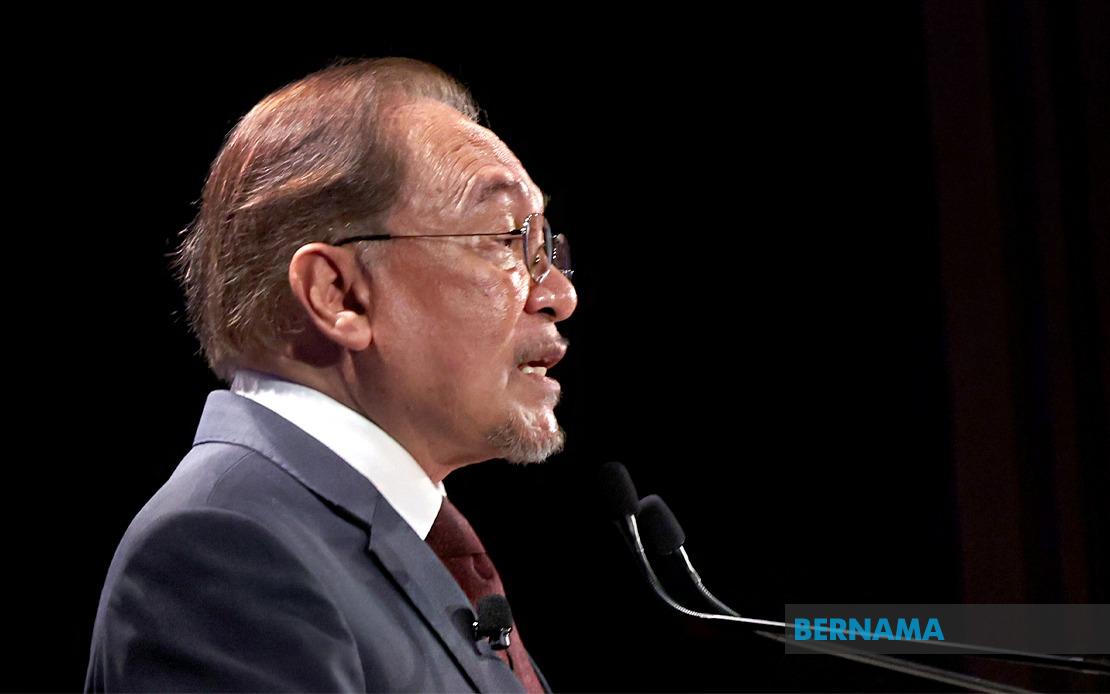
Prime Minister Datuk Seri Anwar Ibrahim has expressed Malaysia's support for an emerging understanding between the United States and Iran, framed as a significant step toward resolving protracted regional tensions. Speaking at the 39th Asia-Pacific Roundtable in Kuala Lumpur on July 2, Anwar acknowledged the diplomatic intermediaries—particularly Gulf nations, Türkiye, and Pakistan—whose active involvement helped broker the memorandum of understanding. The development represents a potential turning point after months of escalating hostilities that have destabilised the Middle East and reverberated across global energy and commodity markets.
Yet Anwar's welcome came with substantial caveats about the fragility of any emerging accord. He stressed that the current détente remains vulnerable to collapse and that the international community cannot afford complacency in monitoring compliance. The Prime Minister underscored that true stability hinges on rigorous enforcement of every ceasefire provision, signalling Malaysia's view that the agreement's durability depends not on diplomatic language alone but on concrete, verifiable adherence to its terms by all parties involved.
The reopening of the Strait of Hormuz has become a cornerstone issue in Malaysia's response to the understanding. Before recent tensions, this critical waterway moved approximately one-fifth of the world's oil supply, making its closure an economically catastrophic event for global commerce. Anwar identified the Strait's return to unrestricted international use as an immediate priority, reflecting how dependent Malaysia and regional economies remain on uninterrupted energy flows through this chokepoint. The passage's security directly affects shipping costs, fuel availability, and price stability across Southeast Asia and beyond.
The economic toll of prolonged hostilities in the Gulf has cascaded through developing economies far beyond the Middle East itself. Anwar drew a direct line between regional instability and the elevated food and energy prices that have persisted globally, emphasising that these are not abstract economic indicators but tangible pressures on ordinary households. Developing nations have borne a disproportionate burden as they scramble to secure essential commodities at inflated costs, straining government budgets and household consumption patterns.
Beyond immediate procurement challenges, Anwar highlighted how regional conflict diverts enormous financial resources away from productive development. Billions of dollars that might have funded infrastructure, education, healthcare, and poverty reduction instead flow toward securing adequate food and fuel supplies. This opportunity cost—the foregone investment in human capital and institutional development—represents a profound drag on long-term growth prospects, particularly for middle-income countries still building comprehensive social safety nets and economic diversity.
The human dimension of these macroeconomic disruptions animated Anwar's remarks. He rejected the notion that global commodity prices constitute mere statistical abstractions, insisting that elevated costs for basic necessities directly erode living standards and employment opportunities. In Malaysia and throughout Southeast Asia, inflation in food and energy has compressed household budgets, forced difficult consumption choices, and heightened economic anxiety among working populations. The Prime Minister's emphasis on livelihoods reflected growing regional concern that geopolitical crises impose asymmetric costs on citizens least able to absorb price shocks.
Quatar's mediation role has proven instrumental in advancing indirect negotiations between Washington and Tehran. According to reports following the conclusion of three-day talks on Wednesday, both sides have demonstrated constructive movement, particularly regarding the Strait of Hormuz's future status. Qatar's diplomatic positioning—as a respected regional actor with relationships across the Gulf Cooperation Council and broader Middle Eastern alignments—positioned it to facilitate communication channels when direct negotiation remained politically untenable. The reported progress suggests that both parties recognise mutual interests in de-escalation, even if deeper strategic reconciliation remains distant.
The Asia-Pacific Roundtable, organised by Malaysia's Institute of Strategic and International Studies, provided an appropriate forum for articulating regional perspectives on global security questions. The three-day conference brought together policymakers, academics, and analysts to examine implications of Middle Eastern developments for Asia-Pacific stability. Malaysia's venue and Anwar's keynote address amplified Southeast Asian voices in conversations often dominated by Western and Middle Eastern participants, reinforcing the region's stake in how great power tensions resolve.
Malaysia's cautious optimism reflects broader regional calculations about the benefits and limits of any US-Iran rapprochement. Southeast Asian nations, including Malaysia, maintain multifaceted relationships with both American and Iranian interests without formal alliance commitments to either power. This positioning allows Malaysia to encourage conflict resolution from a stance of relative neutrality while advocating for outcomes—principally Strait of Hormuz normalisation—that serve tangible regional economic interests. The statement implicitly rejects zero-sum framings that demand regional states choose definitively between Washington and Tehran.
The emphasis on implementation and monitoring also signals Malaysia's understanding that formal agreements, however diplomatically significant, require sustained pressure and institutional mechanisms to translate into lasting peace. Anwar's insistence on strict compliance with ceasefire terms reflects hard-won regional experience with agreements that collapsed when political will or enforcement capacity wavered. Malaysia's own security challenges have taught policymakers that even comprehensive understandings require continuous diplomatic attention and credible deterrents against violation.
Looking forward, Malaysia's position suggests that regional countries will closely monitor whether the US-Iran understanding translates into sustained de-escalation or represents merely a temporary pause in deeper competition. The Strait of Hormuz's reopening will serve as a critical indicator of genuine progress—any renewed closure would signal that underlying tensions persist and threaten again to disrupt global commerce. Malaysian policymakers and analysts will undoubtedly track how American and Iranian actions either reinforce or undermine the fragile consensus that has begun to emerge.
The broader implication of Anwar's remarks is that Asia-Pacific nations, despite geographic distance from the Middle East, cannot treat regional developments as peripheral to their own security and prosperity. Global energy markets, international shipping lanes, and commodity price stability connect distant regions in tightly interdependent networks. Malaysia's welcome for the US-Iran understanding therefore reflects not diplomatic courtesy but enlightened self-interest in promoting conflict resolution that benefits all states dependent on stable global commerce and energy flows.

