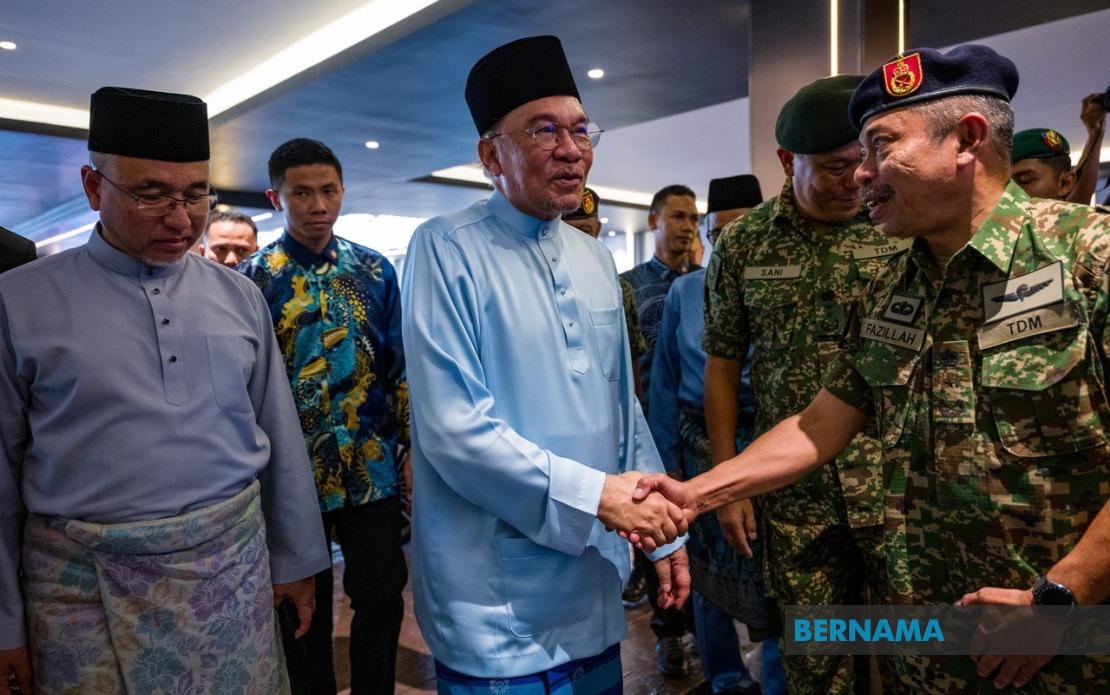
The Malaysian government's decision to expand defence expenditure in the upcoming 2027 budget signals a strategic pivot toward revitalising the nation's military capabilities. Prime Minister Datuk Seri Anwar Ibrahim announced the initiative during the Semarak Kenegaraan Programme held at Terendak Camp in Melaka, positioning the additional funding as a cornerstone of the administration's defence policy. The move comes as regional security dynamics evolve and neighbouring nations continue upgrading their military arsenals, making technological advancement a pressing concern for Malaysian policymakers.
Chief of Defence Force General Tan Sri Malek Razak Sulaiman framed the budget increase as evidence of governmental determination to transform the Malaysian Armed Forces into a formidable, integrated deterrent. The backing represents more than symbolic support; it translates into concrete financial commitments designed to overhaul aging equipment, acquire modern platforms, and establish operational systems aligned with contemporary security threats. Malek Razak emphasised that the government recognises the armed forces' evolving role in national security, whether addressing traditional military concerns or emerging challenges such as maritime security and cybersecurity threats.
The financial commitment extends beyond hardware acquisition. A substantial portion will address the longstanding grievance of personnel welfare, an area long criticised as underfunded relative to regional peers. The government intends to renovate military housing quarters, construct a modern military hospital, and ensure reliable provision of essential services including water supply across installations. These improvements acknowledge that servicemen and women operate more effectively when their families enjoy adequate living standards and healthcare access, reducing attrition rates and strengthening institutional cohesion.
The modernisation programme sits within the Malaysian Armed Forces' Future Force strategic development plan, a comprehensive roadmap designed to position the military for challenges anticipated over the coming decade. The initiative encompasses technological upgrades, force restructuring, and capability enhancement across all service branches. By allocating increased resources now, the government aims to avoid technological gaps that could undermine deterrence or compromise operational effectiveness in regional maritime disputes or humanitarian crises requiring rapid military response.
Personnel morale represents a critical but often overlooked dimension of military effectiveness. Improved living conditions, healthcare facilities, and housing standards directly influence recruitment and retention, particularly as younger Malaysians have expanding career options. The government's recognition that welfare improvements translate into operational readiness reflects lessons learned from other nations, where investment in soldier quality-of-life produces measurable returns in professionalism and commitment. Malek Razak's explicit mention of this connection demonstrates sophisticated understanding of how institutional culture drives performance.
Additionally, the government announced plans to streamline promotion pathways for both military and police personnel, aligning advancement criteria with broader public service standards. This reform addresses frustrations within both organisations where promotion timelines were perceived as bureaucratic and opaque. Simplifying and accelerating the process should encourage career commitment among junior officers with genuine merit, fostering a professional force less dependent on patronage networks and more aligned with performance-based progression.
The budgetary emphasis reflects strategic thinking about Malaysia's position within a changing Indo-Pacific environment. Major powers continue military buildups, and smaller Southeast Asian nations must modernise to maintain credible deterrence. Malaysia's geographic position, controlling crucial shipping lanes and rich maritime resources, necessitates military capabilities sufficient to protect national interests. The defence allocation demonstrates that policymakers understand these imperatives and are willing to commit resources accordingly.
From a regional perspective, Malaysia's military modernisation has implications for ASEAN stability and the balance of power in Southeast Asia. While not targeting any specific adversary, upgrading armed forces capabilities influences regional threat perception and could trigger competitive dynamics. However, modernisation also enables Malaysia to contribute more effectively to regional security architecture, including peacekeeping operations, disaster response, and maritime cooperation initiatives that benefit the entire region.
The timing of this announcement carries domestic political significance as well. By prioritising military investment, the Anwar Ibrahim administration signals focus on core governance responsibilities and national security. This appeals to constituencies concerned about external threats while demonstrating tangible commitment to improving conditions for uniformed personnel, a politically significant group in Malaysian society. The announcement provides narrative coherence to the government's development agenda, linking defence spending to broader prosperity and stability.
Implementation success will depend on fiscal discipline and procurement efficiency. Malaysia has historical experience with defence spending that underdelivered on promised modernisation, partly due to project delays, cost overruns, and procurement complexity. The government must establish robust oversight mechanisms ensuring funds translate into actual capability improvements rather than merely inflating defence contractors' profits. Transparent procurement processes and rigorous project management will determine whether the budget increase achieves genuine military advancement or merely increases expenditure without proportional capability gains.
The commitment also raises questions about fiscal priorities during a period when Malaysia faces competing demands for resources. Healthcare, education, and infrastructure require substantial investment, and defence spending necessarily constrains available resources elsewhere. Whether the government can sustain elevated defence budgets across multiple fiscal years while addressing broader development needs remains uncertain, particularly if economic growth slows or revenue collection falters.

