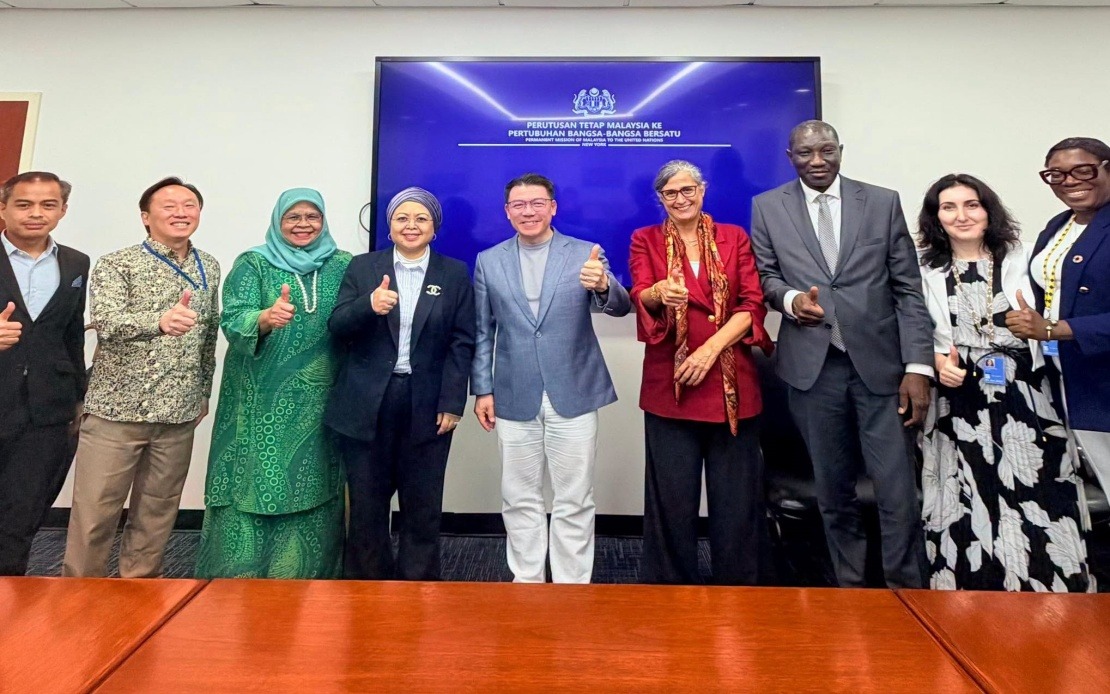
Malaysia has issued a pointed call for the global community to translate commitments into concrete action on sustainable urban development, with Housing and Local Government Minister Nga Kor Ming emphasising that the midterm review of the New Urban Agenda this year represents a crucial juncture rather than merely a stock-taking exercise. Speaking at the High-Level Meeting on the Midterm Review of the NUA at the United Nations Headquarters in New York, where he appeared in his capacity as President of the UN-Habitat Assembly, Nga underscored the urgency of the moment by stressing that only four years remain before 2030 targets come due.
The minister's intervention reflects growing frustration within international development circles that progress on urban sustainability has fallen short of aspirations since the New Urban Agenda was adopted in 2016. Rather than allowing the midterm review to become a mere accounting of shortcomings, Nga insisted that member states must use this opportunity as an inflection point to accelerate delivery of outcomes that will benefit the billions of people residing in urban centres worldwide. This framing signals Malaysia's determination to position itself as a constructive voice in global urban policy deliberations, moving beyond passive participation towards active agenda-setting.
The core challenges Malaysia has identified as requiring intensified international focus reflect pressing regional and global concerns. The global housing crisis remains acute across most developing economies, including those in Southeast Asia where rapid urbanisation has outpaced housing supply and affordability has deteriorated sharply. The urban digital divide—the disparity in access to broadband and digital services between wealthy metropolitan cores and peripheral urban settlements—has become increasingly critical following the pandemic's acceleration of remote work and online service delivery. Climate resilience in urban contexts represents perhaps the most pressing concern for the Asia-Pacific region, where cities face mounting threats from rising sea levels, extreme weather events and water scarcity.
Nga's invocation of the MADANI Economy framework signals Malaysia's integration of sustainable urbanisation into its broader national development strategy. This domestic economic agenda, which emphasises inclusive growth and resilience, provides the conceptual foundation for Malaysia's international advocacy on urban issues. By explicitly linking urban sustainability to national economic priorities, the minister demonstrates that such commitments are not merely aspirational but embedded within Malaysia's actual policy architecture and resource allocation decisions.
The Asia-Pacific Urban Action Platform, which Malaysia has championed with regional partners, represents a practical mechanism for translating global goals into localised action suited to the specific contexts of developing Asian economies. Rather than imposing standardised solutions from the Global North, this platform facilitates peer learning among Asian nations facing comparable urbanisation challenges and operating within similar resource constraints. The emphasis on cross-border knowledge sharing and collaborative green infrastructure financing acknowledges that many urban challenges transcend national boundaries and that regional cooperation yields more cost-effective and contextually appropriate solutions than isolated national efforts.
Malaysia's documented achievement of more than 500 million square feet of green index buildings provides empirical evidence supporting the minister's insistence that ambitious climate-resilient urbanisation is achievable. This concrete example serves multiple rhetorical purposes: it demonstrates that developing nations can implement sophisticated sustainability standards, provides a template for regional peers, and establishes Malaysia as a practitioner rather than merely a theorist of sustainable urban development. The commitment to expand this green building stock further before 2030 suggests that Malaysia views this as a competitive advantage within the regional development landscape.
The emphasis on leaving no community and no place behind reflects growing recognition that urban sustainability frameworks can exacerbate inequalities if poorly designed. Low-income urban residents, informal settlements, and peripheral municipalities often bear disproportionate burdens from climate impacts whilst lacking access to sustainable infrastructure investments. Malaysia's explicit focus on inclusivity and equity suggests an awareness that sustainable urbanisation must address not only environmental imperatives but also the distributional consequences of urban development patterns.
Nga's measured appreciation of various international actors—including UN leadership, other governments, civil society organisations and grassroots communities—reflects diplomatic convention but also acknowledges the genuine necessity of multi-stakeholder engagement in urban transformation. Cities operate as complex systems where municipal governments, national authorities, international organisations, private sector actors, civil society and residents all wield significant influence. Sustainable urban change requires coordinated action across these constituencies rather than top-down imposition by any single actor.
The two-day gathering itself, structured around the theme of delivering sustainable urbanisation for all by accelerating implementation through 2036, signals a modest timeline extension beyond 2030 for some goals whilst maintaining urgency on others. This pragmatic approach acknowledges that some urban transformations require longer timescales than the current decade permits, whilst refusing to allow this reality to diminish momentum on issues where 2030 targets remain achievable. For Malaysian policymakers, positioning the nation as a leading voice in this conversation enhances regional standing and creates space for Malaysia to influence the terms on which developing Asian nations engage with global urban sustainability frameworks.
The significance of Malaysia's intervention extends beyond immediate diplomatic engagement. As Southeast Asian economies continue rapid urbanisation—with urban populations projected to comprise over 65 percent of the region's total by 2030—the region faces an urgent need for scalable, affordable and context-appropriate sustainable urbanisation models. Malaysia's advocacy for practical, locally-driven solutions rather than imported prescriptions resonates with regional development priorities whilst positioning the nation as a bridge between global frameworks and Asian implementation realities. The government's willingness to commit political capital to this agenda at the highest international level signals genuine integration of sustainable urbanisation into national priority hierarchies.
Moreover, Nga's insistence that midterm reviews must deliver more than rhetorical commitments reflects broader shifts in international development discourse. Accumulated experience has demonstrated that proliferating declarations without corresponding accountability mechanisms or resource commitments produce minimal tangible change. Malaysia's call for binding commitments, transparent tracking mechanisms and consequences for non-compliance represents a more mature approach to international cooperation on complex policy issues. For Southeast Asian nations still developing institutional capacity for sustainable urban management, such international frameworks provide both inspiration and practical technical support.

