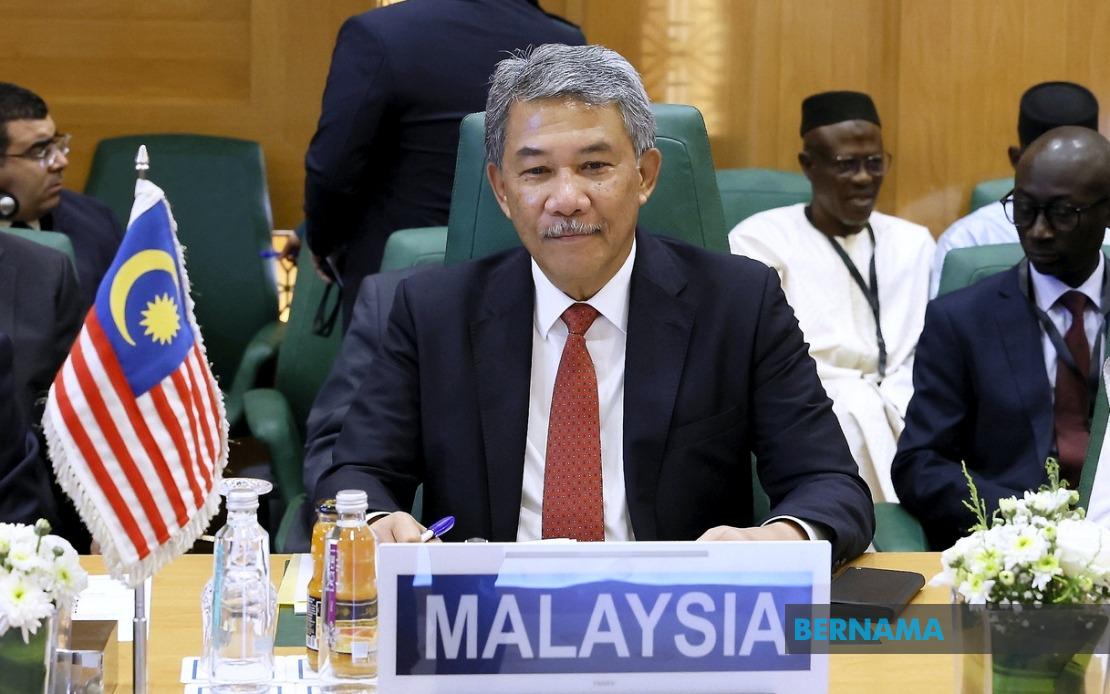
Malaysia has intensified diplomatic pressure within the Organisation of Islamic Cooperation, calling on member states to collectively oppose and withdraw support from Israel's settlement expansion in the occupied Palestinian territories. Speaking at an Extraordinary Meeting of the OIC Council of Foreign Ministers in Jeddah on August 27, Foreign Minister Datuk Seri Mohamad Hasan delivered a forceful statement condemning what he characterised as a systematic effort to undermine Palestinian territorial viability and statehood prospects.
The focal point of Malaysia's criticism centres on a US$2.3 billion settlement scheme that encompasses the controversial E1 expansion plan. According to Mohamad, these initiatives are deliberately engineered to eliminate geographic continuity within Palestinian-controlled areas, making the establishment of a viable Palestinian state increasingly difficult. The E1 zone, located east of Jerusalem, has long been viewed as strategically critical to Palestinian territorial integrity, as it potentially links the West Bank to East Jerusalem. Malaysia's position reflects broader concerns among Muslim-majority nations that settlement expansion represents permanent alteration of territorial facts on the ground, effectively foreclosing meaningful Palestinian self-determination.
Mohamad anchored Malaysia's appeal to international legal frameworks, specifically invoking the International Court of Justice Advisory Opinion delivered on July 19, 2024. He argued that OIC member states bear a collective responsibility to uphold this legal determination by consistently refusing to legitimise or facilitate Israeli settlement activities. This approach represents an effort to internationalise accountability mechanisms and leverage OIC institutional weight to enforce compliance with international legal standards. The invocation of the ICJ ruling underscores Malaysia's strategy of grounding its advocacy in established international law rather than purely political or ideological grounds, potentially broadening the appeal of such positions across the international community.
Beyond settlements, Malaysia articulated deep concern regarding settler violence and forced displacement of Palestinians in Jerusalem. The Foreign Minister highlighted the pattern of evictions and what he described as actions designed to alter the city's identity, including threats to its holy sites. These concerns extend beyond property disputes to encompass religious and cultural dimensions central to Palestinian identity and Muslim-majority nations' investment in Jerusalem's status. Malaysia's explicit reference to protecting Al-Aqsa Mosque compound reflects the religious significance these issues carry within the broader Muslim world, demonstrating how settlement policies intersect with sacred spaces and communal consciousness.
The situation in Gaza formed a critical second pillar of Malaysia's statement, with Mohamad presenting a grim assessment of humanitarian consequences. He reported over 70,000 deaths and described a landscape of systematic destruction affecting residential areas, medical facilities, and educational institutions. Malaysia contextualised these figures within a broader narrative of international humanitarian law violations, emphasising that nearly three years of international appeals have failed to produce substantive Israeli policy changes. This framing positions Malaysia as representing not merely national interest but universal humanitarian principles, attempting to elevate the discourse beyond bilateral grievances to fundamental questions of international humanitarian responsibility.
Mohamad called for immediate and permanent ceasefire mechanisms as prerequisites for addressing the humanitarian catastrophe in Gaza. He criticised what he characterised as Israel's continued blocking of humanitarian assistance, effectively instrumentalising civilian suffering as a dimension of military strategy. Malaysia's emphasis on unimpeded humanitarian access reflects recognition that humanitarian crises directly undermine prospects for sustainable political resolution and international legitimacy. The Foreign Minister's statement implicitly argues that perpetuation of suffering erodes the moral foundation necessary for any conflict resolution framework and delegitimises the entire international order if left unaddressed.
Central to Malaysia's vision for conflict resolution remains unwavering commitment to the two-state solution based on June 4, 1967 borders, with East Jerusalem designated as the Palestinian capital. Mohamad characterised this position not as negotiable diplomatic preference but as a fundamental imperative rooted in international law and justice principles. This rhetorical positioning—elevating the two-state solution from political choice to moral obligation—reflects Malaysia's belief that international consensus on this framework creates binding normative force. By framing it as an imperative rather than preference, Malaysia suggests that any deviation from this standard represents abandonment of international legal principles rather than legitimate policy disagreement.
Mohamad explicitly condemned actions by Israeli government officials and far-right political figures, specifically referencing incursions into the Al-Aqsa Mosque compound on July 23. He characterised such actions as unacceptable provocations threatening the religious sanctity of spaces central to Muslim identity and practice. Malaysia simultaneously called for full international protection of what it termed the historical Hashemite Custodianship over Islamic and Christian holy sites in Jerusalem, invoking Jordan's institutional role in managing these sacred spaces. This appeal to custodianship frameworks represents an attempt to mobilise established international arrangements and third-country institutional interests in support of Palestinian position.
Mohamad directed specific criticism toward United Nations Security Council bodies, urging enforcement of international law and protection of UNRWA's operational mandate. He referenced what he described as illegal seizure of UNRWA's Kalandia Training Centre and adoption of mandatory death penalty legislation targeting Palestinians. These critiques situate Israel within a framework of accountability to international legal bodies and suggest that failure to enforce existing international mechanisms undermines the credibility of the international legal order itself. Malaysia's appeal to the Security Council, while acknowledging its limited enforcement capacity regarding Israel, strategically positions such critique as support for rules-based international order rather than anti-Israel bias.
The broader strategic context for Malaysia's statement reflects its positioning as a leading voice within the OIC on Palestinian issues, particularly following heightened conflict in Gaza. Malaysia has consistently sought to translate diplomatic rhetoric into concrete institutional action, pushing OIC mechanisms toward greater unity and coordinated international advocacy. The emphasis on OIC member state solidarity suggests Malaysia views collective institutional weight as essential to elevating Palestinian concerns within international forums otherwise dominated by Western perspectives. By framing OIC member states as bearers of shared responsibility for Palestinian protection, Mohamad attempts to overcome divisions that have historically limited the organisation's effectiveness.
For Southeast Asian readers and particularly Malaysian observers, these statements carry implications extending beyond the immediate Israeli-Palestinian context. Malaysia's assertive diplomatic positioning reflects its broader commitment to defending international law against perceived great power violations and maintaining space for smaller nations' advocacy within multilateral institutions. The emphasis on rules-based international order, ICJ decisions, and UN mandates reflects Malaysia's strategic interest in strengthening institutions that constrain powerful actors and elevate developing nation voices. Furthermore, Malaysia's leadership on this issue consolidates its position as a significant voice within the Muslim world while simultaneously appealing to universal principles transcending religious or regional boundaries.
Mohamad's comprehensive statement ultimately presents a vision of conflict resolution centred on legal accountability, humanitarian protection, and institutional enforcement of international standards. By connecting settlement expansion to humanitarian crisis to violations of sacred spaces, the Foreign Minister constructs a multifaceted indictment that appeals to diverse constituencies—legal experts, humanitarian advocates, religious communities, and international law proponents. Malaysia's strategy involves leveraging OIC institutional platforms to amplify such critiques while simultaneously appealing to international legal frameworks and universal principles, attempting to transcend the polarisation that has limited conflict resolution efforts. The emphasis on concrete institutional mechanisms and legal accountability distinguishes Malaysia's approach from more rhetorical or emotionally-grounded advocacy, positioning it as offering substantive pathways toward addressing grievances through established international processes.

