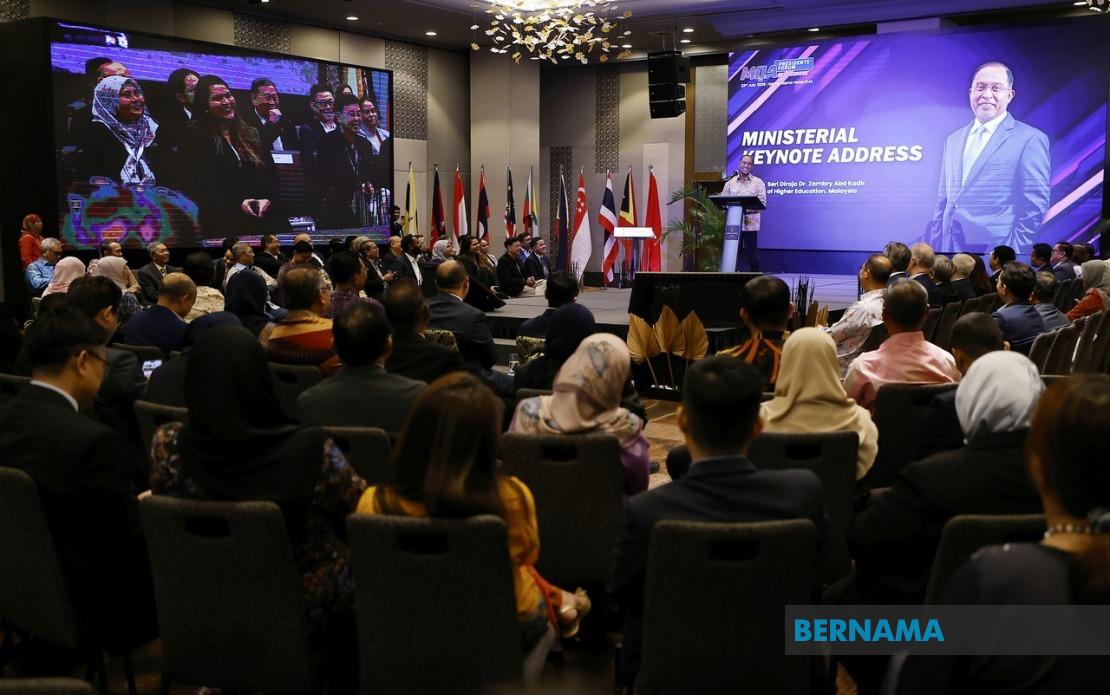
The Malaysian government remains steadfast in its dedication to preserving academic freedom and nurturing spaces where intellectual discourse can flourish, according to Higher Education Minister Datuk Seri Dr Zambry Abd Kadir. Speaking at a public lecture in Putrajaya, Zambry stressed that universities must continue serving as platforms where individuals from diverse backgrounds can present and challenge ideas in an atmosphere of mutual respect and scholarly rigour. This commitment, he argued, forms a cornerstone of Malaysia's approach to developing a vibrant and globally competitive higher education sector.
Zambry's remarks underscore a broader government position that academic institutions should function as venues for open debate transcending geographical, disciplinary and ideological boundaries. The minister emphasised that knowledge advancement depends fundamentally on the free exchange of perspectives and the willingness of scholars to engage with viewpoints that differ from their own. In this framework, academic freedom operates not as an absolute right divorced from responsibility, but rather as a principle intrinsically linked to intellectual accountability and ethical conduct.
The minister's statement comes at a time when questions about university autonomy and intellectual expression have become increasingly salient in Southeast Asian contexts. Zambry articulated a vision where robust academic debate, characterised by evidence-based argumentation and civility, forms the bedrock of scholarly work. This approach recognises that disagreement among researchers and thinkers need not undermine institutional cohesion; rather, it can strengthen the quality of intellectual output when conducted within frameworks of mutual respect and factual rigour. The emphasis on "robust debate conducted with civility, evidence and respect for differing views" suggests a deliberate effort to balance openness with responsibility.
Malaysia's plural and multicultural composition, comprising diverse religious, ethnic and cultural communities, makes the cultivation of informed scholarly dialogue particularly consequential. Zambry highlighted how this demographic diversity necessitates approaches to academic discourse that foster understanding across communal lines while respecting fundamental differences. The minister's observation that Malaysians have historically embraced principles of accepting divergent opinions, captured in the phrase "we agree to disagree," references a pragmatic tradition of coexistence that has characterised the nation's social fabric. Yet he acknowledged that maintaining this balance faces evolving challenges in an era dominated by artificial intelligence, rapid information dissemination and social media platforms where nuance often yields to polarisation.
The specific occasion for Zambry's remarks—a public lecture by Columbia University Professor Dr Joseph A. Massad on Muslim Identity in a Globalised World—exemplifies the government's willingness to host international scholars engaging substantive topics of religious and cultural significance. This choice of event carries particular weight given Malaysia's position as a Muslim-majority nation where questions of religious identity and global engagement intersect with ongoing national conversations about pluralism and social cohesion. By welcoming such scholarly interventions, the government signals its confidence in the capacity of Malaysian academic communities to engage complex topics with sophistication.
The Higher Education Ministry's positioning of itself as an active facilitator of international intellectual exchange reflects strategic awareness of Malaysia's aspirations within the regional and global knowledge economy. By continuing to attract distinguished academics from renowned institutions worldwide, the ministry seeks to enhance the intellectual resources available to Malaysian students and researchers while elevating the nation's profile as a centre for serious scholarly work. This approach recognises that academic excellence cannot flourish in isolation; instead, it requires sustained engagement with leading thinkers and emerging debates across multiple fields and geographies.
Zambry's framing of academic freedom as inextricably bound with intellectual responsibility addresses implicit concerns about unregulated speech within academic settings. Rather than presenting freedom and responsibility as opposing principles, the minister characterises them as complementary dimensions of meaningful scholarly work. This formulation attempts to navigate potential tensions between protecting wide-ranging intellectual inquiry and maintaining standards of evidence, logical consistency and ethical conduct. The emphasis on responsibility may also reflect awareness of anxieties among some stakeholders about the direction of certain academic discussions, particularly those touching on religion, politics or social values.
For Malaysia's higher education sector, these statements carry practical implications for institutional governance and academic hiring. Universities operating under the understanding that their leadership supports substantial intellectual freedom, provided such freedom is exercised responsibly, may feel emboldened to recruit scholars with varied perspectives and to host public discussions of contested issues. Conversely, the emphasis on responsibility and civility could constrain scholarly work that deliberately provokes discomfort or challenges deeply held social conventions. The balance struck will likely prove consequential for whether Malaysian universities can attract and retain top academic talent in increasingly competitive global markets.
The minister's comments also position Malaysia within broader regional discussions about academic freedom in Southeast Asia, where several nations have grappled with tensions between institutional autonomy and state oversight. By reaffirming commitment to open intellectual spaces while grounding that commitment in frameworks of responsibility and mutual respect, Zambry articulates a distinctly Malaysian position that neither abandons academic freedom nor treats it as unconstrained. Whether this vision can be sustained amid evolving social, political and technological pressures will test the government's commitment in practice.

