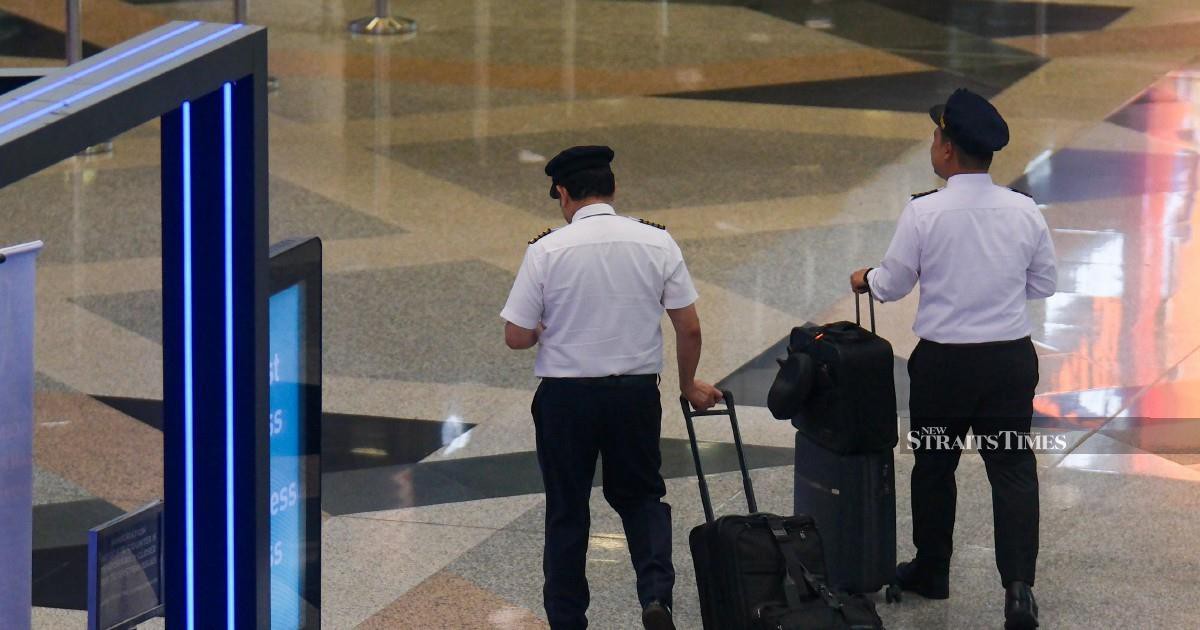
Malaysia Corruption Watch has used the recent detention of a pilot discovered carrying drugs in Indonesia as a catalyst for broader scrutiny of security protocols at Kuala Lumpur International Airport, arguing that investigators should prioritise identifying institutional weaknesses over determining which agency bore responsibility for the oversight.
The anti-corruption watchdog's intervention reflects growing concerns about potential gaps in the airport's layered security architecture. Rather than engaging in bureaucratic finger-pointing between the various agencies tasked with airport operations and security, MCW contends that the incident provides an opportunity to conduct a comprehensive audit of how effectively KLIA's multiple checkpoint systems function in concert to prevent contraband from leaving the country.
This stance carries particular significance for Malaysia's reputation in international aviation circles and its broader standing on narcotics enforcement. The smuggling incident underscores that detection failures at a major hub airport can have far-reaching consequences, extending beyond national borders and reflecting on the country's commitment to controlling illicit substance trafficking. For regional stakeholders and international aviation authorities, such breaches signal potential vulnerabilities in the screening procedures that protect the integrity of regional travel networks.
MCW's recommendation aligns with recognised best practice in institutional reform, which emphasises systemic improvement over culpability assignment when investigating security lapses. The philosophy underpinning this approach acknowledges that individual agencies operating within flawed systems often struggle to perform optimally, regardless of their operational competence or dedication. By focusing investigations on the interconnections between different security layers—whether customs inspections, baggage screening, or personnel vetting—authorities can identify where information sharing breaks down or where procedural gaps allow prohibited items to slip through.
The pilot's arrest in Indonesia, rather than interception at KLIA, represents a significant operational failure with potential diplomatic dimensions. That a commercial pilot successfully transported narcotics through one of Southeast Asia's busiest international airports and only faced detection in a neighbouring country suggests either inadequate screening protocols, insufficient coordination between security agencies, or both. This is particularly concerning given KLIA's status as a major regional aviation hub serving millions of passengers annually and connecting Malaysia to global networks.
The case also illuminates how security vulnerabilities can extend beyond the departure point. If a passenger or crew member can board an aircraft without detection at their origin airport, the enforcement burden shifts to destination countries, potentially straining diplomatic relations and creating friction between nations attempting to collaborate on transnational crime prevention. For Malaysia, ensuring robust screening at KLIA protects not only national security interests but also maintains cooperative relationships with neighbouring countries tasked with addressing spillover consequences.
MCW's call for systematic rather than punitive investigation acknowledges a reality that institutional arrangements at major airports involve multiple stakeholders with overlapping jurisdictions. The Malaysian Aviation Commission, customs authorities, the Royal Malaysian Police, airport management, and airline operators all contribute to security frameworks. When failures occur, determining which single entity bears ultimate responsibility often proves less productive than mapping the precise points where the system fractured and why institutional safeguards failed to activate.
From a Southeast Asian perspective, KLIA's security performance matters beyond Malaysia's borders. The airport functions as a crucial node in regional aviation networks, and any compromises in its screening procedures potentially affect travellers and security operations across Thailand, Singapore, Indonesia, and beyond. Countries in the region increasingly share intelligence and operational data on trafficking and security threats, making KLIA's operational integrity a collective regional concern rather than merely a national one.
Implementing MCW's recommendation would likely involve comprehensive reviews of several operational domains. Technology assessments could determine whether scanning equipment meets current international standards. Procedural audits might reveal whether written security protocols are being followed consistently across shifts and terminals. Training evaluations could assess whether personnel responsible for screening fully understand contraband identification protocols. Inter-agency communication reviews could identify information silos that prevent security relevant intelligence from reaching personnel making go or no-go decisions on travellers.
The watchdog's intervention also carries implications for how Malaysia frames its anti-corruption and good governance narrative internationally. By prioritising systematic improvement over blame assignment, MCW positions the country as mature in its approach to institutional accountability, focusing on forward-looking remediation rather than backward-looking punishment. This framing appeals to international stakeholders invested in robust governance standards and demonstrates that Malaysian institutions can conduct honest assessments of operational shortcomings.
Looking ahead, MCW's advocacy suggests that the investigation's findings could yield broader security improvements applicable across Malaysia's airport network. Lessons identified at KLIA regarding screening effectiveness, inter-agency coordination, or training protocols could inform enhanced standards at other major Malaysian aviation hubs, creating cumulative improvements in national capacity for detecting and preventing contraband movement.
The pilot's case ultimately serves as a diagnostic opportunity rather than merely a scandal demanding accountability theatre. By heeding MCW's counsel to examine structural vulnerabilities comprehensively, Malaysian authorities can transform a specific enforcement failure into a platform for institutional strengthening that benefits not only national security objectives but also regional aviation integrity and cooperative enforcement frameworks across Southeast Asia.

