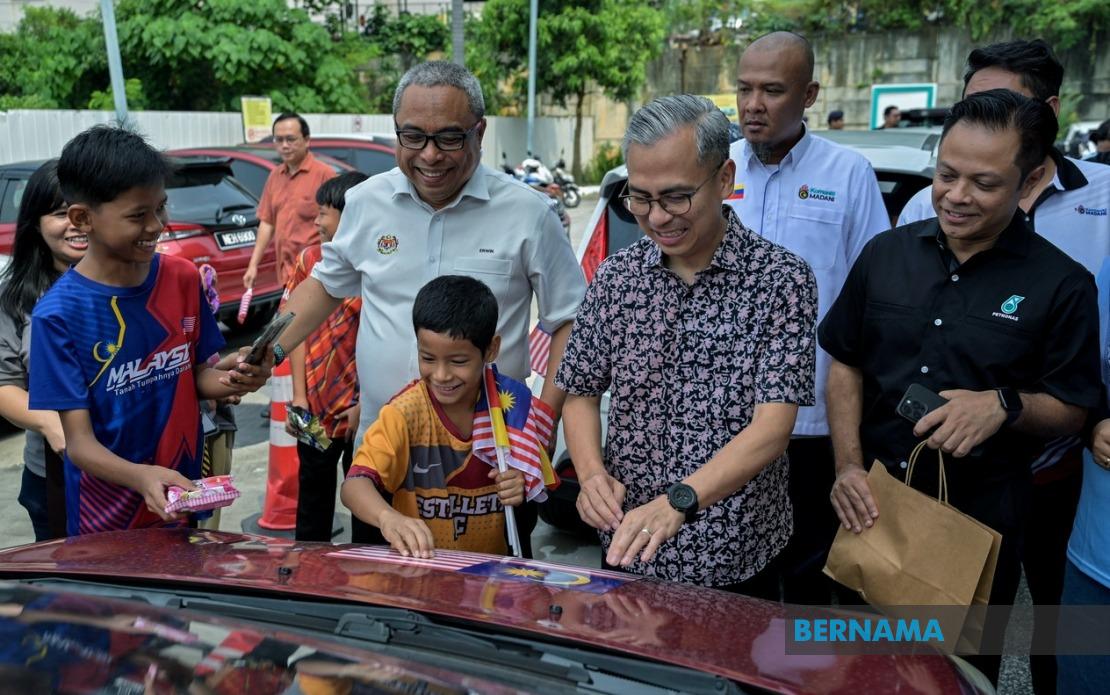
The Borneo Convention Centre Kuching in Sarawak has been selected as the venue for Malaysia Day 2026, Communications Minister Datuk Seri Fahmi Fadzil confirmed on Friday. The decision emerged from the inaugural preparatory meeting for the nationwide celebration, held in conjunction with Sarawak Minister for Tourism, Creative Industry and Performing Arts Datuk Seri Abdul Karim Rahman Hamzah, who serves as co-chairman of the commemorative event.
Fahmi expressed confidence in the suitability of the BCCK, highlighting that venue assessments had determined it possessed adequate space and facilities befitting the scale of Malaysia Day festivities. He drew parallels with the previous year's celebrations, noting that the Kuching venue matched the capacity and layout standards demonstrated by the PICCA Convention Centre in Butterworth, which hosted the 2025 Malaysia Day event successfully. This comparison suggests organisers have prioritised consistent quality and accessibility across different state venues.
The selection of Kuching carries particular significance for Malaysia Day observance, given that Sarawak and Sabah form integral components of the nation's federation narrative. Malaysia Day, observed on 16 September each year, commemorates the formation of the Malaysian federation in 1963, when Malaya, Singapore, Sarawak, and Sabah united. Hosting the 2026 celebration in Sarawak elevates the visibility of the East Malaysian states' historical role in national formation, a symbolic gesture that reinforces the inclusive nature of federal identity across peninsular and island Malaysia.
Organisational momentum for the event appears robust. Fahmi disclosed that subsequent coordination meetings have been scheduled, with the next gathering set for 24 August to deliberate further implementation details. This structured timeline indicates that planners are maintaining orderly progress towards fulfilling logistical requirements. Early engagement with regional authorities and venue stakeholders typically improves execution quality and reduces last-minute complications.
Beyond Malaysia Day preparations, the ministry has also secured commitments regarding National Day celebrations scheduled for 31 August in Putrajaya. Prasarana Malaysia Bhd, the state-owned public transport operator, has pledged to extend service coverage to 24-hour operations throughout the duration of festivities. This represents an operational escalation from previous years, addressing a longstanding accessibility challenge that has historically constrained public participation.
The commitment to round-the-clock public transport reflects administrative recognition that attendance difficulties have dampened turnout at federal territory celebrations. By enabling late-night returns home, authorities remove a significant logistical barrier for out-of-town visitors who might otherwise avoid the lengthy commute from Putrajaya. Families with school-age children, working professionals, and elderly attendees may particularly benefit from extended transport schedules that align with diverse departure preferences.
The transport expansion represents broader infrastructure modernisation initiatives outlined by Fahmi, indicating that multiple facility upgrades are underway across Putrajaya venues. These concurrent improvements—spanning transport, accommodation, parking, and accessibility features—suggest a comprehensive approach to enhancing the visitor experience. When coordinated effectively, such investments can materially increase public engagement with national commemorative events, strengthening civic participation and national consciousness.
For Malaysian readers and Southeast Asian observers, the Kuching selection underscores the federal government's commitment to rotating major celebrations geographically. Such rotation acknowledges regional contributions to national identity and distributes economic benefits arising from large-scale events across multiple state economies. Sarawak tourism and hospitality sectors stand to benefit from increased domestic visitor traffic during the celebration period.
The decision also reflects coordination between federal authorities and state governments, demonstrating federalism functioning at a practical administrative level. Fahmi's engagement with Abdul Karim Rahman Hamzah in joint planning arrangements illustrates the collaborative governance model necessary for managing nationwide events spanning multiple jurisdictions. Effective federal-state cooperation in event management often generates broader institutional trust and smoother policy implementation across other administrative domains.
As Malaysia continues navigating post-pandemic recovery, strategic deployment of national celebrations to stimulate domestic tourism and strengthen patriotic engagement serves multiple policy objectives simultaneously. The Kuching venue selection and enhanced Putrajaya transport infrastructure both exemplify how commemorative events function as instruments for broader developmental and integrative national goals, particularly within Malaysia's federal framework.

