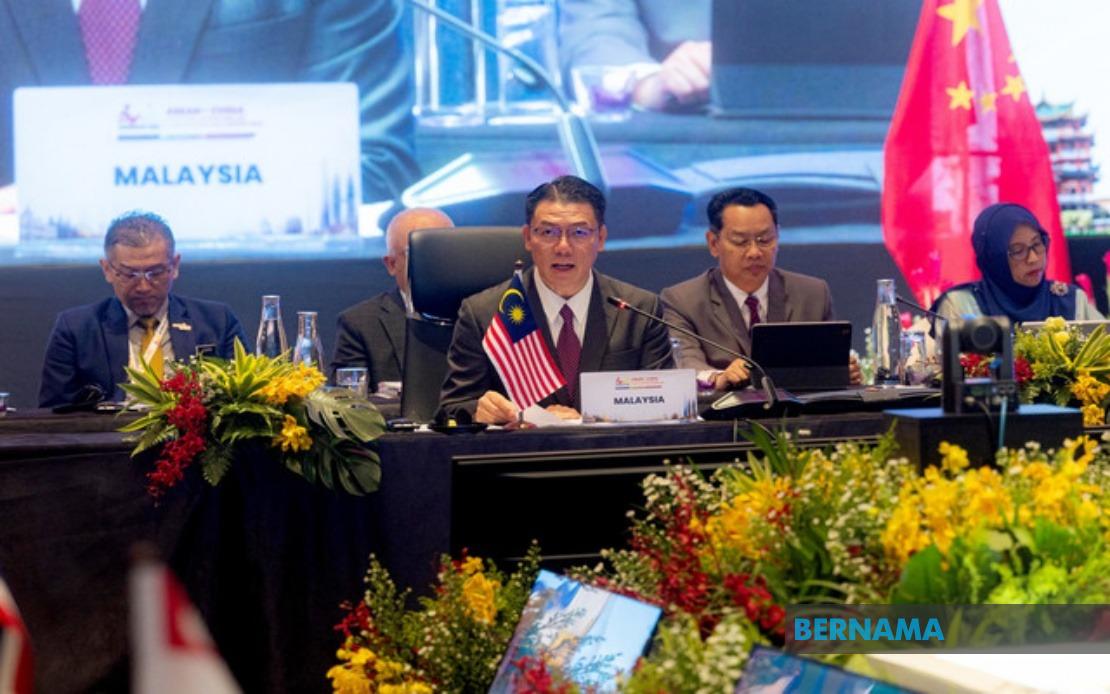
The ASEAN-China Ministerial Roundtable Conference on Construction and Housing (ACMROCH) 2026, held in Ipoh, represents a significant commitment to tackling one of Southeast Asia's most pressing development challenges. The conference brings together approximately 300 participants from 11 ASEAN member states alongside China, creating a multilateral platform where ministers and senior officials can coordinate responses to rapid urbanisation, housing shortages, and the need for climate-resilient urban infrastructure. This gathering underscores recognition that the region's future livability depends on coordinated action across national borders, with solutions developed and implemented in tandem across the ASEAN-China framework.
Housing and Local Government Minister Nga Kor Ming positioned the conference within the broader context of the UN-Habitat agenda, emphasising that ACMROCH 2026 aligns Malaysia's urban development trajectory with global sustainability standards. Malaysia currently holds the presidency of the UN-Habitat Assembly, a role that amplifies the nation's influence in shaping international discourse on human settlements. By linking the regional roundtable to UN-Habitat's mission of building sustainable, inclusive, and resilient cities, Malaysia is effectively channelling international best practices and normative frameworks into practical Southeast Asian solutions. This alignment signals that the region intends to move beyond ad-hoc development approaches toward evidence-based, internationally benchmarked strategies.
The conference operates around three interconnected pillars that reflect the complexity of modern urban governance. Sustainability demands that cities expand in ways that protect environmental systems while prioritising human welfare. Quality housing goes beyond mere shelter provision; it encompasses safe, dignified living conditions accessible to diverse income groups. Cohesive communities represent the social dimension—ensuring that urban growth strengthens rather than fractures social bonds and creates spaces where residents feel invested in collective wellbeing. These three elements are not separate concerns but mutually reinforcing components of a development model that rejects the false choice between economic growth and social wellbeing.
Within this tripartite framework, four operational priorities have been identified to drive implementation. Energy-efficient and climate-responsive housing addresses the reality that Southeast Asia faces intensifying heat stress and weather volatility; buildings designed with passive cooling, renewable energy integration, and water management represent both climate adaptation and long-term economic efficiency. Value-driven housing coupled with inclusive urban growth tackles the affordability crisis that afflicts nearly all regional cities, where rapid price inflation has locked lower-income residents out of formal housing markets. Resilient urban services and sustainable infrastructure recognise that cities require robust foundations—water systems, waste management, transport networks, and digital connectivity—that can withstand climate shocks and accommodate population growth. Fostering cohesive communities and liveable neighbourhoods emphasises that successful cities are more than efficient machines; they must function as human environments where social interaction, cultural expression, and shared identity flourish.
The demographic context lending urgency to this conference is striking. Globally, urbanisation has reached 57 percent, but Asia's experience is far more dramatic. The continent now houses more than half of the world's urban population, with the regional urbanisation rate exceeding 54 percent. Within this broader Asian trend, specific national trajectories illustrate the acceleration of urban concentration. China has achieved 67 percent urbanisation, reflecting decades of state-directed urban expansion and rural-to-urban migration. Malaysia stands at 78 percent, among the highest in the region, indicating that the nation is already deeply embedded in an urban development pattern where the majority of residents depend on functioning metropolitan systems.
This concentration creates cascading pressures across multiple systems simultaneously. Infrastructure networks designed for smaller populations face strain as demand for electricity, water, and transport exceeds capacity. Housing stocks, particularly affordable units, contract as land prices spike and construction costs rise. Energy grids must serve expanding populations while transitioning away from fossil fuels to meet climate commitments. These pressures are not theoretical; they manifest in everyday experiences—congested roads, water shortages during dry seasons, inadequate public housing, and environmental degradation. The challenge is no longer a distant policy concern but an immediate arithmetic problem affecting hundreds of millions of people daily across the region.
Nga articulated Malaysia's own approach through the lens of Malaysia MADANI, the government's development philosophy that places human dignity and ethical governance at the centre of policy-making. This framework rejects technocratic models that treat citizens as inputs to economic growth; instead, it insists that development must be measured by whether it improves human lives, creates conditions for joy and security, and strengthens community bonds. Applied to urban development, this philosophy translates into cities designed for people rather than vehicles, public spaces that foster interaction, and housing that reflects cultural values while meeting contemporary standards. The philosophy finds domestic expression in the Thirteenth Malaysia Plan and alignment with the ASEAN Community Vision 2045, both of which prioritise people-centred development.
The international dimension of this effort should not be underestimated. By formalising cooperation through ministerial-level conferences, ASEAN and China are institutionalising knowledge-sharing, technical collaboration, and potentially coordinated investment in cross-border urban initiatives. Given the region's interconnected economies and increasingly mobile populations, lessons learned in one national context become relevant across borders. Chinese expertise in rapid urban infrastructure development, ASEAN nations' experience with tropical climate adaptation, and Malaysia's specific achievements in managing urban growth at high density can all inform collective problem-solving. The conference structure—bringing together government actors, technical experts, and international partners—creates networks that may persist beyond formal proceedings.
Housing and Urban Rural Development Minister of China, Ni Hong's presence underscores Beijing's commitment to the partnership. China's interest extends beyond philanthropic concern; Southeast Asian development directly affects Chinese economic interests through trade, investment, and regional stability. Sustainable, liveable cities across ASEAN create markets for goods and services, stable environments for Chinese business operations, and reduced incentives for destabilising migration or social unrest. This convergence of interests—where China's strategic goals align with ASEAN nations' development aspirations—provides a foundation for sustained cooperation even amid broader geopolitical tensions.
The conference's focus on quality housing deserves particular attention within Malaysian context. Housing affordability has become a political flashpoint, with many citizens unable to access homeownership despite economic growth. The affordability crisis reflects multiple factors: land scarcity in urban areas, regulatory constraints on density, construction cost inflation, and financing structures that favour developers over end-users. By elevating housing to ministerial priority status within a regional framework, Malaysia signals that solutions require systemic reform rather than marginal adjustments. The conference potentially generates pressure for policy innovations—whether regulatory, financial, or architectural—that individual governments might hesitate to pursue unilaterally.
Looking forward, ACMROCH 2026's impact depends on translating ministerial commitments into concrete action at national and municipal levels. Conference outcomes must move beyond aspirational declarations toward implementation mechanisms: funding arrangements, technical standards, capacity-building programmes, and accountability frameworks. The involvement of senior government officials and delegates—not just symbolic participation—suggests serious intent to embed conference outcomes into policy processes. Whether subsequent follow-up mechanisms will emerge to monitor progress remains an open question, but the presence of two major powers alongside multiple ASEAN nations indicates that the forum has achieved sufficient legitimacy to warrant institutionalisation.
For Malaysian readers and policymakers, the conference represents both opportunity and accountability. Malaysia's leadership through the UN-Habitat presidency and its role as ACMROCH 2026 host position the nation as a thought leader in urban development. Yet this visibility also invites scrutiny; Malaysia's own urban challenges—housing affordability, environmental degradation, traffic congestion, and community fragmentation in rapidly expanding suburbs—remain unresolved. The gap between aspirational rhetoric about people-centred cities and the lived experience of ordinary residents demands that domestic implementation matches international commitment. The conference may generate momentum for structural reforms that acknowledge housing not as a commodity for speculative profit but as a fundamental human need deserving policy priority.

