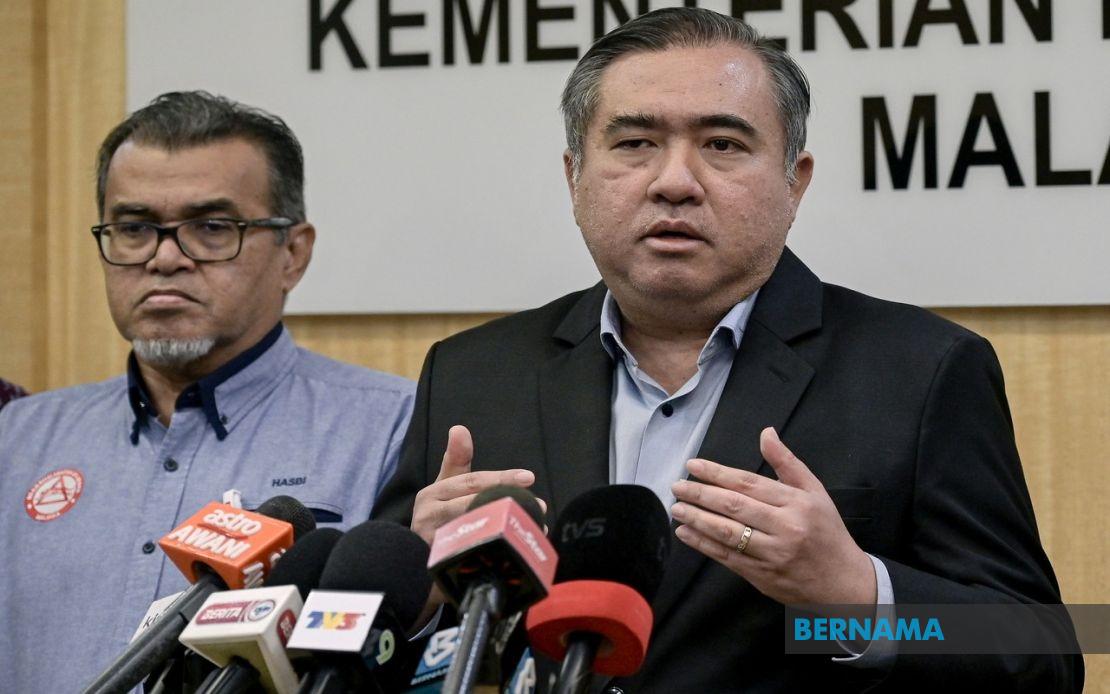
Transport Minister Anthony Loke has moved to quell international speculation about governance structures at Malaysia's major ports, asserting that the government does not intervene in management appointments as long as shareholding requirements remain satisfied. Speaking in Putrajaya on July 17, Loke addressed mounting questions surrounding the recent leadership transition at MMC Ports Holdings Bhd, emphasising that the distinction between ownership and operational control remains a cornerstone of Malaysia's port management policy.
The comments emerged in response to international media reports detailing the appointment of Sultan Ahmed Sulayem, the former chairman and chief executive officer of DP World, to the position of executive chairman at MMC Ports Holdings Bhd. This move followed the abrupt departure of group chief executive officer Azman Shah Mohd Yusof and has attracted attention from regional and global observers monitoring Malaysia's strategic infrastructure landscape. By clarifying the government's regulatory framework, Loke sought to normalise such transitions while reinforcing adherence to ownership regulations.
At the heart of Malaysia's approach lies a clearly defined ownership threshold designed to safeguard national interests without constraining operational flexibility. The government mandates that companies holding concessions or controlling strategic national assets, particularly ports, must maintain at least 51 per cent Malaysian ownership. This policy architecture allows foreign expertise and capital to participate in port management while ensuring that ownership and ultimate decision-making authority reside with Malaysian entities. Loke outlined this framework as the sole dimension of government regulation in such arrangements, distinguishing between shareholding oversight and day-to-day management.
The separation of ownership control from operational management reflects a pragmatic approach recognising that port efficiency and competitiveness depend on attracting international expertise. Malaysia's port sector benefits from the talent and experience that foreign professionals bring to senior leadership roles, a reality evidenced by existing arrangements across the country's port network. Rather than imposing blanket restrictions on executive appointments, the government permits companies to recruit the most qualified candidates available, provided that the Malaysian ownership anchor remains fixed.
Loke pointed to the Port of Tanjung Pelepas as a concrete example of this principle in practice. The southern Malaysian port operates under the leadership of a foreign national chief executive officer, demonstrating that such arrangements function smoothly within the existing regulatory framework. This precedent underscores the government's confidence in allowing foreign-led management at strategically important facilities, provided underlying ownership remains Malaysian. The Port of Tanjung Pelepas continues to serve as a vital transhipment hub for Southeast Asian maritime traffic, suggesting that foreign leadership poses no inherent conflict with national interests when ownership safeguards function properly.
Regarding the specific situation at MMC Ports Holdings Bhd, Loke indicated that the transport ministry had not received formal notification of any changes in share ownership structure. This absence of notification carries significance, as the government requires companies to inform relevant authorities, including through the Public-Private Partnership Unit, whenever shareholding patterns shift. The minister's statement suggested that without such notification, he could not confirm whether ownership modifications had occurred or whether current arrangements remained intact. This procedural requirement serves as a crucial monitoring mechanism, ensuring visibility over the national strategic asset base.
The appointment of foreign nationals to executive positions at Malaysian ports reflects broader regional patterns in Southeast Asia's shipping and logistics industries. Singapore, Thailand, and Indonesia similarly employ international talent in port leadership roles, recognising that maritime excellence demands specialised expertise often sourced globally. Malaysia's positioning as a transhipment hub competing for regional cargo volumes necessitates operational standards matching international benchmarks. Permitting experienced professionals like Sulayem to lead port operations enhances competitiveness while the 51 per cent ownership requirement preserves Malaysian strategic control.
Sulayem's background at DP World, a Dubai-based multinational port operator managing facilities across multiple continents, brings extensive experience in container terminal operations, intermodal connectivity, and digital port innovations. His appointment to lead MMC Ports Holdings Bhd suggests the company seeks to enhance operational efficiency and international positioning. For Malaysia's shipping community and exporters dependent on port services, such leadership transitions potentially signal investments in service quality and technological upgrades. However, clarity regarding the underlying ownership structure remains important for stakeholders assessing the stability and direction of the port operator.
The distinction Loke drew between regulatory oversight and corporate governance illustrates Malaysia's calibrated approach to strategic infrastructure. Government involvement focuses narrowly on ownership preservation rather than extending into personnel decisions, capital allocation, or strategic planning. This framework acknowledges that competent management requires autonomy to recruit talent, restructure operations, and respond to market conditions. By maintaining this boundary, the government avoids micromanaging port operations while retaining effective oversight through ownership requirements and concession agreements.
For Malaysian businesses reliant on port services, and for regional stakeholders evaluating Malaysia's port ecosystem, clarity about management transitions carries practical implications. Port operators under stable, competent leadership typically invest in infrastructure improvements, adopt efficiency-enhancing technologies, and maintain competitive pricing. The appointment of experienced international executives, within Malaysia's ownership framework, potentially supports these objectives. Nevertheless, the transport ministry's statement emphasises that formal notification procedures exist to ensure transparency, suggesting that stakeholders should expect official communication regarding significant corporate changes.
The broader context encompasses Malaysia's role as a regional maritime hub facing competition from ports in Singapore, Thailand, and Indonesia. Port competitiveness depends on factors including infrastructure quality, operational efficiency, technological adoption, and strategic positioning. Permitting qualified international professionals to lead Malaysian port operations serves these competitive objectives. Simultaneously, the 51 per cent ownership requirement ensures that strategic control and wealth generation remain anchored in Malaysia. This formula attempts to balance openness with protection, pragmatism with sovereignty.
Loke's clarification addresses a tension inherent in modern port management: the need for global expertise alongside national control. His statement suggests the government trusts in this model's sustainability, evidenced by years of operational experience across multiple Malaysian ports. For the transport ministry, regulatory vigilance focuses on shareholding transparency and concession compliance rather than executive appointment procedures. This approach permits port operators flexibility to pursue operational excellence while government oversight preserves Malaysian interests at the ownership level, a balance that Loke presented as aligned with contemporary port industry practices globally.

