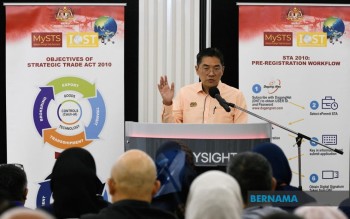
Malaysia's government is escalating its push to reinforce the electrical and electronics sector as a cornerstone of economic strategy, underscoring the nation's determination to remain a critical node in the world's technology supply chain. Deputy Investment, Trade and Industry Minister Sim Tze Tzin articulated this commitment at an industry engagement programme in Penang, signalling that the ministry recognises the sector's outsized importance to Malaysia's economic resilience and export competitiveness at a time when global supply chains face unprecedented disruption and restructuring.
The electrical and electronics industry, anchored by semiconductor manufacturing, represents far more than a single industrial vertical for Malaysia. It encompasses a sprawling ecosystem that includes high-tech sensor production, telecommunications components, and advanced assembly and testing operations that collectively position the country as an irreplaceable link in the technology world's nervous system. Penang and the Northern Region have evolved over decades into one of Asia's premier concentrations of electronics manufacturing, hosting what Deputy Minister Sim characterised as hundreds of world-class technology manufacturers whose operations generate substantial foreign exchange earnings and skilled employment.
Semiconductor manufacturing and related high-value assembly processes hold particular strategic weight in this calculus. Malaysia's role in semiconductor assembly, testing, and packaging—the latter stages of chip production—makes the country indispensable to companies manufacturing everything from consumer electronics to automotive systems and industrial machinery. This positioning became increasingly visible during recent global chip shortages, which demonstrated both the vulnerability of concentrated supply chains and Malaysia's indispensability as a geographically diversified production hub. The government's emphasis on this sector reflects clear-eyed recognition that semiconductor mastery will determine economic outcomes across the coming decade.
Beyond pure manufacturing prowess, Sim emphasised that the Ministry of Investment, Trade and Industry is sharpening focus on export control compliance and the regulatory frameworks that govern technology trade. This dimension carries particular significance given intensifying geopolitical competition over semiconductor technology and international efforts to restrict the flow of advanced chips and manufacturing knowledge to certain nations. Malaysia must navigate these choppy waters carefully, ensuring that its manufacturers comply with international export control regimes—particularly those administered by the United States and its allies—while simultaneously protecting the country's reputation as a dependable, trustworthy investment destination. The calculus is delicate: overly strict compliance risks alienating customers; insufficient rigour could trigger sanctions or reputational damage that imperils the entire sector.
The ministry's initiative unfolds against a backdrop of robust trade performance in the first half of the year, a development that Sim sought to leverage for broader economic and social objectives. His remarks urging companies to translate strong financial results into improved employee compensation—higher salaries and bonuses—signal an understanding that manufacturing sector growth only justifies policy support if workers experience tangible benefits. This framing also addresses simmering concerns about wage stagnation in Malaysian manufacturing despite decades of export-led growth. By publicly calling on companies to share prosperity, the government attempts to build a political coalition around continued investment in electronics manufacturing, ensuring that blue-collar workers and their families perceive direct benefit from the sector's expansion.
The Strategic Trade Act Customer Day and the Northern Region Clinic programme that prompted Sim's remarks represent the granular machinery through which government supports electronics manufacturers. Attended by 86 industry participants, the clinic delivers direct advisory services on product classification, permit applications, interactions with licensing agencies, and internal compliance audits. These services address the regulatory complexity that manufacturers must navigate—complexity that can impede competitiveness if not managed efficiently. By offering centralised guidance and reducing friction in administrative processes, MITI seeks to lower the non-manufacturing costs that businesses face, thereby improving their profitability and competitiveness relative to potential rival locations in Vietnam, Thailand, or Indonesia.
The government's strategic framing of the electronics sector also reflects broader Southeast Asian dynamics. The region is experiencing cautious relocation of manufacturing from China, driven by trade tensions, rising Chinese labour costs, and supply chain diversification imperatives among multinational corporations. Malaysia possesses genuine competitive advantages—established manufacturing ecosystems, skilled workforces, proximity to major markets, and political stability relative to certain competitors—that position it to capture a meaningful share of this relocation wave. However, these advantages are not immutable. Countries such as Vietnam and Indonesia are simultaneously investing heavily in electronics manufacturing capacity, luring multinational investment with incentives and infrastructure improvements. Malaysia's continued emphasis on the sector signals recognition that competitive complacency is not an option.
The emphasis on close collaboration between government and industry players reflects an implicit acknowledgment that Malaysia's electronics sector cannot rely on cost advantages alone to sustain competitiveness. Instead, the country must position itself as a comprehensive solution provider—offering not merely affordable labour and manufacturing capacity but also regulatory certainty, supply chain reliability, skilled management, and the institutional infrastructure necessary for companies to operate efficiently at scale. This narrative shift towards partnership and shared problem-solving represents a maturing of Malaysia's industrial policy, moving beyond simple tax incentives towards comprehensive ecosystem development.
Looking forward, MITI's strategy faces several headwinds that complicate the straightforward narrative of sector strengthening. Global semiconductor demand remains volatile, subject to economic cycles and inventory fluctuations that Malaysian manufacturers cannot fully control. Technological advancement continues to concentrate some of the most profitable semiconductor activities—design and advanced manufacturing—in the United States, South Korea, and Taiwan, leaving Malaysia positioned in lower-margin assembly and testing segments. Additionally, the push towards localising semiconductor manufacturing in Western countries, driven by supply chain security concerns, could eventually erode demand for offshore assembly capacity.
Despite these structural challenges, Malaysia's determination to reinforce its electronics sector reflects realistic assessment of available options. The country possesses neither the technological prowess to compete in cutting-edge chip design nor the labour cost advantages of less developed countries. Instead, the government is pursuing a middle path: leveraging existing manufacturing expertise and infrastructure while gradually upgrading the sector's technological sophistication and value-added components. This approach acknowledges that electronics manufacturing will remain central to Malaysia's economic model for at least the next decade, even as the sector's character and competitive dynamics evolve.
The government's public commitment to strengthening the electronics sector also sends important signals to multinational investors weighing location decisions. In a competitive marketplace where numerous countries seek similar manufacturing investments, explicit government support—manifested through regulatory streamlining, industry engagement programmes, and public emphasis—can influence marginal investment decisions. For Malaysia, where electronics manufacturing already represents a substantial portion of export earnings and manufacturing employment, this sustained commitment suggests that future investment will receive institutional backing and political protection, an assurance that matters to corporations making commitments spanning multiple years.
Ultimately, the Ministry of Investment, Trade and Industry's strategy to fortify Malaysia's electronics sector reflects both confidence in the sector's continued importance and anxiety about competitive pressures that could erode the country's position. The government is explicitly rejecting passive approaches in favour of active engagement with industry stakeholders, regulatory modernisation, and public messaging that reinforces Malaysia's commitment to technology manufacturing. Whether these efforts prove sufficient to maintain Malaysia's standing amid rapid technological change and shifting global supply chain architectures will significantly shape the nation's economic trajectory over the next decade.

