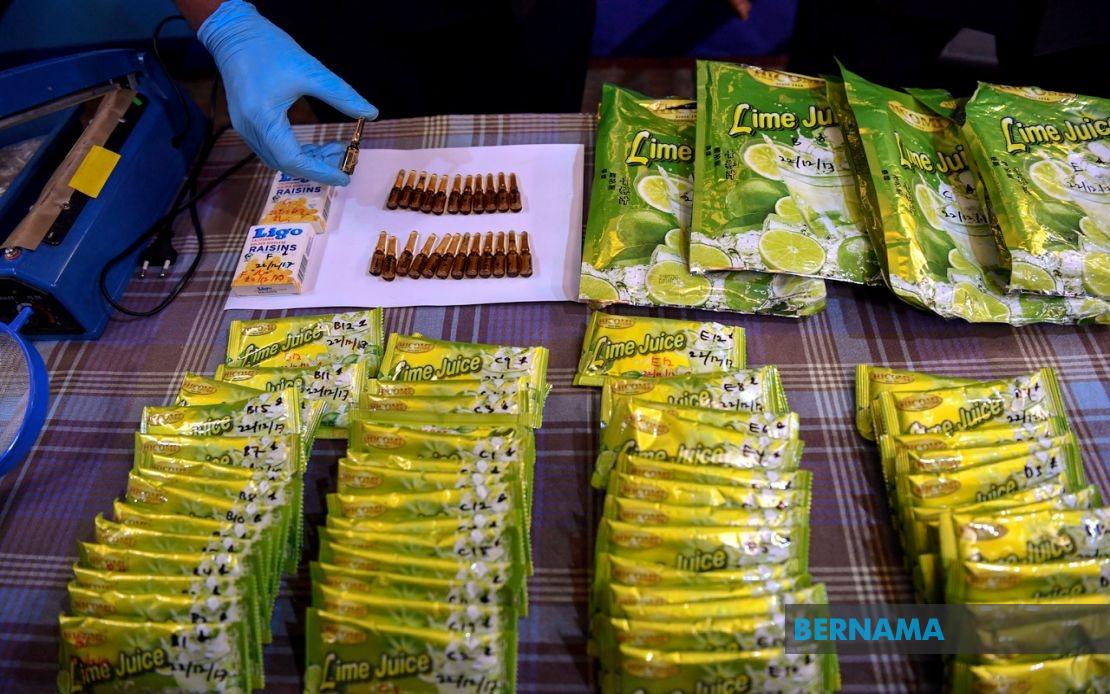
The Malaysian government has declared war on a rapidly expanding synthetic drug crisis that authorities say poses an unprecedented threat to public health and national security. Home Minister Datuk Seri Saifuddin Nasution Ismail warned of the escalating danger posed by methamphetamine, psychoactive pills colloquially known as "piu-piu," and fentanyl, which have become increasingly prevalent in domestic markets. These substances, he emphasised, carry exceptionally high addiction potential, pose fatal overdose risks, and have become entangled with organised crime and deteriorating social conditions across the country.
The scale of the problem has prompted drastic enforcement measures. Royal Malaysia Police recorded 238,704 arrests for synthetic drug-related offences between 2023 and June 2026, a figure that underscores both the magnitude of trafficking operations and the ministry's intensified policing efforts. These statistics reveal a concerning trend where synthetic drugs have fundamentally altered Malaysia's drug landscape, moving beyond traditional narcotics to encompass highly potent and chemically diverse substances that conventional enforcement frameworks struggled initially to address effectively.
Operational intensity has reached unprecedented levels with the Royal Malaysia Police spearheading coordinated campaigns including Op Tapis and Op Tapis Khas, which blanket urban centres, rural communities, and remote territories. These operations represent a departure from traditional narcotics enforcement by emphasising geographic comprehensiveness, recognising that synthetic drug distribution networks penetrate far beyond metropolitan areas. The police have partnered strategically with the National Anti-Drugs Agency and the Royal Malaysian Customs Department, creating an inter-agency framework designed to eliminate gaps that traffickers previously exploited.
Technology has become central to Malaysia's enforcement strategy. Drones equipped with surveillance capabilities now monitor suspected trafficking corridors and production facilities, while advanced camera networks provide real-time intelligence on distribution points. This technological modernisation reflects an understanding that traditional foot patrols and manual intelligence gathering cannot match the sophistication of criminal networks operating across state boundaries and utilising encrypted communications. The investment in surveillance infrastructure signals a long-term commitment to disrupting supply chains at multiple points.
Sarawak, where remote geography and porous borders create particular challenges, has become a focal point for enforcement efforts. Between January and early June 2026, authorities in the state arrested 7,097 individuals connected to drug offences, including 342 traffickers and 5,441 users. Simultaneously, police seized 418.01 kilogrammes of drugs valued at RM53.73 million, demonstrating that despite geographic challenges, Sarawak remains under sustained operational pressure. The seizures and arrests indicate that while demand and trafficking persist, law enforcement presence has become consistently visible throughout the state.
The legal framework governing drug enforcement is undergoing significant evolution. The government is actively considering amendments to the Dangerous Drugs Act 1952 to formally classify New Psychoactive Substances, including emerging synthetic variants and fentanyl analogues, within the Act's legal schedules. This legislative adaptation addresses a critical vulnerability where new chemical formulations could theoretically escape existing penalties because they differed slightly from scheduled substances. By updating statutes proactively rather than reactively, Malaysia seeks to eliminate the cat-and-mouse dynamic where chemists synthesise new compounds that technically fall outside existing prohibitions.
Confiscation of criminal assets has emerged as a parallel enforcement strategy designed to strike at economic incentives driving trafficking. During the first half of 2026, authorities in Sarawak alone seized syndicate assets worth RM1.95 million, representing capital that would otherwise fund expansion of distribution networks. Additionally, 13 individuals were detained under the Dangerous Drugs (Special Preventive Measures) Act 1985, a provision enabling preventive custody of high-risk offenders before they commit additional crimes. These measures acknowledge that incarceration alone proves insufficient without disrupting the financial machinery sustaining trafficking organisations.
Prevention and community engagement form the complementary pillar of Malaysia's drug strategy. Between 2023 and June 2026, authorities conducted 1,144 drug prevention programmes nationwide, reaching diverse communities with educational content addressing synthetic drug dangers. This preventive approach recognises that enforcement cannot succeed without reducing demand and building public awareness of emerging threats. Community policing models emphasise partnerships between police and residents, transforming neighbourhoods into zones where residents actively report suspicious activity rather than remaining passive observers of criminal operations.
Forensic capabilities have undergone substantial enhancement to detect and characterise new synthetic drugs entering Malaysian territory. Laboratory profiling of fentanyl analogues and synthetic opioids enables rapid identification of novel compounds, accelerating enforcement response times significantly. When law enforcement can identify unknown substances within hours rather than weeks, investigators can correlate seizures across jurisdictions, trace supply chains more effectively, and identify production facilities with greater precision. This scientific infrastructure development represents recognition that fighting chemistry with enforcement alone proves futile.
The synthetic drug crisis intersects with Malaysia's broader security concerns given trafficking networks' proven connections to organised crime syndicates and cross-border criminal operations. Unlike conventional narcotics requiring cultivation or straightforward chemical extraction, synthetic drugs can be manufactured in small clandestine laboratories using precursor chemicals and technical knowledge, making them inherently more difficult to interdict at source. Malaysian authorities consequently face adversaries capable of rapid adaptation, distribution innovation, and exploitation of geographic vulnerabilities particularly acute in east Malaysian states sharing maritime boundaries with countries experiencing acute drug production problems.
The enforcement intensity documented in parliamentary responses signals political commitment at the highest levels. Home Ministry acknowledgement of the problem's severity, resource allocation to operations, legislative reform initiatives, and cross-agency coordination demonstrate that synthetic drugs have moved from peripheral concerns to central security priorities. Whether these escalated measures will reverse trafficking trends or merely manage the damage remains uncertain, though the comprehensive approach spanning enforcement, prevention, legal reform, and asset seizure suggests policymakers recognise that single-faceted solutions will prove inadequate against adaptable criminal networks.
For Malaysian communities and residents across Southeast Asia, this evolving drug landscape carries profound implications. Synthetic substances present health risks substantially exceeding traditional narcotics, with overdose potential and addiction severity creating humanitarian dimensions transcending criminal justice frameworks. The successful deployment of enhanced enforcement, community engagement, and legislative reform in Malaysia potentially offers regional models for neighbouring countries confronting identical synthetic drug challenges. Conversely, if trafficking networks prove resilient despite intensified pressure, Malaysia may face continued battles requiring sustained resource commitments and evolving strategies as criminal chemists develop new compounds outpacing legal classification processes.

