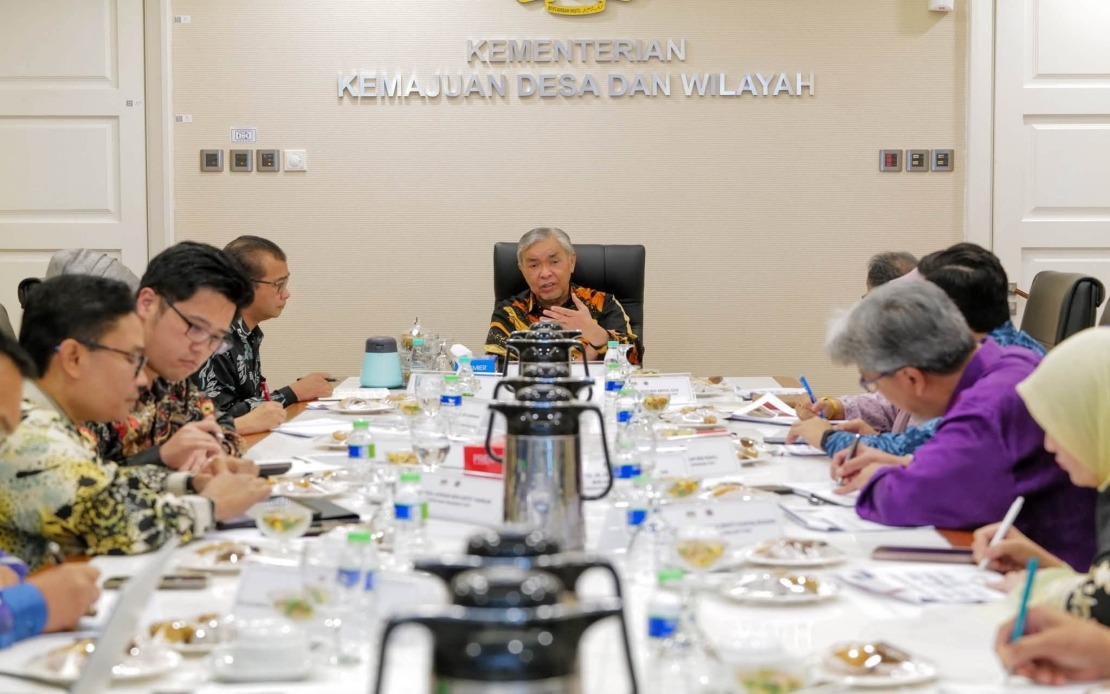
Malaysia is intensifying its push to transform technical and vocational education through the establishment of a Strategic TVET 2.0 Task Force covering the 2026-2035 period, alongside ten specialized strategic committees. Deputy Prime Minister Datuk Seri Dr Ahmad Zahid Hamidi, who chairs the National TVET Council, unveiled the initiative during an official statement in Putrajaya, signalling the government's determination to position vocational training as a cornerstone of the nation's economic competitiveness.
The structural overhaul represents a significant shift in how Malaysia approaches technical and vocational education policy. Rather than relying on disparate departmental efforts, the new framework consolidates responsibility under a unified task force headed by UCSI University's president emeritus, Emeritus Professor Datuk Dr Siti Hamisah Tapsir. This reorganization signals recognition that Malaysia's vocational sector requires coordinated, long-term vision to remain relevant amid rapid technological change and evolving labour market demands.
Ahmad Zahid emphasized that the new arrangements will deliver TVET initiatives through more organized, integrated channels with measurable outcomes. He stressed that the government intends to strengthen policy coordination at the national level, moving away from fragmented approaches toward strategic alignment between educational institutions, industry players, and government agencies. This comprehensive methodology aims to ensure that Malaysia's vocational sector remains responsive to both current employer needs and anticipated future economic challenges.
The ten strategic committees address different dimensions of vocational education ecosystem development. The TVET Governance and Institutional Reform Committee, chaired by Datuk Dr Asyraf Wajdi Dusuki, will focus on structural improvements and organizational effectiveness. The TVET Industry and Employers Committee, led by Datuk Khairul Azwan Harun, will strengthen connections between educational providers and the business community, ensuring curricula reflect real-world requirements. The TVET Financing and Sustainability Committee, headed by Ramelle Ashram Ramli, will address funding mechanisms crucial for expansion and quality maintenance across vocational institutions.
Notably, the task force includes dedicated focus on women's participation through the Women Empowerment in TVET Committee, chaired by Datuk Dr Masilla Kamalrudin. This reflects growing recognition that Malaysia's vocational sector must broaden its talent pool beyond traditional male-dominated demographics. Female participation in technical fields remains comparatively low across Southeast Asia, and targeted interventions through dedicated committees represent an acknowledgment that demographic barriers require deliberate policy response.
For Malaysian policymakers, the TVET 2.0 framework addresses persistent challenges that have constrained vocational education's perceived status and uptake. Historically, technical education has faced social stigma in Malaysia, with families often preferring academic pathways despite demographic trends suggesting insufficient university places for all school-leavers. Creating a more structured, government-backed institutional framework may help rebrand vocational training as a legitimate pathway to skilled employment rather than a second-tier option.
The initiative also reflects Ahmad Zahid's portfolio as Minister of Rural and Regional Development. TVET expansion carries particular significance for rural Malaysia, where vocational training can provide pathways to meaningful employment without requiring costly relocation to urban centres. By embedding rural development priorities within the TVET agenda, the government potentially addresses both skills development and geographical equity simultaneously.
For regional context, Malaysia's vocational education revamp occurs as neighbouring countries similarly upgrade technical training. Singapore, Thailand, and Vietnam have expanded vocational offerings with stronger industry integration, and Malaysia risks falling behind if its TVET sector remains less coordinated or responsive. The Strategic TVET 2.0 Task Force represents an effort to match regional competitors' institutional sophistication and systematic approach.
The ten-year timeframe extending through 2035 suggests the government anticipates sustained commitment rather than ad hoc initiatives. This extended planning horizon allows for curriculum development cycles, infrastructure investment, educator training programmes, and cultural shifts in how Malaysians perceive vocational education. However, implementation success will depend on whether committees receive adequate funding, political support across economic cycles, and meaningful industry participation rather than symbolic engagement.
The framework's emphasis on creating a responsive TVET ecosystem acknowledges that Malaysia's future economic competitiveness depends partly on workforce agility. Industries from manufacturing to services increasingly require workers capable of adapting to technological disruption, and vocational education offers faster retraining pathways than university-based approaches. By aligning TVET more closely with employer feedback through dedicated committees, Malaysia aims to produce graduates whose skills remain current rather than obsolete within years.
Challenges remain substantial. Vocational institutions often struggle with outdated facilities and equipment relative to rapidly evolving industry standards. Attracting qualified instructors who possess both technical expertise and teaching capability proves persistently difficult. The reputation challenge—convincing Malaysian families that vocational pathways offer respectable career prospects—requires sustained effort beyond structural reorganization. Whether the Strategic TVET 2.0 Task Force generates sufficient momentum to overcome these entrenched barriers will become apparent through 2026 and beyond as implementation begins.
The announcement reflects broader MADANI governance priorities, with Ahmad Zahid framing TVET transformation as essential to developing Malaysia's human capital and maintaining economic dynamism. Success would position Malaysia as a regional leader in vocational education modernization while addressing domestic skills shortages that employers consistently cite as constraints on business expansion. The coming decade will test whether Malaysia's institutional redesign translates into measurable improvements in vocational education quality, industry alignment, and graduate employment outcomes.

