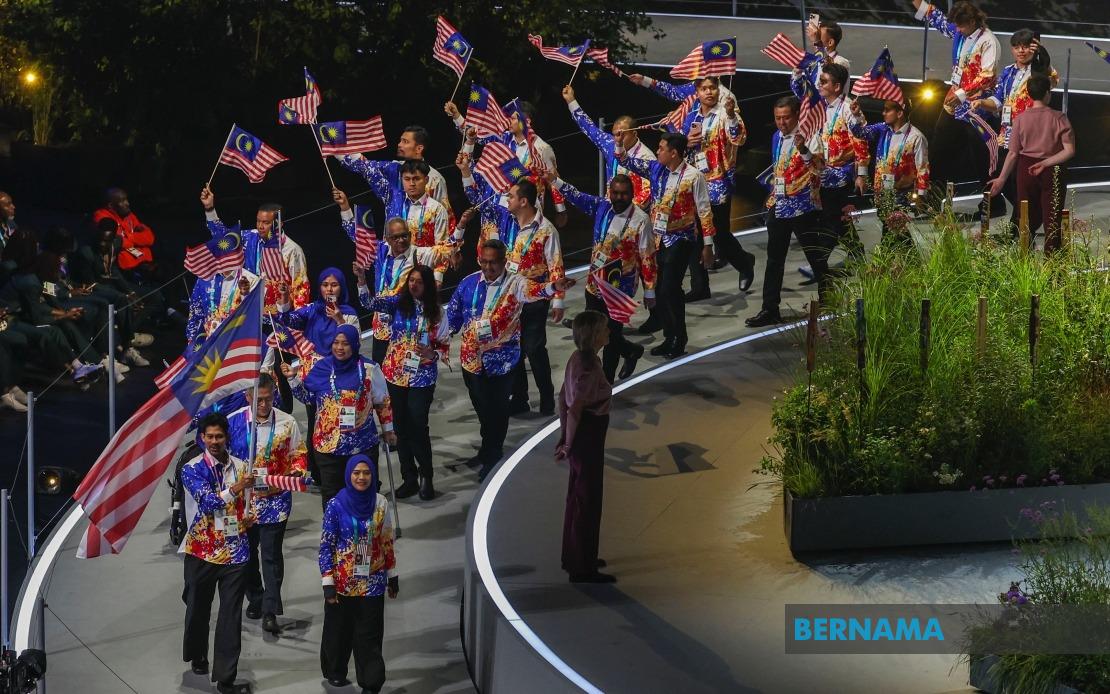
Malaysia's performance at the 2026 Commonwealth Games in Glasgow demonstrates that the country's approach to developing elite athletes is yielding tangible results on the world stage. As the Games conclude this week, the national contingent has already captured seven gold medals—exceeding the ministry's pre-competition projection of five golds—alongside three silver and three bronze medals. This outperformance against initial targets underscores a maturing sporting infrastructure that extends far beyond individual athlete talent, encompassing institutional support systems designed to nurture champions across multiple disciplines.
Youth and Sports Minister Dr Mohammed Taufiq Johari attributed the Glasgow success to a deliberate coordination architecture involving multiple government and quasi-government bodies working in concert. The achievement reflects contributions from the National Sports Council, National Sports Institute, Olympic Council of Malaysia, Paralympic Council of Malaysia, and the respective national sports associations that govern individual sports. This multi-stakeholder approach contrasts with earlier eras when Malaysian sports development relied more heavily on ad-hoc funding and individual initiative. The minister's emphasis on collaboration reveals recognition within the ministry that sustained international competitiveness requires institutional alignment rather than episodic intervention.
The minister extended formal congratulations to the entire Malaysian contingent, highlighting the personal investment required from athletes, coaches, and support staff to deliver medals at this competitive level. His public acknowledgement reflects a broader political understanding that sports achievement generates positive sentiment and national pride, particularly in constituencies where sporting success translates into grassroots inspiration. By framing the Glasgow results as collective rather than individual accomplishment, Dr Mohammed Taufiq positioned the ministry's role as facilitator of an ecosystem rather than as a centralised authority dictating outcomes.
The data reveals a balanced medal distribution, though the emphasis on exceeding gold targets suggests the ministry prioritises headline-grabbing victories. Seven golds, three silvers, and three bronzes total thirteen medals, a respectable haul for a contingent of Malaysia's size competing against larger Commonwealth nations. However, the specific callout of surpassing the five-gold projection indicates that gold medal counts influence public perception and political narrative around sports investment. This metric-driven approach mirrors strategies adopted by other Southeast Asian nations seeking to demonstrate return on public sporting expenditure.
Looking beyond Glasgow, Dr Mohammed Taufiq identified a succession of major international events that will test whether the current upward trajectory proves sustainable or represents a temporary peak. The 2026 Asian Games and Aichi-Nagoya 2026 Asian Para Games in Japan will provide immediate context for assessing Malaysian competitiveness within the Asian sporting ecosystem, where competition intensifies significantly compared to Commonwealth Games. The minister's specific mention of these events signals that the ministry has already commenced planning for these subsequent competitions, suggesting that Glasgow success should catalyse rather than conclude the current performance cycle.
The 2027 SEA Games and ASEAN Para Games, to be hosted in Malaysia, carry heightened political significance as a home competition. Dr Mohammed Taufiq's invocation of these Games appeared designed to create momentum and public expectation around domestic sports development. Hosting major regional competitions traditionally generates pressure on national teams to deliver medal performances, and the minister's forward-looking perspective suggests the ministry intends to leverage Glasgow's success as a foundation for enhanced performance at home. This sequential staging of major competitions through 2027 provides measurable benchmarks against which the ministry's performance will be evaluated.
The Glasgow Games concluded on August 1, but Malaysian athletes remained in competition through August 2, necessitating the minister's public call for continued national support during the final competition day. This appeal to ongoing patriotic sentiment maintained political and public focus on sports achievement even as the Games wound down. By urging Malaysians to maintain backing for the contingent, the minister kept the sporting narrative active and prevented premature declaration of success, recognising that final-day performances could alter the ultimate medal tally.
Dr Mohammed Taufiq's explicit commendation of chef de mission Datuk Awalan Abdul Aziz personalised leadership credit for the Glasgow operation. In Malaysian politics, publicly crediting operational leaders for success establishes clear lines of responsibility and accountability. This acknowledgement suggested that the ministry anticipated continued engagement with Awalan Abdul Aziz for forthcoming major competitions, indicating institutional continuity in mission leadership structures.
The minister's commitment to further strengthening the national sports ecosystem points toward ongoing investment in institutional capacity rather than episodic tournament preparation. References to producing "world-class athletes capable of bringing further glory to Malaysia on the international stage" suggest the ministry conceptualises sports development as a long-term, infrastructure-dependent endeavour. This positioning contrasts with earlier periods when Malaysian sports achievement depended heavily on individual sporting gifts and limited institutional support. The ecosystem language reflects international best practice in sports development policy, where sustained success derives from talent identification systems, coaching excellence, sports science support, and adequate funding architecture.
The timing of the minister's statement—released before the Glasgow Games fully concluded—appeared strategically designed to shape the initial narrative around Malaysian performance. By publicly exceeding stated expectations, the ministry created political space to claim victory regardless of final medal counts. This narrative framing represents sophisticated sports governance communication, establishing benchmarks low enough to ensure success while avoiding the appearance of setting unrealistic targets that might invite criticism if unmet.
For Malaysian readers, the Glasgow results carry implications beyond medal counts. They suggest that sustained government investment in sports infrastructure can generate measurable returns, a politically significant conclusion given ongoing debates about public expenditure priorities. The demonstrated capacity to coordinate across multiple agencies implies that similar collaborative models might theoretically address other complex policy challenges requiring institutional alignment. Additionally, the sequential hosting of major competitions—culminating in Malaysian hosting of the 2027 SEA Games—positions domestic sports development as a national priority extending through the remainder of this decade.

