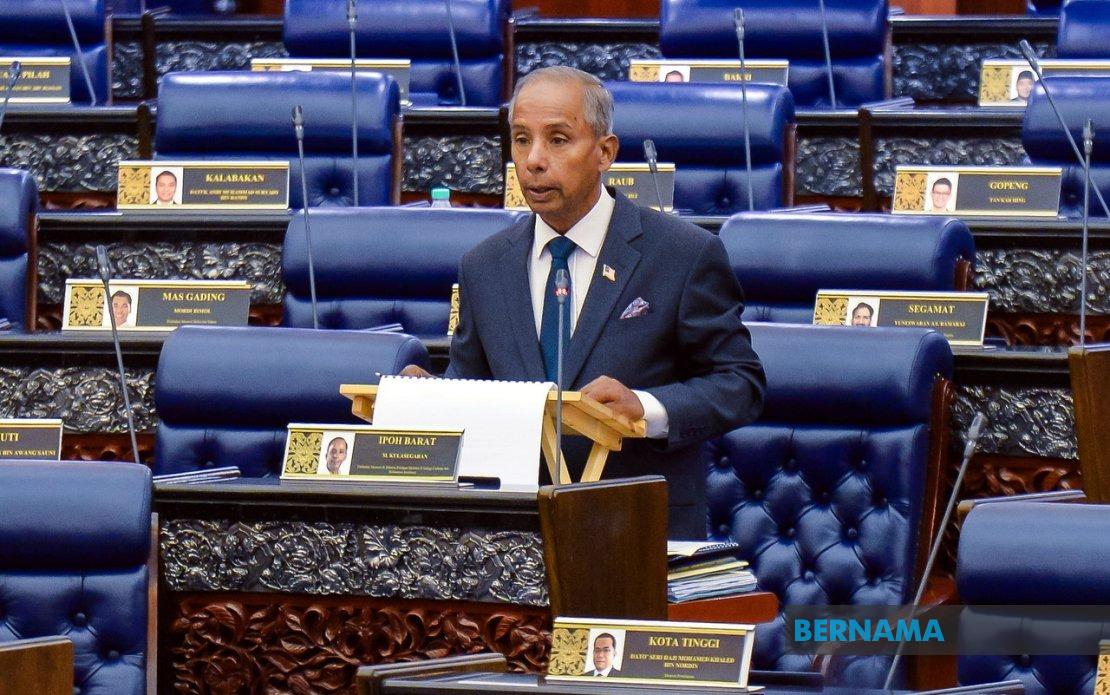
Parliament gave its backing on June 30 to the Sexual Offences Against Children (Amendment) Bill 2026, a legislative step designed to strengthen protections for minors by empowering Malaysian authorities to prosecute child abusers who operate across international boundaries. The measure cleared the Dewan Rakyat with broad parliamentary support following substantive debate that drew participation from 25 lawmakers representing both government and opposition benches, underscoring the cross-party consensus on child protection as a matter of national priority.
The amendment fundamentally reshapes how Malaysia can respond to one of the most serious threats facing vulnerable populations. Previously, the Sexual Offences Against Children Act operated purely within Malaysian territory, creating a dangerous gap in protection. Offenders with Malaysian citizenship or residency could flee the country and commit crimes against children overseas while remaining confident that Malaysian law could not reach them. The revised legislation closes this escape route by extending the reach of Malaysian courts to cover offences perpetrated beyond the nation's borders, provided the perpetrator has meaningful ties to Malaysia.
Deputy Minister in the Prime Minister's Department (Law and Institutional Reform) M. Kulasegaran articulated the government's position during the closing remarks, framing the amendment as essential to ensuring that criminal accountability cannot be circumvented through geography. He emphasised that the extraterritorial provision functions as a deterrent, removing the assumption that Malaysian-connected individuals can exploit jurisdictional boundaries to evade prosecution. This approach aligns Malaysia with contemporary international practice, where numerous democracies have similarly broadened their legal reach to combat transnational child exploitation.
However, Kulasegaran was careful to clarify a critical distinction that underscores Malaysia's commitment to respecting international legal norms. The amendment does not grant Malaysia blanket authority to investigate and prosecute every child abuse case occurring globally, nor does it claim preeminence over the sovereign jurisdiction of other nations. Rather, the country where the offence took place retains the primary right and responsibility to conduct investigations and bring charges under its own legal framework. Malaysia's expanded jurisdiction operates as a complementary tool, not a replacement for existing international legal structures.
The practical application of the law involves a sophisticated cooperative mechanism designed to prevent conflicting prosecutions and duplication of effort. When allegations surface in multiple jurisdictions simultaneously, Malaysian authorities will engage with their counterparts in other countries through formal diplomatic and law enforcement channels to determine the most strategically appropriate course of action. These consultations take into account various practical and legal considerations, including the location where evidence can be most effectively gathered, the availability and accessibility of witnesses, which jurisdiction possesses the greatest investigative capacity, and ultimately which approach best serves the interests of justice and the protection of the victim.
For Malaysia specifically, this legislative development represents a significant evolution in child protection policy. The nation has faced documented challenges with online child exploitation, child trafficking for sexual purposes, and abuse committed by nationals operating in regional destinations. Sectors of civil society have long advocated for extraterritorial provisions, particularly as Malaysian citizens have been implicated in child sexual abuse cases in Southeast Asian countries where enforcement capacity may be limited. The amendment acknowledges these realities and provides law enforcement with statutory authority to act.
The passage also carries implications for Malaysia's regional role within Southeast Asia. Several neighbouring countries have similarly expanded their extraterritorial reach, creating a growing web of overlapping jurisdictions that theoretically enhances protection for children across the region. If these countries coordinate effectively through existing regional mechanisms such as ASEAN and bilateral mutual legal assistance agreements, the cumulative effect could substantially raise the cost and risk for would-be abusers. Conversely, coordination failures could create confusion or gaps that undermine the legislative intent.
International child protection organisations have consistently advocated for precisely this type of legislative expansion, arguing that paedophiles and child traffickers operate transnationally and that domestic laws must evolve accordingly. The amendment brings Malaysian law into closer alignment with similar provisions found in countries including Australia, the United Kingdom, Canada, and several European nations. These jurisdictions have prosecuted nationals for child sexual abuse committed overseas, establishing a precedent that demonstrates both the feasibility and the necessity of such provisions.
The legislative process itself, featuring broad parliamentary support and substantive debate, also signalled that child protection has transcended partisan political divisions in Malaysia. Both government and opposition members contributed to deliberations, suggesting a shared recognition that protecting the nation's children commands priority above electoral considerations. This consensus may facilitate smoother implementation and could encourage related reforms in complementary areas such as victim support services, law enforcement training, and international cooperation frameworks.
Looking forward, the amendment's practical effectiveness will depend heavily on implementation. Law enforcement agencies will require adequate training to investigate extraterritorial cases, prosecutors will need familiarity with foreign legal systems and evidence standards, and cooperation protocols with international partners must be formalised and regularly tested. Additionally, coordination between Malaysian law enforcement and relevant foreign authorities will prove essential to realising the amendment's protective intent. The legislative foundation is now in place; the next phase involves building the operational capacity to translate statutory authority into concrete protection for vulnerable children both within Malaysia and beyond.

