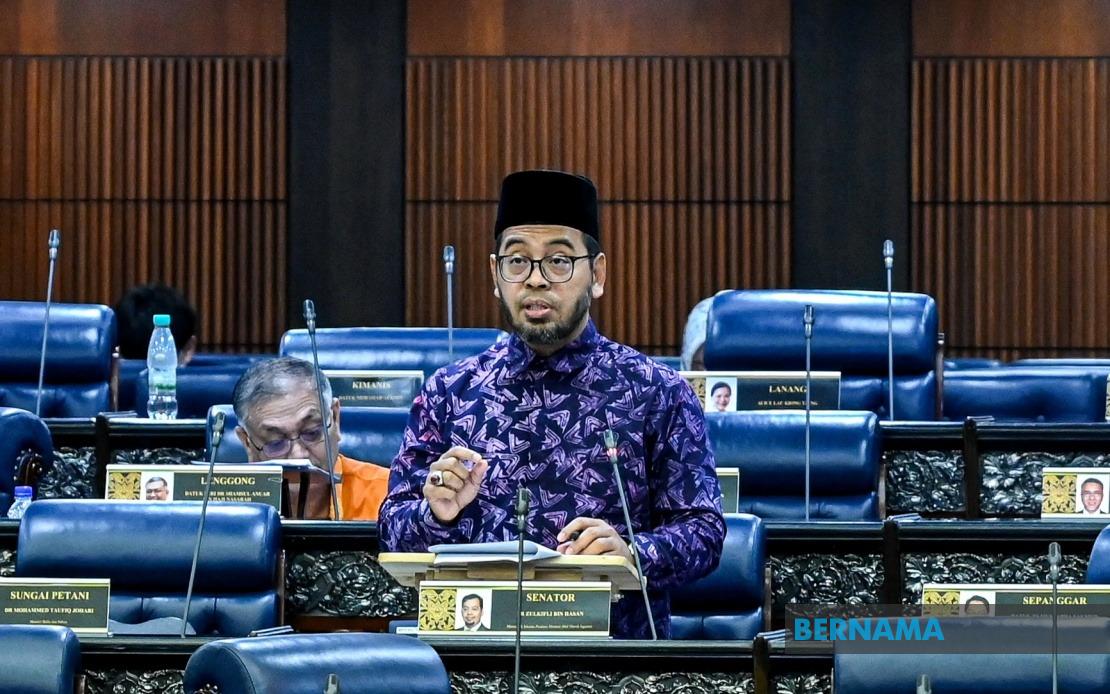
The Malaysian government has declared its commitment to a unified approach in tackling the growing menace of unorthodox Islamic teachings that are increasingly distributed through digital networks and cross-border online channels. Dr Zulkifli Hasan, Minister in the Prime Minister's Department overseeing religious affairs, outlined the escalated response during parliamentary proceedings, emphasising that authorities from JAKIM, state Islamic bodies, and multiple government agencies are working in concert to address doctrines that deviate from the Ahli Sunnah Wal Jamaah school of thought.
The enforcement challenge has undergone significant transformation in recent years. Where once these teachings were restricted to clandestine gatherings and face-to-face interactions, they have migrated wholesale to digital platforms and encrypted messaging applications. This evolution has posed fresh difficulties for regulatory bodies attempting to monitor and intercept the spread of potentially misleading religious content. Adding to the complexity, purveyors of these teachings have become sophisticated in their packaging, disguising their messages within frameworks of self-improvement seminars, humanitarian projects, healing practices and informal religious study circles that appear superficially legitimate to unsuspecting followers.
The tactics employed by such groups exploit emotional and psychological vulnerabilities. Through inspirational narratives infused with spiritual rhetoric, psychological manipulation techniques, unfounded conspiracy theories and the leveraging of influential personalities, these movements construct compelling counter-narratives that appeal to segments of the population dissatisfied with mainstream interpretations. The deliberate obscuration of their true theological positions represents a deliberate strategy to circumvent detection and regulatory oversight while building committed followings.
The coordinated enforcement infrastructure mobilised by authorities demonstrates the severity with which government regards this threat. JAKIM works alongside state religious departments, the Royal Malaysia Police, the Malaysian Communications and Multimedia Commission, the National Security Council, municipal authorities, the Immigration Department and the National Registration Department in a comprehensive effort to identify and apprehend individuals involved in propagating non-mainstream doctrines. This inter-agency collaboration has yielded concrete results, most notably the detention of 288 followers of the Ahmadiyya Qadiani movement during an operation in Sabah on May 31, and a subsequent raid targeting a Syiah religious centre in Petaling Jaya that resulted in the apprehension of 226 foreign nationals.
Beyond enforcement operations, the government has embedded a rehabilitation and re-education strategy within its broader response architecture. Individuals identified as having been influenced by unorthodox teachings undergo structured counselling sessions designed to re-establish their connection with orthodox Islamic principles. Where warranted, Syariah courts have ordered the placement of individuals in faith rehabilitation facilities operated under Islamic authority supervision. These programmes represent an attempt to redraw believers back toward mainstream teachings through supportive intervention rather than purely punitive measures, reflecting a recognition that many adherents may have been misled rather than consciously rejecting orthodox faith.
A centerpiece of the government's preventive strategy has been the establishment of the National Steering Committee to Address Threats to Faith, designed to fortify the religious foundations of younger generations before they become vulnerable to unorthodox messaging. This committee draws representation from the Ministry of Education, the Ministry of Higher Education, the Ministry of Home Affairs, JAKIM and allied agencies, positioning religious resilience as a whole-of-government educational priority rather than a security issue alone.
The specific programmes falling under this umbrella include initiatives delivered by Institut Pemantapan dan Perkaderan Akidah Malaysia, commonly known as IPHAM, which focuses on theological grounding and character development. The My Insaniah Programme and the Rakan Masjid Programme, both executed in collaboration with the Ministry of Youth and Sports, extend these reach into younger communities. Additionally, authorities have strengthened the KAFA 2.0 curriculum, which addresses Quranic study and obligatory religious knowledge, with enhanced emphasis on fostering a resilient religious identity among youth capable of withstanding exposure to alternative interpretations.
For Malaysian policymakers and residents, this enforcement escalation reflects the government's assessment that the digital age has fundamentally altered the landscape of religious authority and influence. Traditional gatekeepers of Islamic knowledge, including formal religious institutions and established scholarly hierarchies, now compete for influence against decentralised online communities operating beyond territorial jurisdiction and institutional oversight. The sophistication of modern recruitment techniques leveraging psychological principles and the borderless nature of digital communication create enforcement conditions substantially more complex than authorities previously encountered.
The regional implications extend beyond Malaysia's borders. Southeast Asian nations including Indonesia, Singapore and Brunei have encountered parallel challenges from identical or similar movements spreading through identical digital channels. Malaysia's multi-agency model, combining enforcement, rehabilitation, prevention and education, offers a template that neighbouring countries may observe and potentially adapt to their own contexts. The intelligence-sharing dimensions of such a coordinated response also carry cross-border significance, as does the implicit acknowledgment that unorthodox teachings rarely respect national boundaries.
The government's emphasis on intervention and rehabilitation alongside detention suggests a recognition that enforcement alone cannot arrest the underlying appeal of these movements. The shift toward preventive religious education targeting youth, coupled with psychological support for those already influenced, indicates official acknowledgment that vulnerability to unorthodox teachings often reflects gaps in mainstream religious education or emotional needs unmet by conventional institutional structures. This dual-track approach—combining security responses with educational fortification—represents the current frontier of Malaysia's effort to preserve mainstream Islamic authority while adapting to twenty-first-century communication realities that have fundamentally altered how religious ideas circulate and take root.

