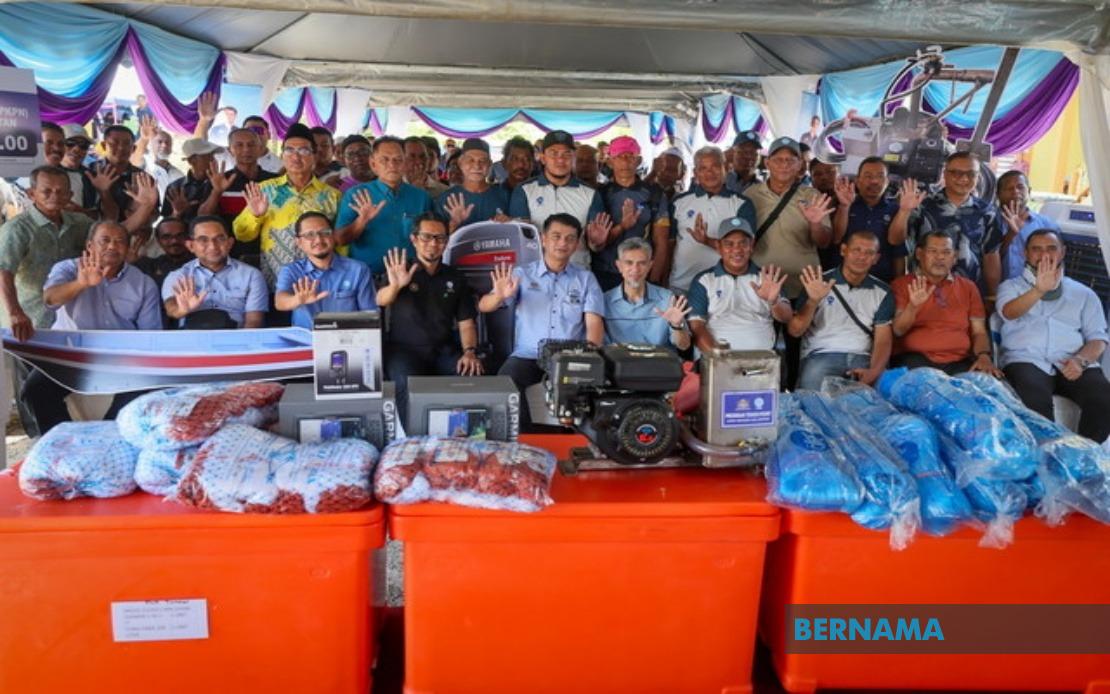
The Malaysian government is investing RM10 million throughout 2024 in the Special Fishermen Housing Project (PKPN), a nationwide initiative designed to strengthen the living conditions and economic resilience of the country's fishing communities. According to Muhammad Faiz Fadzil, chairman of the Fisheries Development Authority of Malaysia (LKIM), this funding reflects governmental commitment to addressing the socio-economic challenges facing fishermen, a sector that remains vital to Malaysia's food security and coastal economies.
The RM10 million allocation splits into two distinct operational streams, each addressing different community needs. The agency has designated over RM6.8 million specifically for repairing and renovating 344 existing fishermen's homes across the nation, while allocating more than RM3.1 million for constructing 36 new residential units. This dual-track approach recognises that the fishing community encompasses both those seeking to maintain existing homes and those lacking adequate shelter entirely. The repair component has already achieved 80 per cent completion and officials project full finalisation by August or September, while new construction projects are proceeding simultaneously, though proceeding at a slower pace due to complications surrounding land ownership and inheritance matters.
The financial parameters established by LKIM reflect geographic variations in construction costs throughout Malaysia. For new housing construction, the government provides RM84,000 per unit in Peninsular Malaysia, recognising lower labour and material costs in this region, while units in Sabah and Sarawak receive RM95,000 each to account for higher logistical expenses and remote location premiums. Repair work receives standardised support of up to RM20,000 per household regardless of location. In Kelantan specifically, authorities have carved out RM388,000 from the national allocation, reflecting both the state's significant fishing population and the government's targeted regional development strategy.
Beyond housing provision, the Malaysian government is simultaneously reshaping the fishing sector's economic foundation by championing aquaculture expansion as a critical alternative livelihood. Muhammad Faiz articulated this strategic pivot clearly: fisheries resources nationwide are contracting while operational expenses, particularly fuel costs, continue escalating despite ongoing government subsidies. This combination creates a structural squeeze on traditional fishing viability, compelling policymakers to reorient the sector toward more sustainable and economically resilient production methods.
The government's aquaculture vision represents an ambitious long-term commitment that extends through the remainder of this decade. Officials have established a target that aquaculture should generate 40 per cent of Malaysia's total fish production by 2030, a significant increase from current levels that would fundamentally reshape the nation's fisheries composition. Achieving this objective requires not merely establishing new farms but actively transitioning existing fishermen toward aquaculture participation, transforming their professional identities and operational methodologies.
To catalyse this transformation in Kelantan, LKIM has allocated RM400,000 to the Kelantan State Fishermen's Association (PENEKA) for developing tank-based prawn farming operations. This targeted investment demonstrates how the government intends to move beyond abstract policy pronouncements toward tangible, community-based implementation. Prawn farming offers fishermen opportunities to diversify income streams while reducing dependence on volatile marine capture fisheries, potentially stabilising household economics in coastal communities.
The aquaculture initiative carries particular significance for Southeast Asian fishing communities facing similar resource depletion and cost pressures. Malaysia's approach—coupling housing security with livelihood diversification—reflects understanding that sustainable sector development requires addressing fishermen's fundamental needs alongside economic restructuring. Regional observers note that aquaculture expansion in Malaysia could serve as a model for neighbouring countries confronting comparable fisheries challenges.
However, realising these ambitions demands sustained commitment extending well beyond the current financial year. The RM400,000 Kelantan allocation, while meaningful, represents merely initial capital investment for what officials acknowledge will be an expanding programme. Senior LKIM management has committed to progressively extending tank-based prawn farming initiatives to additional states, indicating recognition that sustainable transformation requires geographic breadth and multi-year consolidation.
The housing component of this policy demonstrates governmental acknowledgement that fishing communities deserve dignified living conditions commensurate with their contributions to national food security. Many fishermen operate within marginalised economic circumstances, and housing inadequacy compounds their vulnerability to economic shocks. By systematising home improvement support through LKIM, authorities signal commitment to lifting fishing families toward minimum standards of residential adequacy.
Land ownership complications delaying new housing construction reveal broader complexity in rural property rights administration that extends beyond fisheries policy. Inheritance disputes and ambiguous title situations affect numerous Malaysian coastal communities, and resolving these creates prerequisites for housing delivery. LKIM's acknowledgment of these obstacles suggests recognition that sectoral development requires engaging with foundational governance challenges, not merely allocating financial resources.
Looking forward, the success of both housing and aquaculture components depends substantially on effective community engagement and fishermen's willingness to embrace new production methods. Previous development initiatives have demonstrated that top-down programmes lacking genuine stakeholder participation often underperform. The LKIM Madani Get-Together Session convened in Kelantan reflects efforts to maintain direct dialogue with fishing communities, though sustained engagement will remain essential as policies progress toward implementation.
The intersecting initiatives—housing investment and aquaculture promotion—reflect Malaysian policymakers' understanding that contemporary fisheries challenges cannot be addressed through isolated sector-specific interventions. Fishing communities require simultaneous attention to housing security, income diversification, and economic opportunity if government objectives regarding sectoral modernisation are to materialise effectively.

