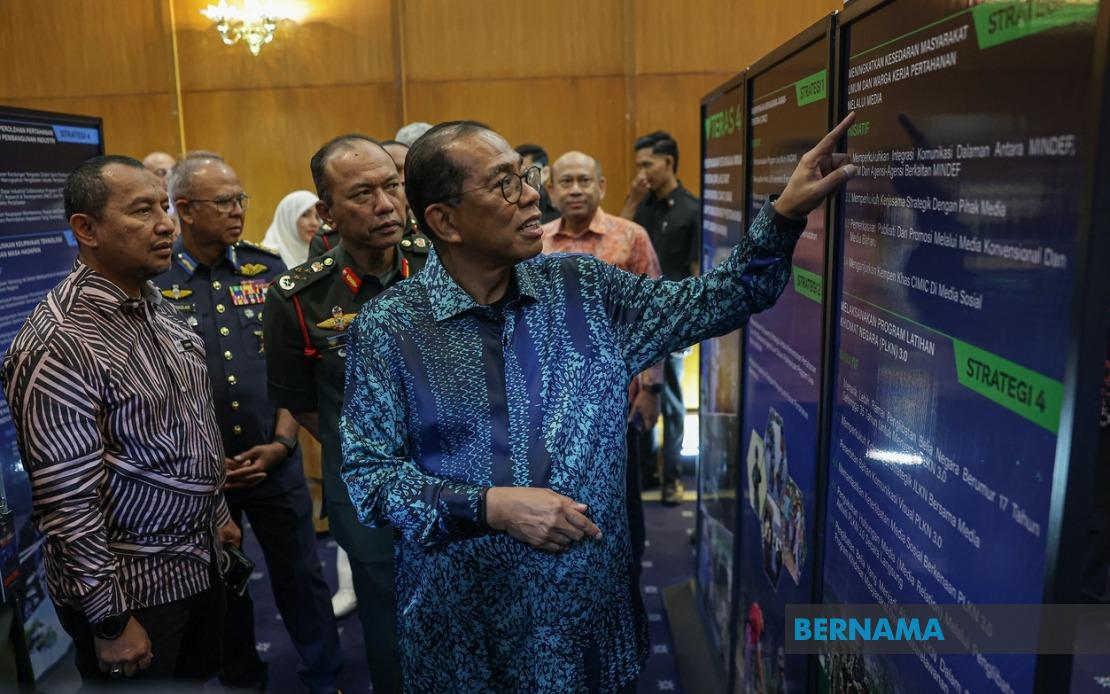
Malaysia has taken a significant step in modernising its defence posture by launching two complementary planning documents designed to provide strategic direction and operational muscle to the country's armed forces over the next five years. The National Defence Strategic Plan (PSPN) and the Defence Capacity Blueprint (RTKP) 2026-2030, unveiled by Defence Minister Datuk Seri Mohamed Khaled Nordin, represent an effort to create a cohesive framework that bridges long-term strategic ambitions with the practical capabilities needed to execute them. These tools will guide defence policy as Malaysia contends with a rapidly changing threat landscape marked by geopolitical instability and technological disruption.
The minister framed the launches as responses to a world experiencing unprecedented shifts in the balance of power and military technology. Heightened geopolitical tensions, particularly in Southeast Asia's maritime domains, have created an environment where nations must continuously reassess their defence requirements. Simultaneously, disruptive innovations such as artificial intelligence and automation are reshaping how military operations are conceived and conducted. The non-traditional threats emerging across transnational crime, cyber warfare, and hybrid conflicts add further complexity to the security environment. These multifaceted pressures formed the basis for a comprehensive Mid-Term Review of Malaysia's existing Defence White Paper, a process that identified gaps in current strategic thinking and operational readiness.
The PSPN itself rests on seven strategic pillars that address different dimensions of defence capability and sustainment. Maintaining the operational readiness of the Malaysian Armed Forces remains central, acknowledging that well-trained, mobilisable forces form the backbone of deterrence. Enhancement of defence capabilities across platforms, systems and infrastructure represents another pillar, directly addressing the need to modernise equipment and close technological gaps. Personnel welfare and support for veterans constitute a third dimension, reflecting recognition that defence depends ultimately on human capital. The inclusion of defence technology and innovation as explicit strategic areas signals a commitment to developing indigenous expertise and reducing dependence on foreign solutions. The remaining pillars, while not detailed in the announcement, complete a comprehensive approach spanning operational, human, technological and institutional dimensions.
The companion document, the Defence Capacity Blueprint, shifts focus from strategic direction to implementation feasibility. If the PSPN functions as a roadmap of intentions, the RTKP addresses whether Malaysia possesses the actual resources, expertise and institutional structures to realise those ambitions. This encompasses financial allocations sufficient to fund planned acquisitions and operations, human capital development to train personnel for increasingly sophisticated roles, and technological expertise to operate and maintain advanced systems. Critically, the blueprint emphasises inter-agency coordination, acknowledging that defence cannot operate in isolation but must integrate with other government functions including foreign affairs, trade, intelligence and internal security.
A distinctive feature of the framework is its adoption of a whole-of-government and whole-of-society approach to defence. This represents a conceptual shift from viewing defence as the exclusive domain of the Defence Ministry towards understanding it as a national endeavour requiring contribution and buy-in from civilian agencies, the private sector, research institutions and society broadly. Such an approach recognises that modern security challenges—ranging from hybrid threats to supply chain vulnerabilities—cannot be addressed through military instruments alone. The framework thus implicitly calls for closer integration between defence planning and broader national development priorities, including infrastructure, technology commercialisation and workforce development.
Beyond the strategic documents themselves, the ministry outlined concrete progress in fleet modernisation. The acquisition and operational deployment of three ANKA Medium Altitude Long Endurance Unmanned Aircraft Systems to Labuan Air Base in March represents a significant capability addition for maritime surveillance and reconnaissance operations. These platforms extend Malaysia's ability to monitor vast maritime areas, particularly relevant given the country's extensive exclusive economic zone and strategic position along major international shipping routes. Their operational status indicates the ministry's capacity to absorb and deploy complex systems.
The procurement pipeline for additional platforms further demonstrates implementation momentum. The forthcoming delivery of FA-50M light combat aircraft will modernise the air force's fighter inventory, offering improved avionics, combat range and flexibility compared to aging platforms. Maritime patrol aircraft additions will enhance capabilities for maritime domain awareness and anti-submarine operations, critical for a nation dependent on sea lanes. The planned delivery of a second batch of Littoral Mission Ships signals continued investment in coastal security and the protection of maritime interests within contested waters. Collectively, these acquisitions indicate a defence modernisation process already underway, with the strategic documents providing overarching coherence and prioritisation.
For Malaysia and Southeast Asia more broadly, the launch carries significance extending beyond domestic military planning. The region faces mounting pressure from great power competition, with major external powers expanding their military presence and influence. A well-articulated, capacity-backed defence strategy helps smaller nations maintain credibility and agency in navigating these pressures. Malaysia's approach—emphasising strategic adaptation, technological capability-building, and whole-of-society mobilisation—offers a model that balances defence investments with broader national development concerns. The framework's attention to indigenous innovation and domestic capacity-building also signals an attempt to reduce strategic vulnerability through reduced dependence on any single foreign supplier.
The emphasis on technology and innovation is particularly noteworthy given Malaysia's aspirations as a middle-income nation with growing industrial capacity. By positioning defence technology development as a strategic priority, the framework creates potential for spin-offs into civilian sectors, defence-related industrial development, and the emergence of an indigenous defence-industrial base. This approach can generate employment, develop technical expertise, and potentially position Malaysia as a regional hub for defence-related innovation and manufacturing, diversifying economic opportunities while simultaneously strengthening security.
Implementation success will depend on sustained political commitment, adequate budgetary allocation, and the ability to execute coordination across multiple agencies and sectors. The framework documents provide architecture and direction, but translating strategy into operational capability requires disciplined programme management, personnel continuity, and protection from bureaucratic impediments. The stated schedule for aircraft and ship deliveries will serve as early indicators of implementation effectiveness. Whether the whole-of-society approach moves beyond rhetoric to meaningful civilian and private sector engagement also remains to be demonstrated. Nonetheless, the articulation of clear strategic intent backed by specific capability acquisitions represents a significant step towards more purposeful defence planning in an era of accelerating security challenges.

