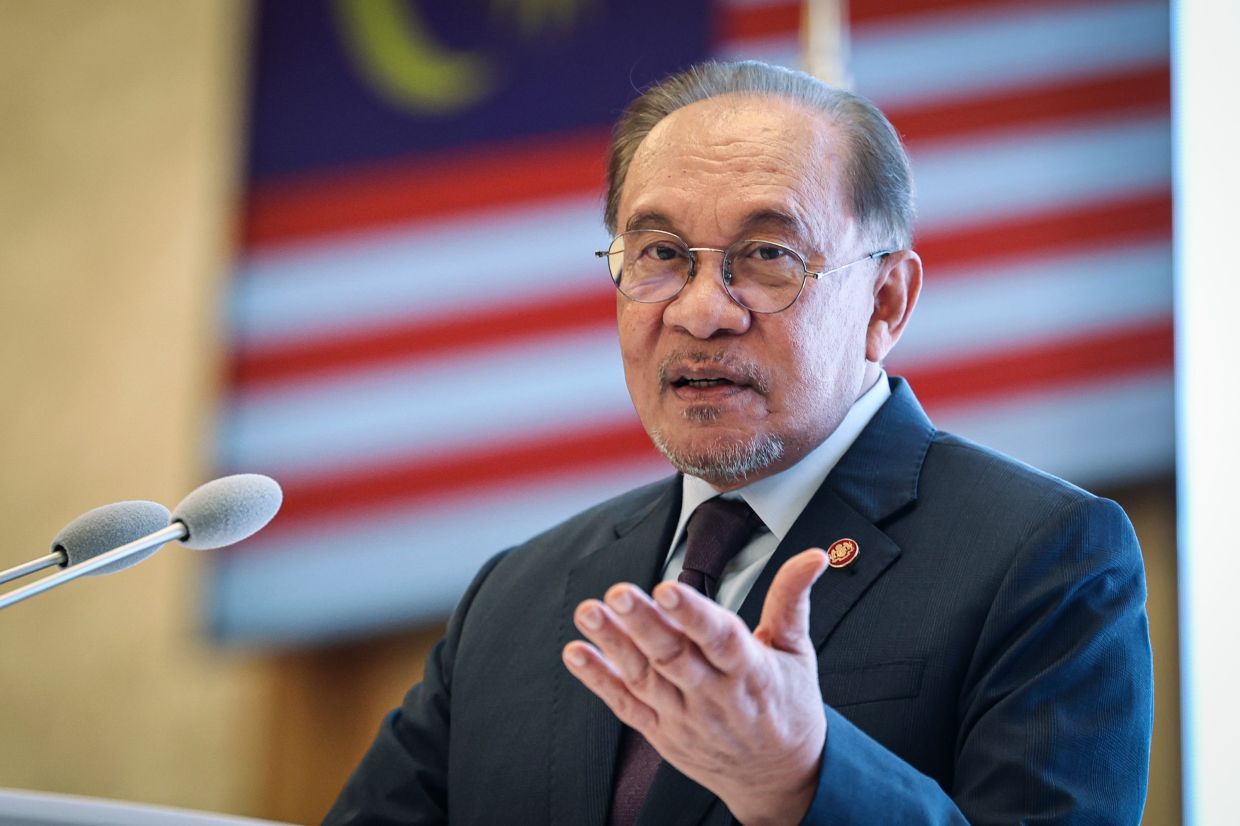
Malaysia's strategic position along major global trade corridors has become the defining characteristic of its economic diplomacy approach, according to Prime Minister Datuk Seri Anwar Ibrahim. Speaking at the 39th Asia-Pacific Roundtable, Anwar—who also holds the Finance Minister portfolio—framed the nation's trading prowess not simply as commercial advantage but as a geopolitical asset that shapes regional influence and international standing. This perspective underscores how Malaysian policymakers increasingly view economic engagement as inseparable from broader diplomatic objectives in an era of intensifying global competition.
The government's strategy has centred on strengthening relations with longstanding commercial and investment counterparts through structured multilateral frameworks. Anwar highlighted Malaysia's active participation in major regional and international trade agreements, including the ASEAN Free Trade Area, the Regional Comprehensive Economic Partnership (RCEP), and the Comprehensive and Progressive Agreement for Trans-Pacific Partnership (CPTPP). These platforms have allowed Malaysia to negotiate tariff harmonization, improve market access for local businesses, and create conditions for more balanced investment flows. The emphasis on these multilateral structures reflects a recognition that Malaysia's economic influence derives partly from its ability to broker and shape rules that benefit not only itself but its regional partners.
Central to Malaysia's diplomatic calculus is the principle of ASEAN centrality, which Anwar described as non-negotiable despite acknowledged tensions within the bloc. He argued that maintaining ASEAN as the cornerstone of foreign policy serves multiple objectives: advancing Malaysian national interests while simultaneously fostering regional peace, prosperity, and stability. This framing suggests that policymakers view the association's coherence as essential to Malaysia's own security and economic wellbeing. The emphasis comes at a time when ASEAN faces internal divisions over Myanmar, South China Sea disputes, and divergent responses to great power competition, making reaffirmation of the bloc's importance a deliberate political statement.
Recognizing that traditional markets and partners alone cannot sustain long-term economic growth and resilience, Malaysia is deliberately pursuing trade and investment opportunities in less-developed but strategically significant regions. Anwar identified West Asia, Central Asia, Latin America, and Africa as priority areas for expansion. This geographic diversification strategy reflects acknowledgment that global economic architecture is shifting, with emerging markets offering both growth potential and political advantage. For Malaysian businesses, these markets represent untapped opportunities in sectors where the nation possesses competitive advantages or technological expertise. For policymakers, expanded presence in these regions strengthens diplomatic influence and reduces dependency on traditional trading blocs.
The Malaysian government is tailoring its economic engagement to align with geopolitical interests and comparative advantages across these emerging markets. Rather than pursuing generic trade relationships, Anwar emphasized targeted collaboration in sectors where Malaysia can demonstrate genuine value addition: the halal industry, digital economy, agriculture, and green technology. This sector-specific approach reflects a more sophisticated economic diplomacy that leverages Malaysia's particular strengths rather than competing broadly across all industries. The halal dimension carries particular weight, as Malaysia positions itself as a global halal hub with certification influence extending across Muslim-majority and Muslim-minority markets alike.
Energy security has emerged as a strategic priority within this expansion framework, with hydrocarbons occupying central importance. During an official visit to Turkmenistan, Malaysia's national petroleum company Petronas formalized agreements with Turkmenistan state entities to explore and develop two major gas fields. Concurrently, Malaysia and Turkmenistan signed a long-term hydrocarbon development framework encompassing cooperation on human and technical capital transfer. These arrangements represent more than commercial transactions; they establish Malaysia as an energy-importing nation diversifying its supply sources while simultaneously building technical expertise and relationship depth with Central Asian partners. The emphasis on capacity building alongside resource development suggests Malaysian policymakers are pursuing sustainable, long-term partnerships rather than transactional deals.
Anwar framed economic diversification as far more than tactical business strategy, characterizing it instead as essential to national resilience amid global uncertainty. The statement reflects awareness that reliance on established trading relationships leaves Malaysia vulnerable to disruption from geopolitical shifts, protectionist policies, or supply chain reorientation by competing powers. By intentionally broadening its economic footprint across diverse regions and sectors, Malaysia reduces concentration risk and increases optionality. This perspective aligns with broader Southeast Asian thinking about hedging strategies in an environment where the United States, China, and other powers compete for influence and where regional relationships remain fluid.
The 39th Asia-Pacific Roundtable, organized by the Institute of Strategic and International Studies (ISIS) Malaysia over three days from June 30 to July 2, provided the platform for articulating this comprehensive economic diplomacy vision. The forum convenes regional policymakers, academics, and business leaders to deliberate on transnational challenges and opportunities. Anwar's keynote address signalled to international audiences Malaysia's commitment to active economic engagement while reinforcing to domestic constituencies that government strategy prioritizes long-term economic security through diversification and partnership-building.
The Malaysian approach reflects broader recognition that small and medium-sized trading nations must leverage geographic advantages, institutional participation, and targeted partnerships to maintain relevance and prosperity. Unable to compete as primary powers in military or technological domains, nations like Malaysia cultivate influence through economic leadership, trade facilitation, and diplomatic bridge-building. Success requires maintaining credibility as reliable partners and neutral platforms while cultivating relationships across competing global blocs. The emphasis on keeping economic ties resilient and forward-looking suggests policymakers understand that Malaysia's trajectory depends not on choosing sides in great power competition but on remaining indispensable to as many partners as possible across shifting geopolitical landscapes.

