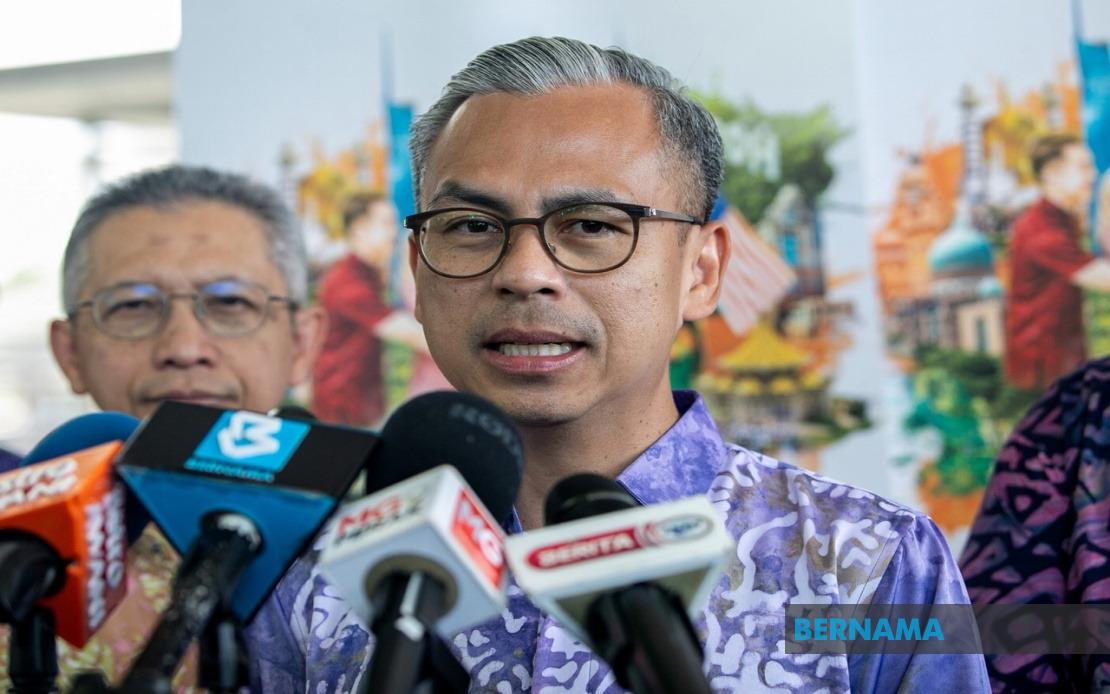
The Malaysian government has chosen an inclusive vision as the cornerstone of its 2026 National Day and Malaysia Day festivities, with Communications Minister Datuk Seri Fahmi Fadzil unveiling the central theme of 'Malaysia MADANI: Kesejahteraan Dinikmati'—translating to 'Malaysia MADANI: Shared Prosperity'—at a launch ceremony in Ipoh on July 19. The selection reflects broader policy objectives of the current administration to distribute economic gains and development opportunities across the entire population in an equitable manner.
Fahmi articulated that the chosen theme goes considerably beyond conventional measures of economic expansion, instead framing prosperity through a multidimensional lens that encompasses tangible improvements in living standards, genuine access to opportunities for all segments of society, and systematic mechanisms ensuring that wealth generated through national development reaches communities fairly rather than concentrating among privileged groups. This conceptual broadening represents a subtle but significant shift in how Malaysian policymakers frame national progress, moving away from purely GDP-focused metrics towards indicators that reflect genuine quality-of-life enhancements.
The minister emphasised the foundational principle underpinning the MADANI government's approach: a commitment that Malaysia's development trajectory does not marginalise any demographic segment. Specifically articulating that citizens from different racial communities, religious backgrounds, geographic regions, and socioeconomic circumstances should all experience tangible benefits from national progress, Fahmi positioned the shared prosperity agenda as a corrective mechanism against regional disparities and unequal access to opportunities that have historically characterised Malaysian development patterns.
Prime Minister Datuk Seri Anwar Ibrahim formally inaugurated the 2026 National Month campaign and the broader 'Fly the Jalur Gemilang' initiative at the Sultan Azlan Shah Ministry of Health Training Institute in Tanjung Rambutan, signifying the federal government's prioritisation of these celebrations. The event brought together National Unity Minister Datuk Aaron Ago Dagang and Perak Menteri Besar Datuk Seri Saarani Mohamad, indicating coordination across multiple government portfolios to ensure coherent messaging around national unity themes.
Fahmi further elaborated on Malaysia's multicultural composition as a distinctive national asset rather than a challenge to be managed. He argued that the nation's ethnic, religious, and cultural plurality represents not merely historical happenstance but forms the substantive foundation upon which contemporary Malaysian harmony, interpersonal respect, and communal cohesion have developed. This framing contests narratives suggesting diversity inherently threatens social stability, instead positioning it as the wellspring of the nation's social resilience.
The minister articulated a collective responsibility falling upon all Malaysian citizens to actively maintain this pluralistic social contract through deliberate efforts to preserve existing unity frameworks, deepen harmonious relations across communities, and protect national sovereignty. The language employed—emphasising shared responsibility rather than government-led initiatives—suggests an attempt to distribute ownership of national cohesion beyond state institutions towards individual citizens and community organisations.
Several programmatic initiatives have been scheduled to operationalise the shared prosperity theme and strengthen patriotic sentiment among Malaysians. The 'One House, One Jalur Gemilang' campaign aims to foster national symbolism at the grassroots residential level, while the Kembara Merdeka Jalur Gemilang convoy programme envisages geographical traversal promoting national consciousness and unity messaging across diverse regions. These initiatives reflect recognition that abstract policy commitments require tangible, participatory mechanisms to resonate with ordinary citizens.
For Malaysian citizens and observers, the timing of this theme selection carries particular significance in the context of ongoing debates surrounding income inequality, regional development disparities, and equitable resource distribution. The articulation of shared prosperity as a central national narrative may be interpreted as governmental acknowledgment that previous development models generated uneven outcomes, necessitating explicit recommitment to inclusivity as a corrective principle.
The emphasis on unity and harmony within the 2026 celebrations also reflects regional and international contextual considerations. As Southeast Asia navigates geopolitical tensions, economic uncertainties, and transnational challenges, Malaysia's assertion of internal cohesion and demonstrated commitment to maintaining multicultural harmony carries significance beyond domestic politics, positioning the nation as a model of plural society management within a regionally volatile environment.
Citizens seeking information regarding specific 2026 National Month programming and celebrations can access comprehensive details through the Merdeka 360 digital portal, which centralises information across government communications channels, or through dedicated social media accounts maintained by the Information Department. This digital-first approach reflects contemporary administrative practices emphasising accessibility and real-time information dissemination to diverse demographic constituencies.

