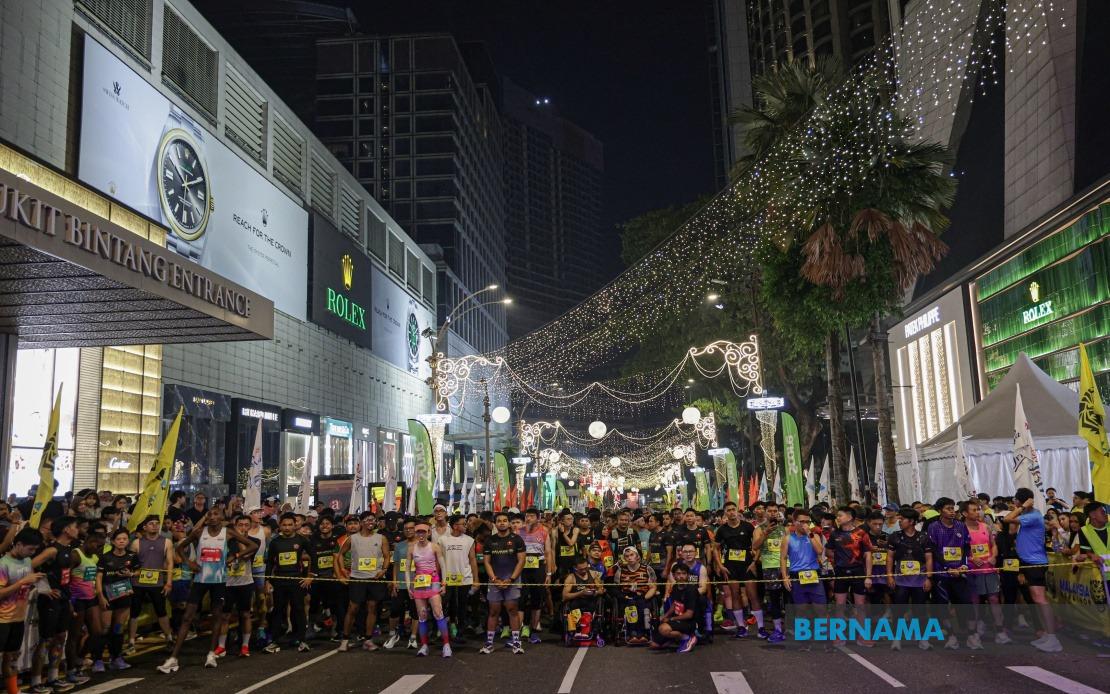
Malaysia's largest marathon event unfolded across the early morning hours of August 30, drawing together 25,000 local and international participants in a multifaceted celebration timed to honour the nation's 69th National Day. The staggered start times, beginning shortly after midnight, transformed Kuala Lumpur into a sprawling endurance sports venue, with the full-scale activation representing a significant expansion of competitive running culture in Southeast Asia.
Tourism, Arts and Culture Minister Datuk Seri Tiong King Sing officially launched proceedings with the 42-kilometre Full Marathon category, which commenced at 12:30 am and drew 2,000 elite and amateur athletes to the starting point near Pavilion Kuala Lumpur. The decision to situate the flag-off ceremony in the heart of the commercial district signalled the event's integration with urban life, departing from traditional approaches that confined marathons to dedicated sporting venues. This symbolic location underscored how major sporting events now serve as platforms for showcasing urban spaces and city-centre vitality to international audiences.
The cascading start schedule reflected careful event architecture designed to manage crowd flow and participant experience across distinct fitness levels. The 21-kilometre Half Marathon, involving 8,000 runners, began at 2:00 am, followed two hours later by the 10-kilometre category with 5,000 participants. The 5-kilometre Fun Run, positioned as an accessible entry point for families and casual participants, commenced at 7:30 am with 10,000 entrants. This tiered approach democratised marathon participation, permitting individuals across varying athletic capabilities to engage with the celebration simultaneously whilst maintaining operational efficiency.
A striking departure from conventional marathon design, the Kuala Lumpur City Centre precinct was designated as the universal finish line for all categories, replacing the historically favoured Dataran Merdeka location. This repositioning transformed the nation's commercial and tourist heart into a celebration zone, potentially broadening spectator engagement and integration with the city's ongoing vitality. The choice reflects evolving thinking about how major sporting events can animate multiple urban precincts rather than concentrate activity in heritage spaces.
The Full Marathon course presented substantial physiological challenges through the incorporation of a 900-metre elevation gain along the Ampang-Kuala Lumpur Elevated Highway, demanding considerable cardiovascular endurance from competitors. This routing choice transformed the marathon from a flat urban circuit into a demanding test of mountainous terrain, attracting elite athletes seeking genuine competitive challenge. For Malaysian runners accustomed to lower-altitude training environments, the elevation component elevated the event's international credibility whilst testing local participants' preparation and resilience.
A genuinely innovative element emerged through the inclusion of an HONOR-manufactured humanoid robot competing within the 10-kilometre category, creating an unprecedented fusion of technology and athletics. This technological integration attracted international runners from jurisdictions including Japan and Nigeria, positioning the Malaysia Marathon as a forward-thinking global sporting platform. The robot's participation generated substantial conversation around human-technology interaction in sport, transcending traditional competitive frameworks and appealing to technology-engaged audiences across Southeast Asia.
World Athletics' official recognition of the championship conferred significant credibility upon the inaugural event, situating it within the global competitive running ecosystem. This sanctioning enabled the event to attract serious international competitors and established the marathon's trajectory as a potentially recurring championship-calibre competition. For Malaysia's sporting development ambitions, this recognition represents acknowledgment that the nation can host world-class athletic competition, enhancing national sporting profile across global sporting communities.
Kuala Lumpur Police implemented phased road closures and traffic diversions commencing on the evening of August 29 and extending through the following afternoon, encompassing major arterial routes including Jalan Bukit Bintang, Jalan Ampang, Jalan Sultan Ismail, Jalan Raja Chulan, and both the AKLEH and SUKE highways. This infrastructural coordination demonstrated the substantial urban impact of large-scale sporting events, requiring comprehensive transportation management and public communication. For residents and commuters, such disruptions necessitated advance planning and alternative route preparation, illustrating the intricate relationship between major events and metropolitan functioning.
The event's positioning within National Day celebrations carried deeper symbolic significance, linking sporting achievement with national pride and unity. By timing the marathon to coincide with the 69th National Day, organisers embedded athletic competition within patriotic narratives, encouraging participants and observers to associate personal sporting endeavour with collective national identity. This integration transformed the marathon from a conventional athletic competition into a cultural and civic occasion, appealing beyond dedicated running communities to broader Malaysian audiences seeking meaningful National Day engagement.
The temporal spread of categories across multiple hours reflected sophisticated event management responding to Southeast Asia's tropical climate and Kuala Lumpur's substantial heat challenges. Early morning starts for longer distances protected elite athletes from midday temperature extremes, whilst the delayed Fun Run timing on August 30 morning accommodated casual participants less accustomed to predawn activity. This scheduling sophistication demonstrated organisers' understanding of regional environmental constraints and participant diversity, enhancing overall experience quality across the entire field.
For Malaysian sports tourism and event development, the Malaysia Marathon 2026 established precedent for large-scale international sporting events capable of attracting diverse international participation whilst maintaining strong domestic engagement. The 25,000-participant scale positioned this as a major Southeast Asian sporting occasion, potentially competing with regional marathons in Thailand, Singapore, and Indonesia for runner attention. Success at this inaugural iteration creates opportunities for sustained annual events, consistent international participant bases, and established sponsorship frameworks supporting future editions.

