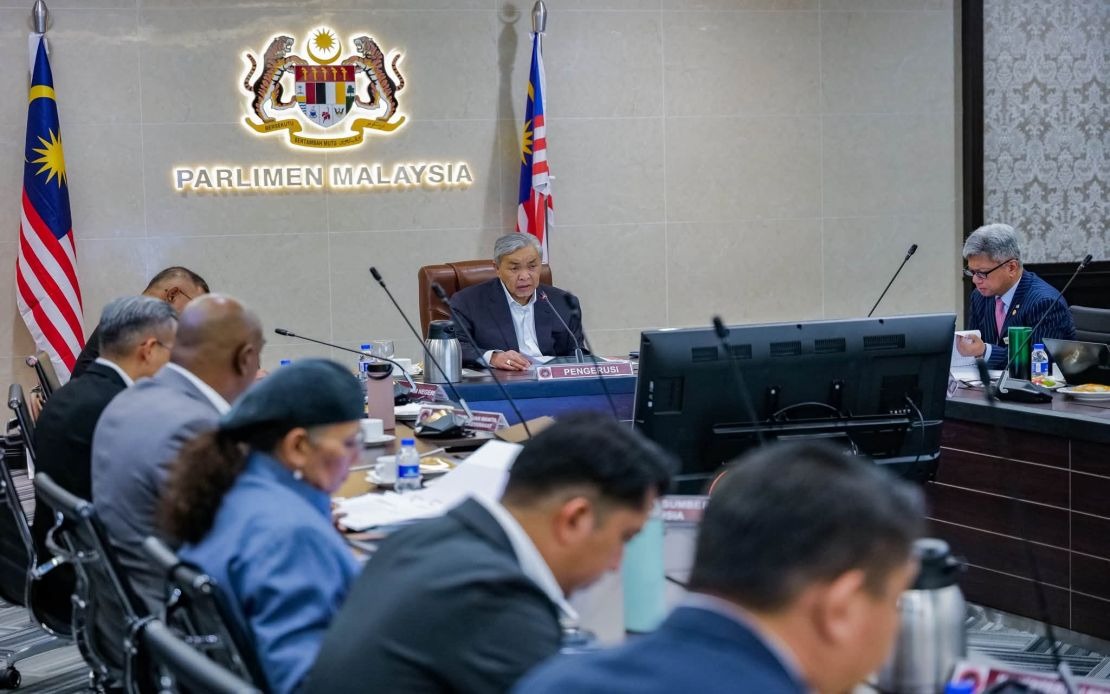
Deputy Prime Minister Datuk Seri Dr Ahmad Zahid Hamidi has outlined Malaysia's approach to navigating one of the most pressing humanitarian challenges of our era: reconciling obligations to refugees with the imperative to protect national security. Speaking after chairing a high-level government committee focused on refugee management, Ahmad Zahid stressed that policy frameworks governing displaced persons must reflect this delicate equilibrium, particularly as global circumstances continue to deteriorate.
The context for Malaysia's renewed attention to refugee governance is sobering. Across the world, over 122 million individuals have been forcibly displaced from their homes due to armed conflict, persecution, and widespread instability. This figure underscores the unprecedented scale of human displacement, with major crises continuing across the Middle East, Africa, South Asia, and parts of Europe. For a Southeast Asian nation like Malaysia, which sits at the intersection of multiple migration routes and maintains significant refugee populations, these global trends carry direct policy implications.
Ahmad Zahid's remarks, made during a review of the 6th Meeting of the High-Level Committee on the Management of Refugees and Asylum Seekers, reflect a governmental perspective that treats refugee administration as far more than a technical administrative exercise. Instead, the Deputy Prime Minister characterized it as a matter intrinsically linked to state sovereignty and the protection of citizens. This framing is significant because it signals that Malaysia intends to position humanitarian considerations within a broader architecture of national interests and security protocols.
One concrete mechanism under scrutiny is the Refugee Registration Document, commonly referred to by its acronym DPP. This credential system plays a foundational role in Malaysia's ability to track, register, and manage refugee populations within its territory. By reviewing its implementation, authorities aim to ensure that the documentation process functions both as a humanitarian tool—enabling refugees to access essential services—and as an administrative safeguard that enhances state awareness of population movements and demographic composition.
Beyond registration, the government has been examining how refugees and asylum seekers access fundamental services, particularly education and healthcare. Ahmad Zahid indicated that current guidelines governing these access points require refinement to achieve better coordination between agencies, stronger legal compliance, and easier administrative execution. The implication is that Malaysia's refugee management had previously operated with some fragmentation across institutions, potentially leaving gaps where oversight was inadequate or where humanitarian provision was inconsistent.
The emphasis on coordination reflects a practical reality facing many developing nations hosting refugees. Educational and healthcare provision for displaced populations strains existing infrastructure and budgets. If these services are not properly integrated into national planning systems and aligned with legal frameworks, they risk becoming either unsustainable burdens or sources of public resentment. Streamlining access guidelines therefore serves multiple constituencies: displaced persons gain more predictable pathways to essential services, host communities see rational allocation of resources, and government agencies operate with clearer mandates.
For Malaysia specifically, this policy recalibration carries regional significance. The country has long served as a major destination for refugees fleeing persecution in neighbouring countries, including significant populations from Myanmar and Afghanistan. The Rohingya crisis alone has brought tens of thousands to Malaysian shores over recent years, straining social services and sparking domestic political tensions. Ahmad Zahid's emphasis on balancing humanitarian duties with security concerns directly addresses these pressures, acknowledging that without credible security frameworks and manageable intake processes, public support for refugee hosting erodes.
The government's framing also provides cover for potential policy adjustments that might restrict refugee flows or tighten eligibility criteria. By positioning security and sovereignty as legitimate policy priorities alongside humanitarian concerns, officials create conceptual space to justify measures that might otherwise face international criticism. This is not necessarily cynical; many nations genuinely struggle to absorb displaced populations without experiencing social friction.
At the regional level, Malaysia's approach may influence how other Southeast Asian nations manage refugee questions. Countries like Thailand, Indonesia, and Bangladesh also host significant displaced populations and wrestle with similar trade-offs. Should Malaysia's refined framework prove effective in balancing humanitarian provision with security assurance, it could become a model that other governments adapt to their own circumstances. Conversely, if the security emphasis comes at the expense of genuine humanitarian protection, regional and international criticism may intensify.
The timing of this policy review is noteworthy. Global displacement continues climbing, suggesting that pressure on Malaysia's refugee management systems will persist and likely intensify. By strengthening its institutional framework now, the government aims to establish mechanisms robust enough to handle sustained or increased refugee flows without compromising either humanitarian standards or security oversight. Whether this proves achievable remains to be seen, particularly if international crises worsen.
Ahmad Zahid's statement reflects a government attempting to articulate a sustainable middle path. Rather than adopting purely restrictive approaches that would damage Malaysia's international humanitarian reputation, or purely open policies that might face domestic political backlash, the administration seeks a managed system that provides genuine protection to those fleeing persecution while maintaining state control and public confidence. The success of this approach will likely determine both the quality of protection available to refugees in Malaysia and the country's broader regional standing on humanitarian governance.

