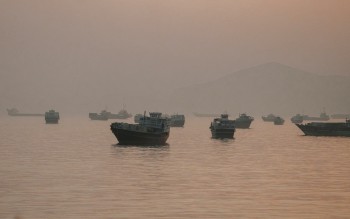
Malaysia's Economy Minister Akmal Nasrullah Mohd Nasir has sounded an alarm about the cascading economic risks facing the nation following Iran's renewed closure of the Strait of Hormuz, cautioning that continued complacency could prove costly as geopolitical tensions in West Asia intensify. Speaking through a video message on his official TikTok account, the minister stressed that despite reports of limited commercial vessel traffic still moving through the strategic waterway, neither government nor businesses should take comfort from such isolated passages.
The Strait of Hormuz sits at the crossroads of global energy commerce, with millions of barrels of crude oil and refined petroleum products transiting through its narrow channels daily. Iran's declaration to close the strait represents a direct response to a series of military strikes launched by the United States on July 8, escalating a conflict that has profound implications for economies far beyond the Middle East. Malaysia, as a trading nation heavily dependent on international commerce and energy imports, faces particular vulnerability to such disruptions.
Akmal Nasrullah emphasised that Malaysia's economic resilience remains fundamentally exposed to external geopolitical shocks originating thousands of kilometres away. The interconnected nature of modern global commerce means that a disruption at a single critical chokepoint can reverberate across multiple economic sectors and consumer wallets within weeks. He cautioned that the government, business community, and household consumers must maintain heightened vigilance and prepare contingency strategies rather than assuming that normal trade patterns will simply resume.
The immediate economic consequences of Hormuz tensions manifest through several channels. Rising crude oil prices would increase Malaysia's energy import bills and feed into higher transportation costs nationwide. As shipping routes become uncertain and vessels face delays or rerouting around the Cape of Good Hope, freight charges surge, pushing up the cost of bringing finished goods and raw materials into the country. Global commodity prices, already volatile, would face additional upward pressure, translating directly into higher production costs for Malaysian manufacturers.
Food security represents another critical vulnerability highlighted by the minister. Malaysia imports substantial quantities of agricultural products and processed foods, with international shipping comprising the backbone of these supply networks. Any sustained disruption to maritime traffic through one of the world's busiest shipping corridors would inevitably affect food availability and pricing within Malaysian supermarkets. Consumer purchasing power, particularly among lower-income households, would come under immediate strain.
Beyond the obvious energy and food sectors, the minister pointed to the hidden complexity of modern supply chains, using plastic manufacturing as a revealing example. When plastic producers face disruption, the consequences cascade through dozens of dependent industries simultaneously. Food packaging manufacturers struggle to obtain raw materials, electronics producers cannot source protective components, automotive suppliers find themselves unable to fulfil orders, and medical device manufacturers face shortages. This ecosystem effect means that disruptions do not remain isolated within single industries but instead create system-wide bottlenecks that ultimately harm consumers through product scarcity and price inflation.
Malaysia's manufacturing sector, which has become increasingly integrated into Asian and global production networks, faces particular exposure. Electronics, automotive components, medical devices, and agricultural exports all depend on the seamless flow of materials and finished goods through international ports and shipping lanes. A prolonged Hormuz closure would test supply chain resilience across manufacturing hubs in Selangor, Penang, Johor, and other industrial regions. Businesses operating on just-in-time inventory systems would find themselves especially vulnerable, unable to absorb extended delays without cascading production shutdowns.
The minister's call for systemic supply chain resilience building represents a significant shift in policy thinking. Rather than treating supply chain management as a purely commercial matter for individual companies, the government is beginning to conceptualise supply chains as critical infrastructure requiring strategic planning and potential government intervention. This approach acknowledges that market forces alone may be insufficient to ensure adequate buffers and redundancy when external shocks occur. Building resilience requires deliberate diversification of sourcing, strategic inventory accumulation, and development of alternative logistics routes.
Reducing dependence on external situations, as Akmal Nasrullah advocated, presents both philosophical and practical challenges. Complete self-sufficiency in an interconnected global economy remains impossible for a resource-constrained nation like Malaysia. However, the principle suggests pursuing targeted investments in sectors where domestic production can be expanded, establishing emergency reserves for critical commodities, and developing relationships with multiple trading partners to avoid over-reliance on any single supply source or shipping route. Regional cooperation within Southeast Asia could also provide additional buffer capacity.
The minister's message reflects broader concerns within the Malaysian government about geopolitical volatility and its economic consequences. The past decade has witnessed multiple supply chain shocks—from the 2011 Japan earthquake and tsunami to the COVID-19 pandemic to ongoing China-United States trade tensions. Each event has reinforced the reality that Malaysian prosperity depends not only on domestic policy but also on the stability of international systems and the resilience of global supply networks. The Hormuz situation crystallises these concerns into immediate policy challenge.
Businesses must begin implementing contingency planning now rather than waiting for a full-scale crisis to unfold. This means reviewing supplier dependencies, establishing relationships with alternative sources, building strategic stockpiles where feasible, and developing communication protocols with logistics partners. Large manufacturers should conduct scenario planning for extended shipping disruptions, while distributors and retailers should consider increasing inventory buffers for essential goods. Such preparation, while requiring upfront investment and carrying carrying costs, ultimately protects against far more severe disruptions should the Hormuz situation deteriorate.
The government's role in this scenario extends beyond issuing warnings. Policy interventions might include expedited customs clearance for essential goods, temporary tariff reductions on critical imports, financial assistance for affected businesses, and coordination of regional responses through ASEAN channels. Monetary authorities may also need to manage inflationary pressures that supply disruptions would inevitably generate. Central planning without stifling market mechanisms represents the difficult balance required.
Ultimately, Akmal Nasrullah's message underscores that Malaysia cannot insulate itself from international conflict and instability, no matter how remote geographically. In an era of integrated global supply networks, events in West Asia directly affect Malaysian households and business operations. Preparation, vigilance, and systematic resilience-building across both public and private sectors represent the only viable strategies for minimising economic damage should the Hormuz tensions escalate further.

