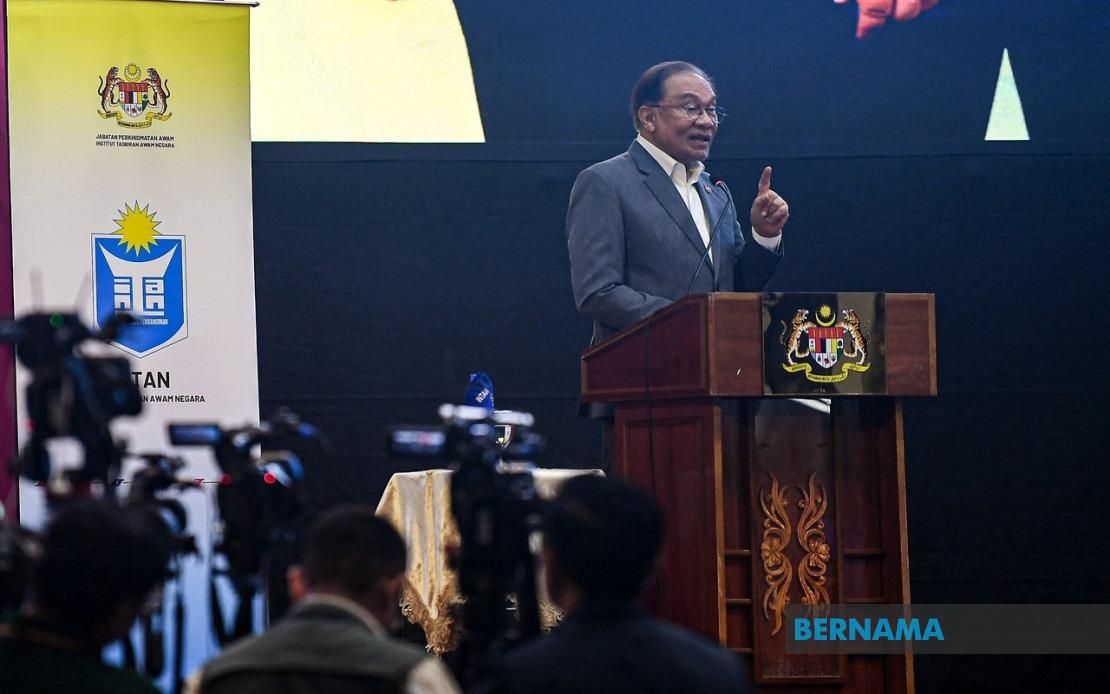
Prime Minister Datuk Seri Anwar Ibrahim has launched a forceful critique of what he describes as a lingering colonial mentality that continues to shape Malaysian thinking decades after independence, urging citizens to reclaim their nation's trajectory by privileging homegrown values and approaches over wholesale adoption of Western models.
Speaking at a gathering with civil servants from the Central Zone at Universiti Islam Selangor on July 20, Anwar articulated a vision of independence that extends far beyond political sovereignty. He framed the challenge facing contemporary Malaysia as fundamentally one of psychological and intellectual emancipation, arguing that true national development requires Malaysians to evaluate their own strengths and build systems authentically reflective of the country's character rather than deferentially mimicking external systems simply because they originate from the West.
The Prime Minister's remarks appear aimed squarely at a post-independence generation that he suggests has internalised Western superiority across multiple domains. According to Anwar, this mindset manifests in the assumption that excellence in education necessitates English medium instruction, that cultural refinement requires Western aesthetic frameworks, that economic prosperity demands capitalist models imported wholesale from developed nations, and that legitimate governance structures must replicate Western democratic architectures. He described this pattern as particularly evident among Malaysians who may possess no personal memory of colonial rule yet continue to operate within its conceptual confines.
The Prime Minister employed pointed imagery to underscore his argument, observing that many individuals maintain fundamentally Western intellectual orientations despite their Malaysian origins and brown skin. This observation suggests that Anwar views the colonial mindset less as a matter of external imposition than as an internalised psychological condition that has persisted through generations, becoming virtually invisible to those operating within its logic. His intervention thus positions breaking this mental frame as essential groundwork for any authentic national development agenda.
This push for ideological independence carries particular resonance in Malaysia's current policy environment. The government has increasingly emphasised localisation across sectors ranging from education to technology and cultural industries. Anwar's framing suggests that structural policy changes require corresponding shifts in how Malaysians conceptualise progress and evaluate policy options. Without reorienting fundamental assumptions about whose systems deserve emulation and whose values should guide national development, even well-intentioned policy reforms risk remaining superficial rearrangements operating within inherited Western-centric frameworks.
The timing of these remarks reflects broader regional currents in Southeast Asia, where multiple governments have begun articulating nationalist development visions partly in reaction to perceived Western domination of intellectual and institutional life. Malaysia's positioning as a multiethnic, Muslim-majority nation with significant economic and technological capabilities gives its leadership distinctive authority in these conversations, yet also creates complex challenges around balancing inclusive national identity with Islamic frameworks and navigating relationships with Western technological and economic partners.
Anwar's emphasis on grounding development in "strong values and a clear national identity" raises substantive questions about whose values those would be and how such identity would be defined in a diverse, pluralistic society. The speech suggests a concern that without intentional cultivation of Malaysian self-confidence in indigenous systems and approaches, the country risks perpetually measuring itself against external benchmarks and remaining psychologically subordinate even after achieving political independence. This framing implies that genuine independence requires intellectual courage sufficient to question imported orthodoxies and develop locally-rooted alternatives.
The remarks were delivered alongside Chief Secretary to the Government Tan Sri Shamsul Azri Abu Bakar and Director-General of the Public Service Tan Sri Wan Ahmad Dahlan Abdul Aziz, signalling that the government intends positioning this ideological pivot as a central concern for the civil service itself. This suggests that bureaucratic implementation of government policy may increasingly prioritise approaches reflecting Malaysian values and conditions rather than defaulting to international best practice frameworks developed in Western institutional contexts.
For Malaysian policymakers and civil servants, Anwar's intervention establishes a mandate to think critically about imports of foreign governance models and development approaches, questioning whether they genuinely serve Malaysian conditions or merely reflect historical habits of deference. This could reshape everything from educational policy and language medium instruction to economic structuring and administrative procedures, creating space for more indigenous innovation whilst also requiring clarity about which Malaysian values should guide such innovation.
The challenge ahead involves moving beyond rhetorical rejection of Western models toward constructing and institutionalising viable alternatives that can deliver measurable development outcomes. This requires not dismissing Western knowledge and expertise categorically but rather assessing them against Malaysian priorities and conditions rather than treating them as inherently authoritative. For regional observers, Malaysia's attempt to chart this course carries implications beyond its borders, potentially influencing how other Southeast Asian nations conceptualise their own paths to authentic development.

