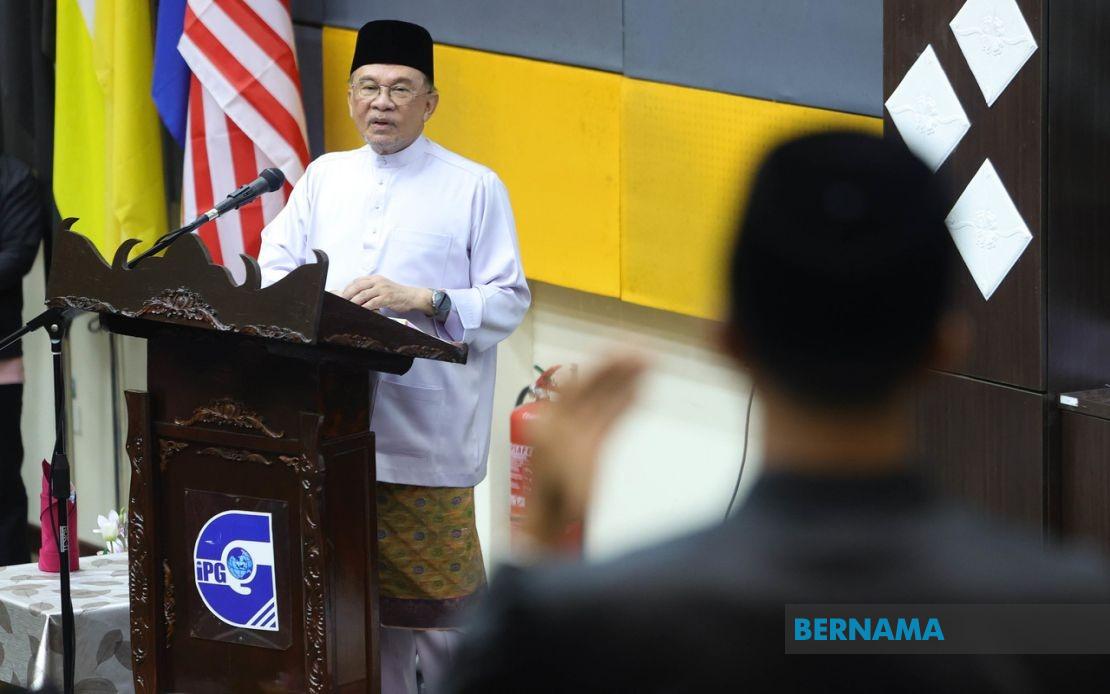
Prime Minister Datuk Seri Anwar Ibrahim has called for a fundamental shift in how Malaysia develops its teaching workforce, emphasising that technological prowess must be matched by deep moral grounding. Speaking in Nilai, the premier articulated a vision where educators are equipped not merely with competency in Science, Technology, Engineering and Mathematics—particularly in cutting-edge domains like artificial intelligence—but also possess unwavering commitment to ethics and values that anchor their professional practice. This dual imperative reflects recognition that Malaysia's competitive positioning in the global economy depends on educational leaders capable of navigating rapid technological change without sacrificing the moral compass that sustains society.
The Prime Minister's remarks underscore mounting concern that conventional educational approaches, relying on static curricula and traditional pedagogical methods, have become inadequate for an increasingly dynamic world. Anwar cautioned that complacency in curriculum design risks leaving Malaysia disadvantaged in the race to adopt and integrate transformative technologies into classrooms and learning environments. Yet his message went significantly further than a mere call for technology adoption. He stressed that mastering contemporary tools and platforms represents only one dimension of educational excellence, arguing that without simultaneous cultivation of character, ethical reasoning, and humanistic values, technological advancement becomes potentially hollow—even counterproductive if weaponised against society's cohesion.
Encapsulating his philosophy in the phrase "reach for the skies while keeping our roots on the ground," Anwar articulated a philosophy that rejects false dichotomies between modernisation and tradition. The formulation suggests that Malaysia can and must pursue technological mastery without abandoning the religious, cultural, and moral foundations that have historically defined the nation's identity. This integrated approach responds to anxieties within Malaysian society that rapid digitalisation might erode local values or create generations of technically proficient but morally rudderless professionals. By insisting on this balance, the Premier positioned education as the vehicle through which Malaysia can achieve both competitive advancement and spiritual coherence.
Anwar placed education at the apex of national development priorities, identifying it as the essential prerequisite for enhancing Malaysia's broader capabilities. Ranking immediately behind education is the nation's capacity to respond agilely to transformations occurring across the globe—a capacity that depends fundamentally on having educators capable of modelling and teaching adaptability. This sequencing reflects a sophisticated understanding that technical capacity flows from human capacity, and that educational leadership therefore constitutes strategic infrastructure for national resilience and progress.
The Premier delivered particularly pointed warnings regarding the corrosive effects of prejudice within educational contexts. He cautioned that education fundamentally fails its purpose if teachers or students harbour or express sentiments rooted in racial or religious animosity. This concern carries particular weight in Malaysia's plural society, where education serves not only an economic function but also a nation-binding role. Anwar argued that diversity—Malaysia's defining demographic characteristic—can be either a source of strength or division depending entirely on whether educational institutions actively nurture intercommunal understanding or permit sectarian sentiment to take root.
Drawing explicit connections between internal social cohesion and national security, Anwar warned that no nation, regardless of military or economic strength, can sustain stability while deliberately cultivating ethnic or religious hatred among its population. This framing elevates interfaith and interracial tolerance from matters of abstract principle to concrete national interest, suggesting that educational institutions bear responsibility for actively promoting social harmony as a practical dimension of national defence. The implication is that teachers themselves must embody and transmit this tolerance, making character development inseparable from professional competence.
The Prime Minister articulated a constructive vision of what must replace tolerance's absence: institutional commitment to mutual respect, reciprocal understanding, and shared allegiance to universal human values that transcend communal boundaries. Rather than merely asking Malaysians to refrain from harming each other, Anwar called for active construction of positive relationships across difference. This prescriptive orientation suggests that educational institutions should function as spaces where diverse students learn not simply to coexist but to build genuine understanding and recognition of common humanity. Such an approach demands teachers of particular calibre—individuals comfortable navigating cultural difference while maintaining conviction in shared principles.
The venue for these remarks—attendance by Education Minister Fadhlina Sidek and Institut Pendidikan Guru Kampus Raja Dr Kartini Abdul Mutalib—indicated that the government intends these statements to guide actual curriculum and teacher training policy. By addressing education leadership directly, Anwar signalled commitment to translating rhetoric into institutional change within Malaysia's teacher preparation ecosystem. The specificity of the audience suggested these are not merely aspirational statements but calls for concrete action within existing pedagogical and training structures.
For Malaysian educators and policymakers, Anwar's message presents both opportunity and challenge. The opportunity lies in reconceiving teacher development as holistic formation that integrates technical capacity with moral and cultural sophistication. The challenge involves implementing such integration within systems historically organised around specialist technical training. Building educators capable of teaching artificial intelligence while modelling intercommunal respect requires reconceptualising both initial teacher education and ongoing professional development. It demands deliberate curricular redesign, modified assessment frameworks, and cultivation of mentor educators embodying this integrated excellence themselves. Success requires sustained resource commitment and philosophical coherence across Malaysia's education bureaucracy and universities responsible for teacher training.

