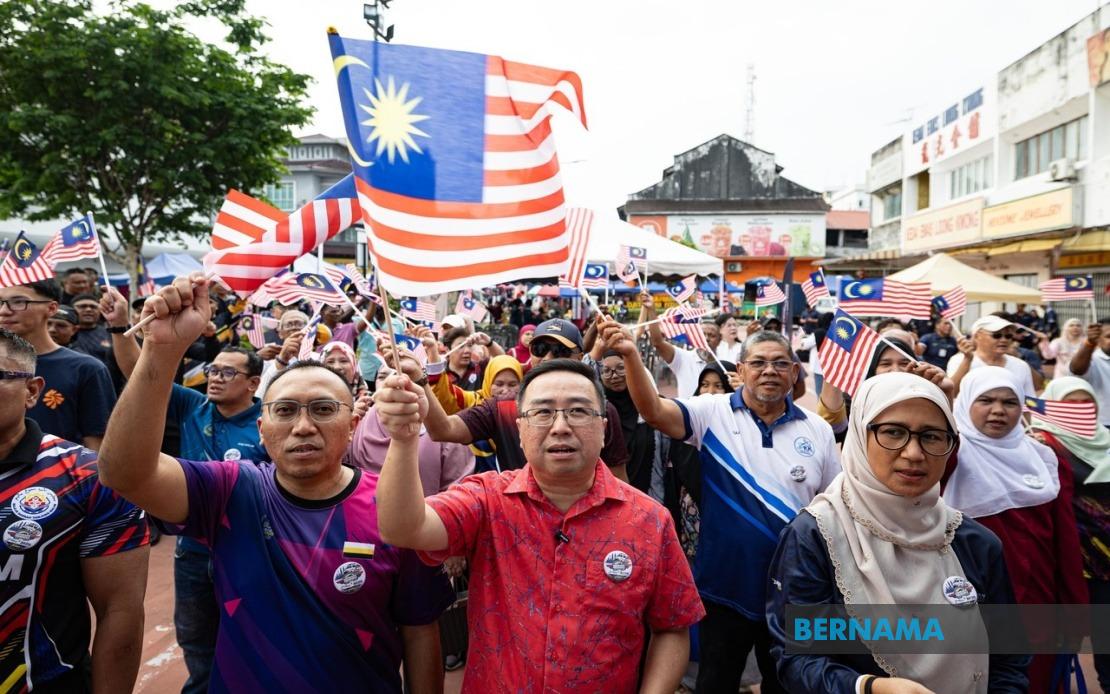
Malaysia's path forward demands a fundamental shift in how its leaders and citizens conceptualise nationhood, according to Science, Technology and Innovation Minister Datuk Chang Lih Kang, who has warned that the country cannot prosper when political discourse remains trapped within frameworks of race and religion. Speaking on Malaysia Day, Chang articulated a vision of the nation that transcends the divisive identity politics which increasingly characterises public debate, instead positioning inclusive governance and genuine stakeholder participation as cornerstones of durable national cohesion.
The Tanjong Malim Member of Parliament argues that building a genuinely strong and united Malaysia necessitates moving beyond mechanisms of coercion, fear and enforced silence. Rather, Chang contends that every citizen—irrespective of ethnicity, religious faith, socioeconomic background or political affiliation—must perceive themselves as possessing a legitimate and valued role in determining the nation's trajectory. This philosophical reorientation represents a significant departure from approaches that have historically relied upon majoritarian assertion or institutional intimidation to maintain national unity.
Central to Chang's framework is the establishment of robust, impartial institutions capable of administering law and delivering public services without discrimination based on identity markers. He emphasises that good governance functions as the most potent safeguard against sectarian fragmentation and the weaponisation of communal difference for narrow political advantage. This institutional foundation becomes particularly critical as Malaysia navigates increasing polarisation, where political actors may weaponise questions of religious and cultural identity to consolidate support among discrete demographic constituencies.
Chang directly addresses the risks posed by irresponsible invocation of race and religion in political mobilisation, warning that such rhetoric crystallises societal divisions by fostering perceptions that particular communities systematically receive preferential treatment or accumulate disproportionate advantage. This dynamic, he suggests, corrodes the social contract upon which multiethnic democracies depend, generating mutual suspicion and resentment that undermine broader national projects. The accumulation of such grievances, whether grounded in substantive disparities or manufactured through rhetorical distortion, threatens the fundamental cohesion prerequisite for addressing collective challenges.
A particularly distinctive element of Chang's intervention concerns how Malaysia treats patriotic symbols, specifically the Jalur Gemilang. While affirming that the national flag warrants reverence as an embodiment of historical experience and national aspiration, Chang cautions against enforcement regimes so draconian that inadvertent violations attract criminal sanction and public vilification. He argues that disproportionate responses to genuine mistakes paradoxically erode patriotic sentiment by generating anxiety around flag display and fostering fear of severe penalties for honest lapses. A truly confident nation, he suggests, calibrates its responses according to context, distinguishing between unintentional transgressions deserving educational intervention and deliberate provocations warranting stricter measures.
Chang's advocacy for proportionality and intent-sensitive enforcement reflects broader concerns about state apparatus deployment against citizens. He contends that government agencies should primarily function as educators and guides rather than exclusively as enforcement authorities tasked with prosecution and punishment. This recalibration would require substantial shifts in institutional culture and individual agency mindset, positioning public officials as stewards of civic development rather than custodians of compliance through deterrence.
The minister invokes Sultan Perak Sultan Nazrin Shah's contributions to discourse surrounding Islamic thought and civilisation, particularly the principle that unity rooted in genuine belonging proves more resilient than unity imposed through coercive mechanisms. This resonates with contemporary scholarly understanding that sustainable social cohesion emerges through inclusive participation and perceived fairness rather than hierarchical imposition of uniformity. Such framing carries particular relevance for Malaysia, where historical accommodation of religious and cultural diversity has generated relative stability compared to more homogeneous neighbours or more rigidly hierarchical societies.
Chang envisions a Malaysia where cultural, linguistic, religious and traditional diversity actively enriches national identity rather than representing threats requiring containment. In this formulation, heterogeneity becomes a source of collective strength provided that accompanying institutional frameworks ensure equitable treatment and meaningful participation. This vision requires rejecting the zero-sum framing wherein one community's advancement necessarily diminishes another's interests—a framing that has historically dominated Malaysian political discourse during periods of elevated tension.
Addressing the question of patriotic expression, Chang distinguishes between genuine emotional investment in national wellbeing and performative displays of nationalist sentiment. He suggests that on the occasion of Malaysia's independence anniversary, citizens should engage the more substantive question of what societal model is being constructed for succeeding generations, rather than merely quantifying expressions of affection toward the nation-state. This distinction privileges substance over symbolism whilst acknowledging that symbols communicate meaning and warrant respectful treatment.
Crucially, Chang urges resistance to instrumentalisation of state machinery for partisan political advantage, warning that weaponising government institutions to disadvantage particular constituencies betrays the public trust. Leadership positions, he argues, carry obligations extending beyond electoral success or factional advantage to encompass stewardship of institutions capable of serving all citizens equitably. This normative framework challenges entrenched practices whereby governing coalitions have historically leveraged state resources to entrench electoral advantages through targeted patronage or discriminatory service delivery.
The minister calls for societal maturation in responding to communal difference, encouraging citizens to demonstrate empathy and forgiveness toward honest mistakes rather than engaging in performative outrage. Simultaneously, he emphasises that this tolerance for inadvertent transgression should not extend to those deliberately inciting hatred or engineered division. This calibration demands civic judgment and good faith engagement, capacities that institutional design alone cannot guarantee but which institutional frameworks can either encourage or discourage.
Chang's intervention reflects growing concern among certain segments of Malaysian political and intellectual elite regarding the trajectory of public discourse and its implications for national cohesion. His emphasis on institutional impartiality, inclusive governance and proportionate enforcement represents implicit critique of recent trends toward more assertive state positioning on communal and religious questions. Whether such exhortations toward institutional maturity and civic restraint will reverse polarisation trajectories remains uncertain, particularly absent accompanying policy reforms or political leadership willing to model the behaviours Chang advocates.

