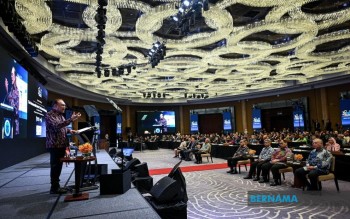
Prime Minister Datuk Seri Anwar Ibrahim has underscored the urgent necessity for Malaysia to establish a sovereign cloud infrastructure capable of protecting the nation's most sensitive information and critical data assets. Speaking during a question-and-answer session at the 39th Asia-Pacific Roundtable in Kuala Lumpur, Anwar articulated a vision that balances the imperatives of data protection with Malaysia's continued engagement in the globalised digital economy. The proposal reflects growing concerns across Southeast Asia about the degree to which the region's digital infrastructure and sensitive information remain vulnerable to external access and control, particularly as countries in the region deepen their reliance on cloud-based systems and digital technologies for government operations, financial services, and national security functions.
At the heart of Anwar's argument lies a pointed concern about the extraterritorial reach of the United States' Cloud Act, which permits American technology companies to access data stored on their servers regardless of where that data originates or the location of the servers themselves. Anwar referenced former President Donald Trump's explicit statements regarding the authority of United States-established corporations to penetrate and extract data from countries where those companies maintain operations and infrastructure. While acknowledging the sovereignty of the American position and the limited practical recourse available to other nations operating within the existing international framework, Anwar nevertheless emphasised that Malaysia cannot remain passive in the face of such potential vulnerabilities. The remarks signal a recognition that technological dependence can translate into geopolitical vulnerability if nations lack the infrastructure and institutional capacity to retain control over their own information assets.
The sovereign cloud strategy that Anwar proposes represents a pragmatic middle path between competing imperatives that confront modern developing economies. Rather than adopting a protectionist stance that would isolate Malaysia from global digital investments and technological advancement, the sovereign cloud model would establish firewalls and protective mechanisms specifically designed to shield critical security information and personal data while permitting continued openness in other domains. This approach acknowledges the reality that complete digital sovereignty remains elusive in an interconnected world, yet recognises that certain categories of information—those relating to national security, citizen privacy, and critical infrastructure—warrant enhanced protection and domestic control. The distinction between different tiers of data protection reflects a mature understanding that blanket restrictions are neither feasible nor desirable, but targeted safeguarding of the most sensitive information remains both necessary and achievable.
Anwar explicitly recognised the inherent tension between openness and security that characterises contemporary digital governance. He noted that while free information exchange and open digital landscapes bring tremendous benefits and remain philosophically aligned with Malaysia's identity as a democratic nation, these same characteristics create openings for malicious actors to exploit digital platforms and technologies. The proliferation of social media platforms and digital communication channels has generated new vectors for abuse, extending beyond traditional economic or political espionage to include personal harassment, sexual exploitation, and psychological manipulation particularly targeting vulnerable populations. The Prime Minister stressed that government has a legitimate responsibility to establish safeguards protecting Malaysian citizens, especially young people whose digital literacy and critical evaluation skills may not yet be fully developed, from such harms.
The sovereign cloud initiative also situates itself within Malaysia's broader strategy to remain attractive to multinational technology investors and digital economy participants from diverse geographies. Anwar reaffirmed Malaysia's openness to continued investments from the United States, China, Germany, and other technologically advanced nations, signalling that the pursuit of data sovereignty does not constitute a rejection of foreign capital or technological partnerships. Rather, the establishment of domestic cloud infrastructure represents an attempt to create conditions under which Malaysia can negotiate from a position of greater strength and autonomy in its digital relationships with global powers. By developing indigenous capacity to store and process critical data, Malaysia enhances its negotiating position in technology transfer discussions, reduces its dependence on any single foreign provider or government, and demonstrates the capability to establish standards and practices that reflect Malaysian values and priorities.
The Prime Minister's framing of ASEAN centrality extends beyond traditional foreign policy frameworks to encompass digital governance and technology infrastructure development. Anwar suggested that the region's collective strength and coordinated approach to digital sovereignty could amplify individual nations' bargaining power and create economies of scale in infrastructure investment. This perspective implies potential cooperation among Southeast Asian nations in developing regional cloud infrastructure, establishing common data protection standards, and collectively asserting agency in global technology governance discussions. Such regional coordination would reflect the principle that small and medium-sized nations can exercise meaningful influence through collective action and multilateral institution-building rather than attempting to contest great powers individually.
Anwar's characterisation of Malaysia's international position as that of a small nation deliberately rejecting great-power aspirations demonstrates sophisticated understanding of Malaysia's actual capabilities and optimal strategic positioning. Rather than attempting to punch above its weight or claim status as a middle power, Anwar argued that Malaysia's strength derives from its integration within ASEAN's collective framework and its cultivation of relationships with multiple global powers simultaneously. This approach enables Malaysia to benefit from partnerships with the United States, China, and European nations without becoming locked into exclusive alignments that would diminish its autonomy or reduce its attractiveness as a partner to other states. The emphasis on regional solidarity and collective strength over individual power projection represents a pragmatic strategy suited to Malaysia's demographic, economic, and military capabilities.
The sovereign cloud initiative addresses a critical gap in Southeast Asia's technological infrastructure that has received insufficient attention from policymakers and analysts. While much discussion of digital sovereignty focuses on regulatory frameworks and data protection legislation, the underlying infrastructure question remains largely unresolved. Most Southeast Asian nations continue to store critical government data, financial information, and personal records on cloud systems controlled by foreign companies headquartered in the United States, Europe, or increasingly China. This dependency creates structural vulnerabilities that no regulatory framework alone can adequately address. A sovereign cloud system, by contrast, would enable Malaysia to maintain physical and operational control over sensitive data while still participating in the global digital economy for non-critical applications and services.
The timing of Anwar's remarks reflects accelerating regional and global trends that have heightened urgency around digital sovereignty. Geopolitical tensions between the United States and China have created pressure on countries throughout Asia to choose sides in technology and telecommunications infrastructure decisions. Simultaneously, high-profile data breaches and disclosures of government surveillance programmes have increased public awareness and concern about data security. Malaysia and other Southeast Asian nations have observed how technological dependencies can be weaponised during periods of diplomatic tension, from restrictions on semiconductor exports to targeted sanctions affecting specific technology sectors. Establishing sovereign cloud capacity therefore represents a form of strategic resilience that enhances Malaysia's ability to maintain normal operations even during periods of heightened international tension.
Implementing the sovereign cloud infrastructure that Anwar envisions will present substantial technical, financial, and organisational challenges. Malaysia will require significant capital investment in data centre facilities, cybersecurity expertise, and skilled personnel capable of managing sophisticated cloud systems at scale. The country will need to develop the regulatory frameworks and institutional governance structures to oversee sovereign cloud operations in ways that both protect data effectively and maintain public trust through transparency and accountability. International cooperation with neighbouring ASEAN nations could reduce costs and expand the talent pool available for system development and operation. Private sector involvement will likely prove essential, requiring government to establish partnerships with Malaysian technology companies and international vendors willing to comply with sovereignty requirements.
The sovereign cloud strategy also aligns with Malaysia's broader digital economy aspirations and domestic technology sector development. By creating guaranteed demand for cloud infrastructure and digital services from within government, Malaysia can support the emergence of domestic technology companies and reduce dependency on foreign vendors across multiple domains. This approach mirrors successful technology development strategies employed by other nations that have used government procurement and domestic market protection to nurture competitive local technology sectors. Over time, a thriving Malaysian cloud ecosystem could export services and expertise to other Southeast Asian nations, positioning Malaysia as a regional technology hub rather than merely a consumer of foreign technology services.
Anwar's vision ultimately reflects recognition that digital sovereignty represents not an alternative to globalisation but rather a precondition for Malaysia's meaningful participation in the global digital economy on terms that protect national interests and citizen welfare. By establishing infrastructure that enables Malaysia to retain control over its most sensitive data while remaining open to international investment and technology transfer, the government can pursue prosperity through digital transformation without surrendering the autonomy necessary to protect its citizens and safeguard its strategic interests. The sovereign cloud initiative therefore represents a sophisticated policy response to the genuine dilemmas that developing nations face in an era of technological interdependence and great-power competition.

