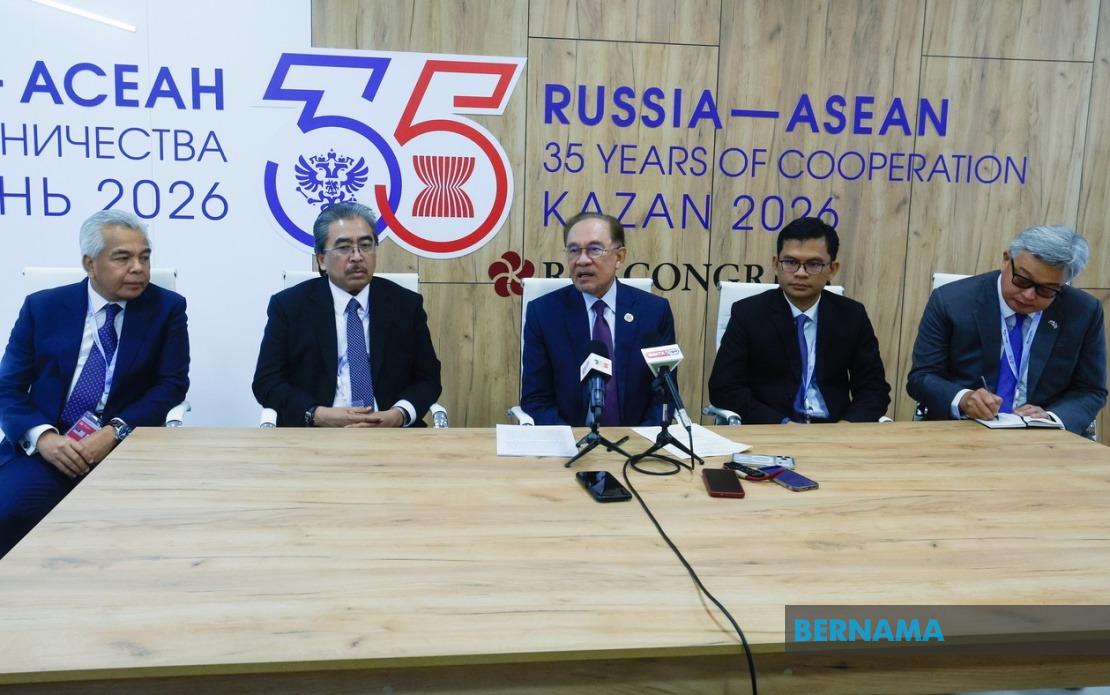
Prime Minister Datuk Seri Anwar Ibrahim has called for an acceleration of negotiations to establish visa-free travel and direct air routes between Malaysia and Russia, arguing that removing these bureaucratic barriers is essential to unlock the tourism potential between the two countries. Speaking in Kazan following his attendance at the ASEAN-Russia Commemorative Summit, Anwar highlighted the stark disparity in visitor flows, observing that Malaysia receives far fewer Russian tourists than regional competitors despite maintaining diplomatic relations with Moscow.
The contrast in numbers is striking and revealing of the structural impediments to travel. Russia sends approximately five million tourists annually to Türkiye and two million to Thailand, demonstrating considerable appetite for leisure travel in the region. Malaysia, by contrast, receives only around 100,000 Russian visitors per year—a figure the Prime Minister views as grossly inadequate given the countries' relationship and Malaysia's tourism offerings. This gap suggests that factors beyond mere awareness or destination appeal are constraining visitor flows, and Anwar has pinpointed specific policy levers that can be adjusted.
Transportation connectivity ranks foremost among these constraints. The absence of direct flights between Malaysia and Russia forces prospective travelers to endure multi-leg itineraries, adding cost, time, and inconvenience that deter casual tourism. For price-conscious Russian holidaymakers comparing options across Southeast Asia, the additional expense and hassle of connecting flights can prove decisive. Establishing direct routes would collapse travel time and expense simultaneously, making Malaysia a more competitive proposition within the region's tourism marketplace.
Payment infrastructure emerged as a second critical impediment that Anwar articulated with notable frustration. He referenced the restrictive payment mechanisms and financial protocols that currently govern transactions between the two countries, suggesting that outdated or cumbersome arrangements are discouraging Russian tourists from booking Malaysian hotels, tours, and services. The Prime Minister's reference to "archaic" procedures indicates frustration with legacy regulatory frameworks that may have been appropriate in earlier geopolitical contexts but now unnecessarily complicate commerce.
Anwar's comments also carried an implicit critique of excessive caution in Malaysian policymaking regarding relations with certain countries. He suggested that Malaysia has been unduly constrained by concerns about negative reactions from third parties when pursuing closer economic and tourism ties with Russia. This observation touches on the broader geopolitical reality: Malaysia, as a non-aligned nation with strategic autonomy, should not allow external pressure to dictate its bilateral relationships or limit opportunities for mutual benefit. The Prime Minister's framing suggests a desire to recalibrate Malaysia's approach toward greater pragmatism and independence.
The inclusion of Iran in Anwar's remarks—noting that similar visa and payment obstacles affect travel with that nation—signals that the impediments are not Russia-specific but rather systemic issues within Malaysia's international travel facilitation framework. This broader context matters for Malaysian policymakers and tourism authorities, as reform in these areas would yield benefits across multiple bilateral relationships simultaneously. A modernized visa regime and streamlined payment systems would boost arrivals not only from Russia but from other markets currently underperforming their potential.
Russia represents an underexploited market segment for Malaysian tourism. The country's substantial middle and upper-middle classes possess disposable income for international leisure travel, and geographic and cultural differences from Southeast Asia traditionally make the region attractive for Russian travelers. Moscow's geographic distance from Malaysia—approximately 9,500 kilometers—means travel is sufficiently exotic and aspirational to appeal to Russian consumers, yet familiar enough through existing diplomatic and trade channels to reduce perceived friction.
The timing of Anwar's remarks at a summit venue carries significance. By raising these issues in Kazan immediately following bilateral discussions at the ASEAN-Russia forum, the Prime Minister was signaling that Malaysia intends to translate diplomatic engagement into concrete economic benefits. Tourism development serves as a relatively non-controversial vehicle for deepening bilateral ties while generating employment and foreign exchange benefits for Malaysia. From Russia's perspective, easier access to Malaysian destinations benefits its citizens and demonstrates tangible returns from maintaining strong regional partnerships.
Implementing these changes requires coordination across multiple Malaysian agencies—the Ministry of Transport for aviation policy, the Ministry of Tourism for tourism strategy, the Ministry of Home Affairs for immigration procedures, and the Ministry of Finance for payment systems. Anwar's public advocacy suggests he intends to drive this coordination from the Prime Minister's office, lending institutional weight to accelerate typically sluggish bureaucratic processes. His candid acknowledgment that current procedures are "too stuck" and overly constrained indicates executive impatience with the status quo.
For Southeast Asia more broadly, Malaysia's push for improved connectivity with Russia reflects the region's desire to diversify tourism sources and reduce dependence on traditional markets. As Western economies face economic uncertainty and changing travel patterns, accessing growth in Russian tourism represents strategic diversification. Thailand and Türkiye have successfully captured substantial Russian visitor volumes, and their experience demonstrates the viability and profitability of this market segment. Malaysia's ambition to expand Russian tourism to meaningful levels appears both realistic and commercially justified.
The practical pathway forward involves bilateral negotiations with Russia to establish a framework for visa-free or simplified visa access, paired with discussions with aviation regulators in both countries to facilitate direct commercial flight operations. Payment mechanisms may require coordination with international banking systems and fintech solutions to enable seamless transactions despite geopolitical considerations. Anwar's public commitment suggests Malaysia intends to prioritize these negotiations within its near-term diplomatic agenda.