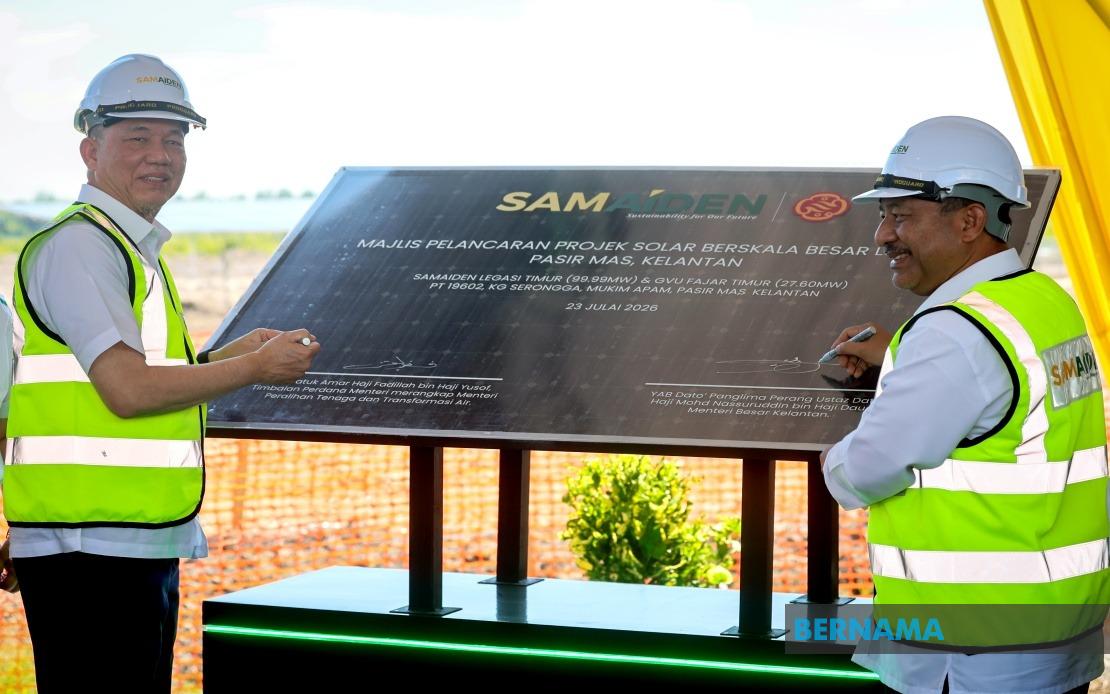
Malaysia's transition towards renewable energy is accelerating, with installed renewable capacity reaching nearly 32 per cent as of June, Deputy Prime Minister Datuk Seri Fadillah Yusof announced at the launch of the Large-Scale Solar Project (LSS5) in Pasir Mas. This milestone places the country squarely within reach of its 2030 objective to achieve 35 per cent renewable energy capacity, demonstrating consistent momentum in executing the government's comprehensive National Energy Transition Roadmap (NETR).
The pace of achievement has been notably swift. Malaysia already surpassed its December 2025 milestone with 31 per cent renewable energy installed capacity, validating the effectiveness of policy frameworks and investment incentives implemented across federal and state jurisdictions. With a clear trajectory mapped until 2050—when the nation aims for 70 per cent renewable energy penetration—Malaysia is positioning itself among Southeast Asia's more ambitious energy transition practitioners. For regional investors and neighbouring countries monitoring energy policy developments, this consistency sends important signals about Malaysia's commitment to long-term energy security planning.
Fadillah, who doubles as Minister of Energy Transition and Water Transformation (PETRA), framed the renewable energy shift not as an aspirational goal but as a strategic imperative. Energy transition, he stressed, underpins multiple national objectives including safeguarding energy independence, fortifying economic resilience against volatile global energy markets, and positioning Malaysia competitively for high-value foreign direct investment. Concurrently, these efforts fulfil the country's international climate commitments, aligning domestic policy with global decarbonisation expectations increasingly demanded by multinational corporations and international financial institutions.
The government's approach deliberately balances three competing priorities: maintaining energy security through reliable supply, ensuring affordability for households and industries, and embedding sustainability throughout the energy ecosystem. This triangular framework reflects lessons learned across the region, where aggressive renewable transitions without adequate infrastructure or affordability safeguards have created political backlash. Malaysia's measured pace suggests policymakers understand that sustainable energy transitions require public buy-in alongside technological deployment.
The LSS5 project in Kelantan exemplifies how Malaysia is channelling private sector participation into renewable infrastructure. The facility's establishment in Kampung Serongga represents tangible evidence that international and domestic investors maintain confidence in Malaysia's energy policies and regulatory environment. Such confidence translates directly into capital inflows, employment generation, and technology transfer—economic multiplier effects that extend beyond electricity generation statistics. For Kelantan specifically, the project promises job creation, stimulation of local supply chains supporting solar infrastructure, and immediate community benefits across the state.
Kelantan Menteri Besar Datuk Mohd Nassuruddin Daud positioned the project as a development template for the state's future, signalling that renewable energy infrastructure can serve as a magnet for quality investments across sectors. His emphasis on sustainability, innovation, and green technology reflects a broader regional shift where environmental credentials increasingly determine competitive advantage in attracting manufacturing, data centre, and technology hub investments. States and nations perceived as renewable energy leaders gain preferential status in supply chains of multinational corporations committed to carbon-neutral operations.
The state government's commitment to maintaining a transparent, investor-friendly ecosystem underscores recognition that renewable energy transitions require institutional reliability alongside technological capability. Investors undertaking multi-year, capital-intensive solar projects require assurance of regulatory predictability, contract enforcement, and stable governance—factors that historically challenged some Malaysian states. By explicitly promising safety standards, environmental stewardship, and community engagement, Kelantan's administration attempts to differentiate itself as a jurisdiction serious about sustainable development credentials.
Kelantan's renewable energy potential extends significantly beyond the LSS5 project. The state possesses substantial suitable land for solar installations and benefits from geographical and climatic conditions favourable for solar generation. The government is actively promoting the Solar ATAP Programme through PETRA, encouraging residential, commercial, and institutional adoption of rooftop solar systems. This distributed generation approach complements large-scale solar facilities, reducing transmission losses, enhancing grid resilience, and democratising energy production across socioeconomic classes—a social benefit often overlooked in purely technocratic energy planning.
The national renewable energy trajectory carries implications across Southeast Asia's interconnected energy markets. Malaysia's demonstrated capacity to achieve renewable targets attracts technology providers, component manufacturers, and service suppliers seeking regional hubs. This creates spillover effects for neighbouring economies dependent on regional supply chains or competing for similar investments. Furthermore, Malaysia's progress contributes to ASEAN's collective climate commitments and renewable energy targets, influencing regional electricity trading arrangements and cross-border power cooperation frameworks increasingly under discussion across Southeast Asia.
Challenges remain substantial despite positive progress. Scaling renewable capacity to 70 per cent by 2050 necessitates grid modernisation, energy storage solutions, and transmission infrastructure upgrades that demand sustained capital investment and technological innovation. Fossil fuel phase-out pressures communities dependent on coal and natural gas industries, requiring just transition mechanisms protecting workers and regional economies. Regional supply chain vulnerabilities for solar components and battery technologies—largely dependent on Chinese manufacturing—require diversification to enhance resilience against geopolitical disruptions.
The NETR's success ultimately depends on sustained political commitment across changing governments, consistent regulatory frameworks, and collaborative engagement among federal authorities, state administrations, and private investors. Malaysia's achievement of nearly 32 per cent renewable capacity represents progress, but the path toward 70 per cent requires accelerating technological deployment, expanding grid capabilities, and managing competing demands for land and resources. Stakeholders across Southeast Asia will monitor whether Malaysia sustains this momentum, as success provides a replicable model for nations wrestling with energy transitions amid economic development imperatives.

