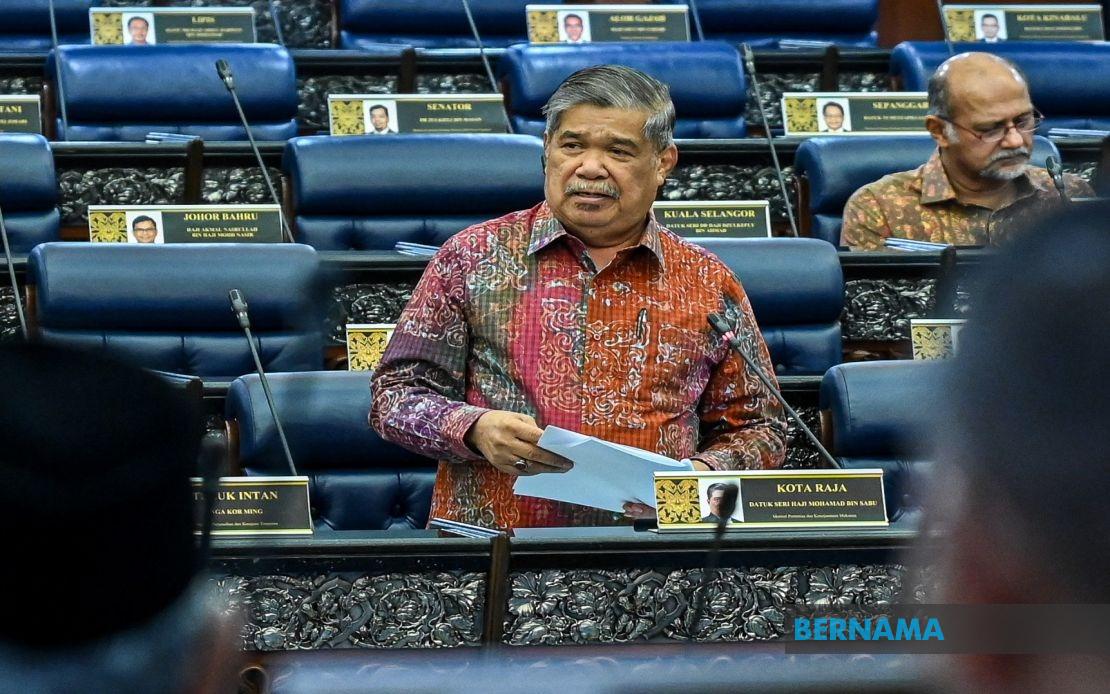
Malaysia's Ministry of Agriculture and Food Security has announced a structured pathway for unlicensed fishermen to obtain proper credentials through a regularisation programme that the government implements on a periodic basis. The initiative addresses a persistent challenge in the country's fishing sector, where many coastal operators continue working without formal licensing, creating compliance gaps and limiting their access to state support schemes. Agriculture and Food Security Minister Datuk Seri Mohamad Sabu outlined the programme during parliamentary proceedings, responding to concerns raised about licensing flexibility for traditional fishermen, particularly those in Zone A operations involving coastal boat vessels.
The regularisation mechanism operates by filling vacancies created when existing licences are cancelled or expire without renewal, creating periodic windows for new applicants to enter the formal system. This approach reflects a pragmatic recognition that Malaysia's fishing communities contain many marginalised operators who lack the resources or knowledge to navigate standard licensing procedures. By opening these occasional application windows, the government acknowledges that outright enforcement alone cannot solve the informal fishing problem without providing realistic alternatives. Mohamad's statement indicates that the ministry views regularisation not merely as an administrative process but as a deliberate policy tool to expand the legal workforce within the sector.
The approval rates demonstrate moderate but steady expansion of the licensed fishing population. The ministry approved 915 licences nationally during the year prior to the parliamentary statement, with a subsequent year recording 800 approvals. While these figures represent a substantial annual intake, they also suggest that demand continues to exceed available licensing capacity, indicating that many applicants likely remain unsuccessful each cycle. This imbalance between supply and demand creates ongoing pressure on the licensing system and suggests that future regularisation rounds will remain competitive despite the government's stated intention to accommodate more operators.
Access to the special boat licence programme requires applicants to navigate a defined set of criteria administered through District Fisheries Offices. Potential fishermen must demonstrate a ten-year residency confirmation from their fishing village leadership, establish that they venture to sea for at least 120 days annually, and secure endorsement from the relevant State Fisheries Office. These requirements serve dual purposes: they verify genuine dependence on fishing as a livelihood while filtering out individuals seeking licences for investment or resale rather than active operation. The residency requirement particularly targets applicants with deep community roots, while the sea-going threshold ensures that licence holders maintain meaningful engagement with the profession.
Age and health requirements form part of the baseline eligibility framework. Applicants must be at least 18 years old and in adequate health to perform fishing work safely, establishing that the licence intends to serve individuals capable of active participation rather than passive investors. Beyond these fundamentals, the government has implemented an income ceiling that effectively targets assistance toward economically vulnerable populations. Pensioners may apply only if their monthly retirement income does not exceed RM2,200, a threshold designed to ensure that government-facilitated licensing primarily benefits those for whom fishing remains an essential income source rather than supplementary activity. This income test reflects a social policy calculation that prioritises distributing limited licensing capacity to those most dependent on the sector.
Monitor Datuk Syed Abu Hussin Hafiz Syed Abdul Fasal from Bukit Gantang initially raised the parliamentary inquiry, specifically questioning whether the licensing system offered adequate flexibility for traditional fishermen facing enforcement actions. His supplementary question pressing for more transparent criteria indicates ongoing parliamentary concern about the comprehensiveness and clarity of the licensing framework. The minister's response committing the Department of Fisheries to periodic review of licence-issuance criteria suggests receptivity to refinement, though the government stopped short of announcing immediate overhauls to existing mechanisms. This measured stance reflects confidence that current procedures remain fundamentally sound while acknowledging room for improvement in clarity and communication.
The government's framing emphasises that regularisation serves multiple policy objectives simultaneously. By bringing unlicensed fishermen into the formal system, the programme expands access to various government assistance initiatives, training programmes, and social support mechanisms that remain unavailable to informal operators. Simultaneously, it strengthens the fisheries regulatory framework by increasing compliance rates and improving resource management through better data on who actually operates fishing vessels and where they operate. The ministry characterises this as supporting sustainability of marine resources and enhancing the welfare of fishing communities, positioning licensing compliance as beneficial rather than merely punitive.
The regularisation programme assumes particular significance given the Southeast Asian context of informal fishing economies. Across the region, unlicensed fishing represents a persistent challenge as traditional and subsistence operators struggle to comply with increasingly formalised regulatory systems. Malaysia's periodic regularisation approach offers a regional model that acknowledges the reality of informal labour while creating structured pathways toward compliance. By contrast to enforcement-only strategies that may drive operators further underground, regularisation efforts attempt to build inclusive systems that recognise existing practitioners and facilitate their transition to legitimate status.
Transparency and complaint mechanisms represent an important component of the government's approach to maintaining licensing integrity. The minister explicitly invited fishermen and community members to lodge written complaints regarding instances where non-fishermen had obtained licences improperly, signalling a commitment to policing the system against fraud. This invitation suggests that enforcement capacity remains limited and the department relies partly on community reporting to identify illegitimate licence holders. The emphasis on accessible reporting through both written complaints and direct officer engagement indicates an attempt to lower barriers for community participation in system oversight, though effectiveness depends on whether complainants actually possess confidence in departmental responsiveness.
For Malaysian fishermen seeking to regularise their status, the practical pathway involves approaching their District Fisheries Office with documentation establishing residency, evidence of active fishing engagement, and endorsement from state-level authorities. The process appears designed for relatively straightforward application rather than requiring sophisticated legal assistance, recognising that many traditional fishermen may lack formal education or administrative familiarity. However, the requirement to gather residency confirmation from village heads and state-level support letters suggests that success depends partly on relationships and local knowledge that may advantage established community members over recent migrants or marginalised groups within fishing populations.
The government's positioning of regularisation as an ongoing programme rather than a one-time amnesty suggests long-term commitment to gradually incorporating informal operators into the formal system. This incremental approach distributes licensing capacity over extended periods rather than attempting wholesale transformation, managing the fiscal and administrative impacts of expanding the licensed fleet. For fishing communities, this means that those unable to access licences in current regularisation cycles retain hope of future opportunities, though the demand-supply imbalance may mean that patient waiting does not guarantee eventual approval. The sustainability and scope of future regularisation rounds will depend on whether the government continues prioritising incorporation of informal operators or shifts toward stricter enforcement against remaining unlicensed fishing.

