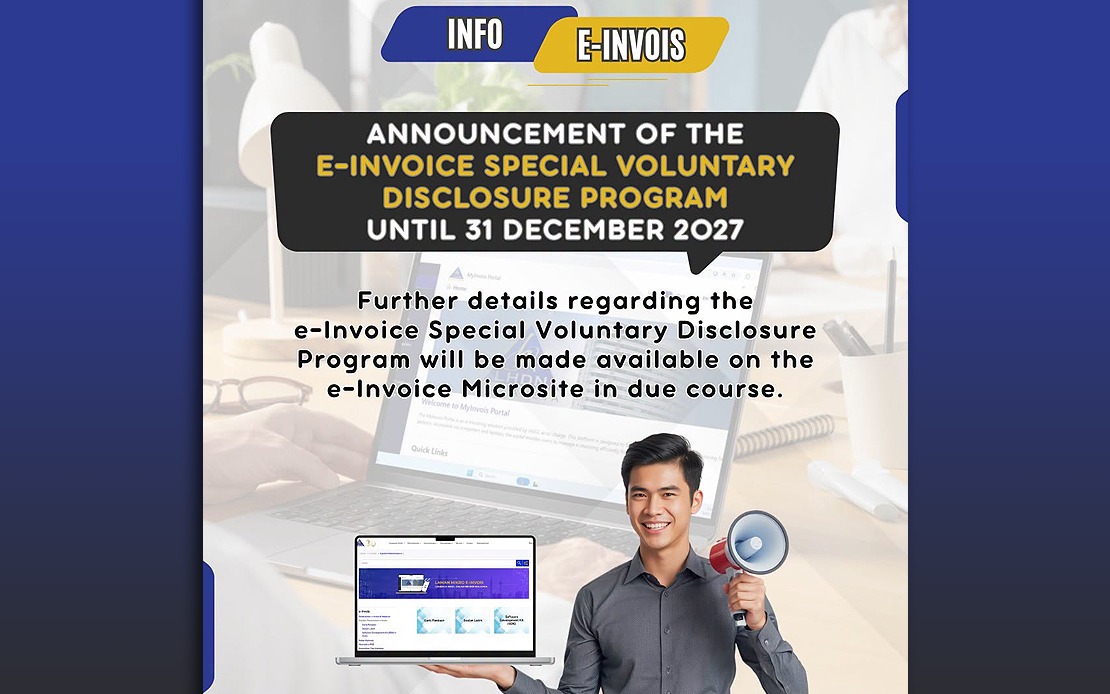
Prime Minister Datuk Seri Anwar Ibrahim announced a fresh initiative to ease the administrative burden on Malaysia's business community, particularly smaller enterprises struggling with digitalisation requirements. The e-Invoice Special Voluntary Disclosure Programme (PKPS), set to remain open through December 31, 2027, represents a strategic attempt to balance tax compliance with practical support for firms navigating the nation's transition to digital invoicing systems. The programme signals the government's recognition that mandatory e-Invoice implementation has created genuine challenges for taxpayers across different business scales and operational sophistication levels.
The Inland Revenue Board has structured the initiative to accommodate three distinct groups of taxpayers facing different compliance difficulties. The first category encompasses businesses that failed to lodge e-Invoices for specific transactions within the stipulated frameworks. The second group includes those who did submit e-Invoices but discovered errors or found their submissions did not satisfy the technical and procedural requirements set by authorities. The third category covers taxpayers who have not filed e-Invoices for any period since the mandatory implementation date took effect. This three-pronged approach acknowledges that compliance failures arise from varying circumstances—some reflecting genuine system understanding problems, others stemming from gaps in implementation timelines.
During the disclosure window, the IRB commits to forgoing penalty assessments on any voluntary updates, corrections, or revisions that businesses submit. This penalty waiver fundamentally changes the calculus for many enterprise owners and finance managers who might otherwise hesitate to surface compliance gaps, fearing substantial financial consequences. By removing the punitive dimension from the equation, authorities have created meaningful incentive for businesses to self-correct rather than risk detection through audit processes that could ultimately result in compounded penalties and reputational damage.
Recognising that compliance requires investment in technology and expertise, the government has sweetened the offer with accelerated tax incentives for businesses demonstrating full adherence to e-Invoice requirements. Participating taxpayers may now claim capital allowances for information and communication technology equipment purchases within a single fiscal year rather than spreading deductions across multiple periods. Additionally, costs associated with developing or modifying computer software specifically deployed for e-Invoice systems qualify for similarly expedited treatment. These provisions directly address a core complaint from MSMEs and smaller operators—that compliance burdens impose upfront capital demands that strain limited resources.
The backdrop to this amnesty programme reveals broader patterns in Malaysia's tax administration. The country has invested significantly in digitalising revenue collection and business compliance frameworks, positioning e-Invoice systems as essential infrastructure for a modern economy. Yet implementation across diverse business sectors and enterprise sizes has encountered friction points. Family-run retailers, traditional traders, and first-generation digital businesses have confronted technical barriers, unclear guidance, and transition costs that larger corporations with established IT departments navigate more easily. The voluntary disclosure pathway represents tacit acknowledgement that a one-size-fits-all mandatory system requires calibrated enforcement allowing for adjustment periods.
For Malaysian businesses, particularly in the MSME segment that constitutes the backbone of the economy, the programme offers tangible relief. Micro enterprises operating on thin margins benefit from penalty forgiveness that might otherwise prove catastrophic. Small and medium firms gain breathing room to audit their e-Invoice submissions, correct systematic errors, and align their processes with evolving regulatory requirements without triggering enforcement action. This calibrated approach supports the government's stated aspiration to foster digital business operations while maintaining the stability of the entrepreneurial ecosystem.
The programme's seven-year window through December 2027 signals that authorities expect extended transition periods for full compliance consolidation across the business population. Rather than rushing toward enforcement of penalties, the government has chosen a pathway emphasising cooperative compliance. This extended timeframe particularly benefits businesses in regional Malaysia, those with limited technical capacity, and sectors where e-Invoice integration presents specific operational challenges. The generosity of the timeline reflects lessons learned from previous compliance initiatives where aggressive enforcement alienated business communities and prompted political backlash.
Taxpayers seeking assistance can access dedicated support channels, including direct engagement with IRB offices nationwide, a specialised helpdesk at 03-8682 8000, and MyInvois Live Chat facilities. This multi-channel support architecture ensures that guidance reaches businesses regardless of their geographic location or technical sophistication. The provision of user-friendly assistance mechanisms demonstrates that the IRB recognises implementation challenges extend beyond mere non-compliance to include genuine gaps in understanding requirements and accessing support.
The initiative carries implications extending beyond individual taxpayer compliance. Enhanced voluntary disclosure rates improve the quality of tax authority data, enabling more accurate revenue forecasting and better policy calibration. Businesses brought into compliance strengthen the formal economy's recorded transaction base, improving economic statistics and supporting evidence-based policymaking. For Southeast Asia's wider business environment, Malaysia's approach offers a model balancing digitisation ambitions with pragmatic recognition of implementation realities across diverse enterprise ecosystems. Regional neighbours facing similar e-invoicing transitions may observe how Malaysia's collaborative approach manages the transition between mandatory digital systems and actual compliance across economically heterogeneous business populations.
The programme ultimately reflects mature tax administration thinking that recognises compliance emerges more effectively through supportive frameworks than through punitive enforcement alone. By providing penalty forgiveness, accelerated tax incentives, extended timelines, and multi-channel assistance, Malaysia has constructed a comprehensive ecosystem encouraging voluntary disclosure and genuine compliance. This balanced approach positions the nation to achieve its digitalisation objectives while strengthening business-government relationships critical for sustained economic development.

