Malaysia and the Philippines have committed to accelerating the repatriation process for over 5,000 undocumented Philippine migrants currently held across four immigration detention centres in Sabah, according to discussions held during the 9th Malaysia-Philippines Joint Commission Meeting in Manila. The agreement represents a fresh attempt to resolve a persistent humanitarian and administrative challenge that has strained the capacity of Malaysia's immigration infrastructure in the eastern state.
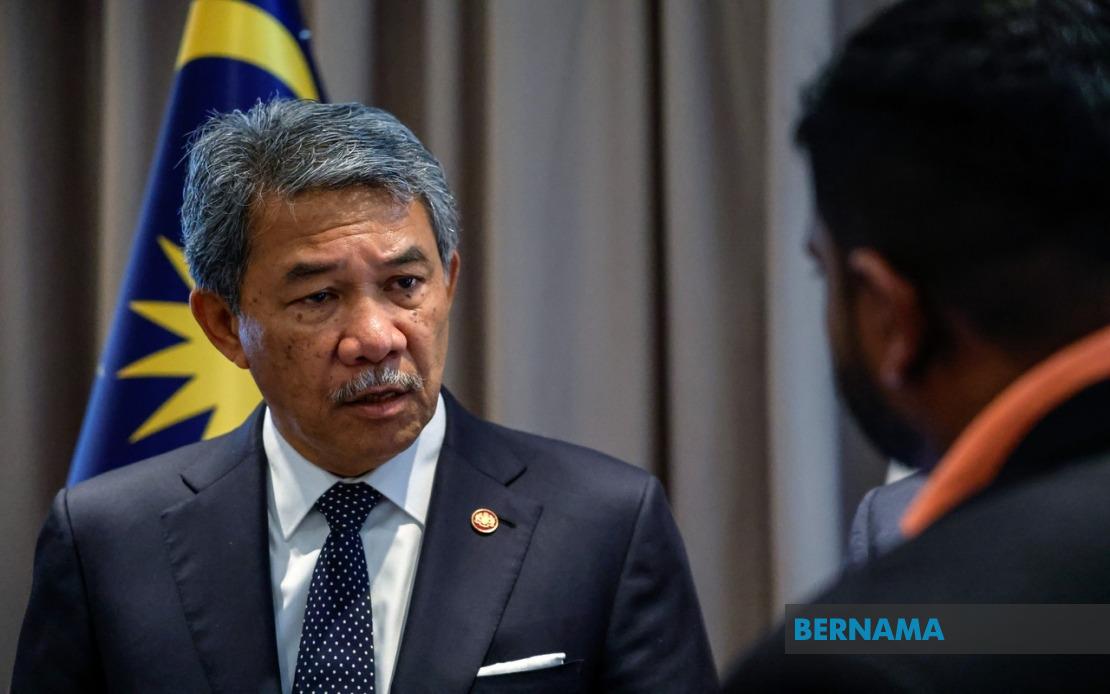
Foreign Minister Datuk Seri Mohamad Hasan outlined the scope of the problem following the bilateral talks with Philippine Secretary of Foreign Affairs Ma. Theresa P. Lazaro. Initial screening conducted by the Philippine Embassy in Kuala Lumpur has identified more than 1,000 individuals among the detained population who meet criteria for immediate repatriation, creating an urgent pathway for swift deportations to begin within weeks rather than months. The identification of this cohort signals a willingness on both sides to move beyond bureaucratic delays that have historically characterised such operations.
The capacity constraints facing Malaysia's detention infrastructure form the immediate backdrop to these negotiations. Mohamad stressed that the four centres in Sabah have exceeded their operational limits, creating conditions that strain resources, complicate management, and raise humanitarian concerns about living standards within the facilities. By establishing a prioritised deportation schedule beginning with the 1,000 pre-screened individuals, both governments hope to alleviate the immediate pressure while continuing to process remaining detainees. The Foreign Minister indicated that Manila will coordinate repatriation through maritime routes and other feasible transportation channels, recognising that large-scale overland movements would be impractical and costly.
Beyond the logistics of deportation itself, the two countries have opened a broader dialogue regarding the children of undocumented migrants currently residing in Sabah. Malaysia has agreed to examine whether educational provisions can be extended to these children during the interim period before their families' repatriation. This represents a humanitarian consideration absent from purely enforcement-focused approaches, acknowledging that prolonged detention of family units creates educational gaps for vulnerable populations. However, Mohamad made clear that any educational framework must operate under direct Philippine government administration and oversight, rather than through private institutions or informal arrangements that escape regulatory scrutiny.
The insistence on Philippine government management of educational facilities reflects broader concerns about accountability and standards. Malaysia has evidently grown wary of unmonitored private schooling arrangements that might exploit vulnerable migrant communities or fail to maintain educational quality. By conditioning educational support on formal governmental involvement, both nations aim to ensure that assistance genuinely serves detainees' interests rather than creating parallel, unregulated systems. This principle extends Malaysia's broader position that addressing irregular migration requires structured cooperation between legitimate state institutions rather than ad hoc or private-sector solutions.
The bilateral talks also touched upon the politically sensitive matter of Sabah's territorial status, though Mohamad indicated this was not a focal point of substantive discussion during the formal JCM proceedings. He reiterated Malaysia's position that Sabah's sovereignty has been definitively established through international recognition and United Nations verification, citing a commission report submitted by the UN Secretary-General as the authoritative basis for Malaysia's territorial claims. This statement appeared designed to preempt any attempts by Philippine actors to resurrect historical claims over the state, particularly following Senator Robin Padilla's earlier public calls for President Ferdinand Marcos Jr to revive such territorial assertions.
Mohamad's reference to a forthcoming diplomatic note to Manila suggested that Malaysia intends to formally register its objections to any future attempts to question Sabah's status as Malaysian territory. The timing of this messaging, coinciding with discussions on migrant repatriation, indicates that Malaysia seeks to compartmentalise the bilateral relationship, treating practical cooperation on migration as separate from foundational questions of sovereignty and international law. This approach allows both governments to advance pragmatic solutions to contemporary problems without either nation surrendering historical positions or allowing one issue to derail cooperation on others.
The broader context for these repatriation efforts involves Malaysia's long-standing challenges with irregular migration from the Philippines and other Southeast Asian nations. Sabah, as a geographically proximate state with established Philippine migrant communities, has borne disproportionate responsibility for managing this phenomenon. Detention centres have operated as the default policy mechanism for addressing undocumented entry, yet the accumulation of thousands of detainees has revealed the limitations of enforcement-only strategies. By shifting toward expedited repatriation backed by bilateral coordination, both governments implicitly acknowledge that sustainable solutions require destination country cooperation from source nations.
The repatriation effort also reflects evolving regional approaches to migration management within Association of Southeast Asian Nations (ASEAN) frameworks. Rather than treating migration solely as a security or sovereignty issue, Malaysia and the Philippines are attempting to address it as a shared challenge requiring coordinated administrative capacity. The involvement of the Philippine Embassy in screening and the commitment to various transportation modes suggests that Manila is mobilising diplomatic and logistical resources to facilitate the return of its nationals. This contrasts with earlier periods when repatriation moved at glacial pace due to bureaucratic friction or inadequate coordination.
For Malaysian policymakers and the public, these discussions signal recognition that Sabah's irregular migrant population has become administratively and fiscally unsustainable without external cooperation. The detention centres serve primarily as holding facilities rather than as instruments of deterrence or integration, and their overcrowding generates ongoing humanitarian and operational challenges. By establishing clear timelines and prioritising the 1,000 immediately repatriable individuals, both governments are testing whether accelerated processing can succeed where incremental deportations have faltered.
The agreement to discuss educational provisions for detainees' children suggests that Malaysia may be gradually expanding its conception of responsibility toward vulnerable migrant populations, even while maintaining strict enforcement of immigration law. This reflects a maturation of policy thinking that recognises detention conditions affect dependent children who bear no responsibility for their parents' immigration status. Educational continuity, even during detention, reduces trauma and facilitates potential reintegration in the Philippines following repatriation.
Moving forward, the success of these initiatives will depend on whether the Philippine government allocates sufficient resources to process the 1,000 pre-screened individuals within agreed timeframes and whether maritime and transport arrangements can be secured efficiently. Delays in the repatriation phase could undermine Malaysian confidence in the bilateral mechanism and generate domestic pressure to revert to enforcement-only policies. Conversely, demonstrable progress in reducing detention populations through coordinated repatriation could establish a template for addressing similar challenges with other source countries and might eventually reduce Malaysia's overall irregular migrant population to more sustainable levels.

