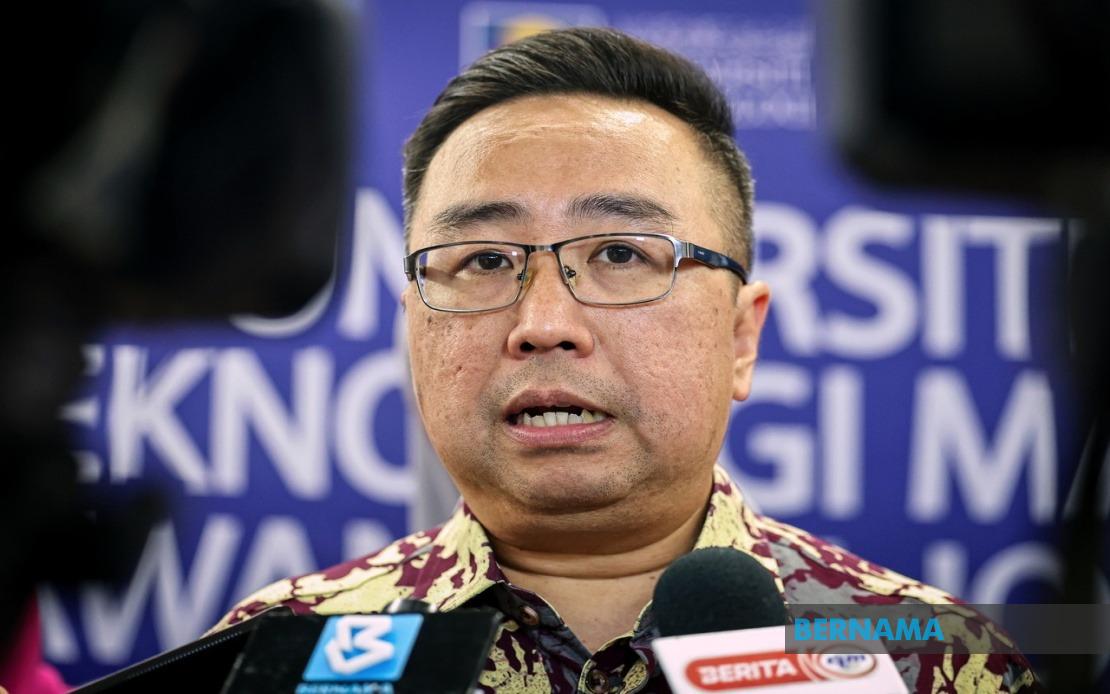
Malaysia is positioning itself as a regional hub for science and technology leadership by placing human capital development at the heart of its strategic roadmap, according to Science, Technology and Innovation Minister Datuk Chang Lih Kang. The emphasis comes as the country prepares to host the 23rd ASEAN Ministerial Meeting on Science, Technology and Innovation (AMMSTI-23) in June 2027, a high-profile gathering that will spotlight Malaysia's capabilities in innovation and research to its neighbours across the region.
The ministerial decision to bring AMMSTI-23 to Malaysian shores was formally confirmed at the 22nd edition of the meeting held in Vientiane, Laos, on June 26, establishing a timeline for the Ministry of Science, Technology and Innovation (MOSTI) to demonstrate tangible progress in building world-class research infrastructure and a skilled workforce. Datuk Chang articulated that talent development stands as the foundational pillar supporting Malaysia's broader competitive advantage, particularly in attracting multinational corporations seeking to establish high-technology manufacturing and research facilities in Southeast Asia. Without a pipeline of skilled researchers, engineers, and technologists, the minister indicated, such investments would likely gravitate towards rival nations with more robust human capital ecosystems.
Beyond talent cultivation, MOSTI has delineated several interdependent technological frontiers that will shape Malaysia's innovation trajectory over the coming years. Energy transition represents a critical priority as global markets shift away from fossil fuels and Malaysia seeks to position itself within clean energy supply chains. Artificial intelligence and digitalisation feature prominently, reflecting the ministry's recognition that these foundational technologies will increasingly determine competitive positioning across all economic sectors. Advanced materials and nanotechnology open pathways to next-generation manufacturing and industrial applications, while hydrogen technology offers Malaysia opportunities to participate in emerging global energy systems. Biotechnology rounds out the portfolio, a field where Southeast Asia possesses natural advantages through its biodiversity and genetic resources.
A particularly significant initiative involves the comprehensive restructuring of Technical and Vocational Education and Training (TVET) systems across Malaysia, despite TVET formally falling outside MOSTI's direct administrative remit. The ministry has assumed a coordinating role, working alongside twelve other government agencies to ensure that vocational curricula evolve in tandem with technological change. This collaborative architecture brings together the Ministry of Education, Ministry of Higher Education, Ministry of Rural and Regional Development, and Ministry of Human Resources, among others, signalling the whole-of-government approach required to modernise skills development. The undertaking recognises that conventional technical training focused on manual competencies and established procedures will prove inadequate for a digital economy.
Datuk Chang emphasised that TVET programmes must integrate emerging technologies such as robotics, artificial intelligence, and coding into their curricula rather than maintaining exclusive focus on time-honoured technical disciplines. This curricular modernisation serves multiple objectives simultaneously. It aligns Malaysia's vocational education with actual labour market demands from advanced manufacturers and technology companies. It provides alternative pathways for students who may not pursue university-based academic qualifications, democratising access to skills aligned with high-value employment. It also signals to young Malaysians that vocational careers offer genuine prestige and economic opportunity, potentially addressing skills shortages that constrain industrial development.
To bridge the gap between abstract policy commitments and tangible youth engagement, MOSTI has launched the TechTalks Series, a decentralised programme that brings discussions of Malaysia's science and innovation agenda directly to university campuses. Rather than confining dialogue to ministerial conferences or industry forums, the initiative democratises exposure to cutting-edge developments in Malaysia's science, technology and innovation ecosystem. University students encounter contemporary research directions, emerging opportunities in STEM fields, and the practical career pathways available to science graduates. Such face-to-face engagement serves psychological as well as informational functions, helping young people visualise themselves as participants in Malaysia's technological future rather than passive consumers of innovation imported from elsewhere.
The timing of these initiatives carries particular significance for Malaysia's competitive positioning within Southeast Asia. Regional competitors including Vietnam, Thailand, and Indonesia are themselves investing heavily in science and technology infrastructure, creating a race to attract talent and investment. By emphasising talent development and modernised technical education, Malaysia signals commitment to competing on the basis of human capital quality rather than cost arbitrage alone. This approach acknowledges that middle-income Southeast Asian nations cannot compete with low-wage competitors in low-skill manufacturing, but can potentially compete with higher-income developed nations by offering quality technical talent at reasonable cost, combined with established infrastructure and geographic advantages.
The hosting of AMMSTI-23 in 2027 will provide an external validation point for Malaysia's progress along these trajectories. The conference will allow MOSTI to demonstrate what has been achieved in talent development, to showcase research successes in priority technology domains, and to articulate a vision for ASEAN's collective technological advancement. Conversely, the event will challenge Malaysia to demonstrate tangible improvements rather than merely announcing aspirations. The two-year runway provides a defined period to expand university-industry collaboration, launch visible projects in priority technologies, and produce evidence that TVET modernisation is yielding graduates capable of meeting industry needs.
For Malaysia's broader developmental agenda, MOSTI's approach reflects an understanding that sustainable competitive advantage rests ultimately on the quality and relevance of the workforce. Investment in physical infrastructure—laboratories, testing facilities, manufacturing plants—reaches its potential only when operated by personnel possessing requisite knowledge and skills. By prioritising talent development and curricular modernisation, the ministry is addressing what economists identify as the binding constraint on Malaysia's technological advancement. The approach further acknowledges that technological sophistication cannot be purchased wholesale from abroad but must be cultivated domestically through education, research institution building, and career ecosystem development.

