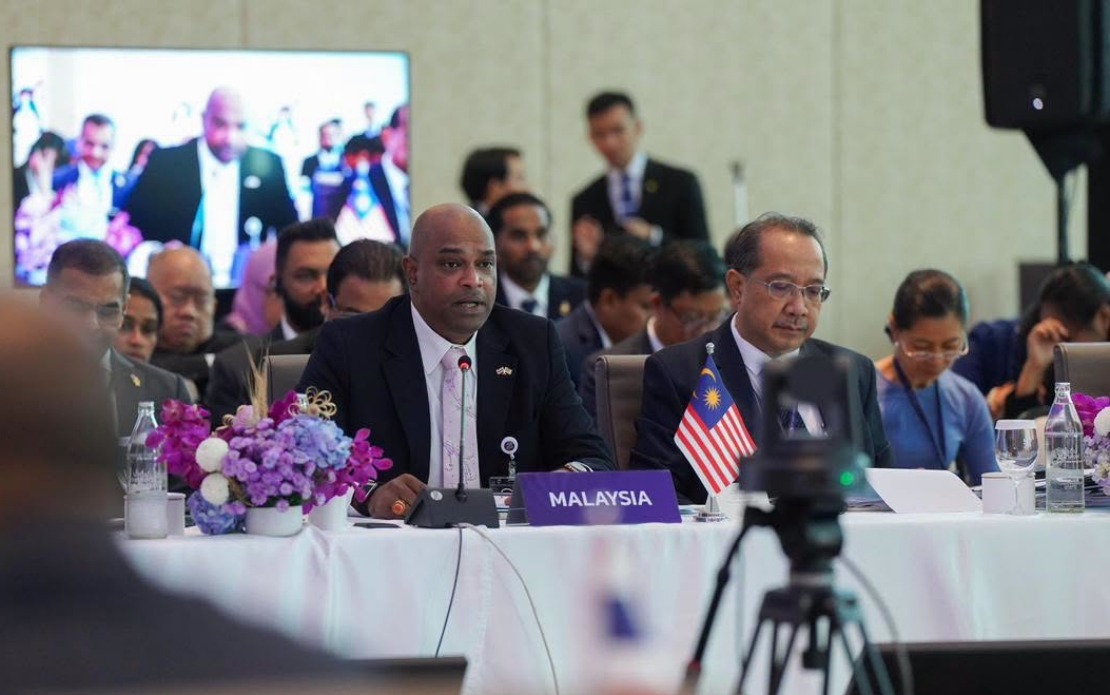
Malaysia has emerged as a vocal advocate for closer coordination among ASEAN member states on vocational education and workforce development, pressing the region's labour ministers to establish robust mechanisms for cross-border recognition of worker skills and qualifications. Human Resources Minister Datuk Seri R. Ramanan articulated this agenda at the 14th ASEAN Plus Three Labour Ministers' Meeting in Bangkok, Thailand, underscoring the importance of ensuring that skilled workers developed across the region are trusted by employers, can move freely between countries, and possess credentials with genuine international standing.
The minister's intervention reflects growing awareness within Malaysia's policymaking circles that vocational training must evolve beyond domestic frameworks to address the reality of regional labour mobility. As companies increasingly operate across multiple ASEAN nations and recruit talent across borders, the absence of standardised skills verification creates friction and reduces opportunities for workers to maximise their earning potential and career trajectories. By championing mutual recognition agreements, Malaysia is positioning itself as a thought leader on workforce issues at a time when economic integration in Southeast Asia remains incomplete despite decades of ASEAN cooperation.
Three core pillars structured Malaysia's policy position at the Bangkok meeting. Foremost was strengthening joint certification processes and achieving harmonisation across Technical and Vocational Education and Training qualifications—a substantial undertaking given that each ASEAN nation maintains distinct regulatory frameworks and pedagogical approaches. The second priority focused on facilitating technology transfer and enhancing teacher qualifications, recognising that instructional capacity fundamentally limits the quality of vocational output. The third priority addressed future-oriented skills development, specifically directing attention toward artificial intelligence, next-generation electric vehicles, advanced robotics, and other emerging sectors likely to define labour demand within the next decade.
Ramanan's framing of the issue transcends mere certificate portability. He explicitly connected skills recognition to broader strategic objectives: enabling ASEAN workers to compete on global labour markets, attracting quality employment opportunities, and positioning Southeast Asian talent as a reliable resource for multinational enterprises. This perspective acknowledges that while ASEAN possesses significant demographic advantages and a large working-age population, these advantages remain partially unrealised without proper mechanisms to certify, standardise, and market regional capabilities. The disconnect between training output and market-ready credentials represents a substantial economic inefficiency, particularly as technology-driven sectors increasingly demand specialised expertise.
Collaboration with major regional economic powers—China, Japan, and South Korea—featured prominently in Malaysia's advocacy. By expanding dialogue beyond ASEAN member states to include these three nations, Malaysia sought to leverage their advanced training systems, technological expertise, and industrial experience. Each country brings distinct advantages: Japan's renowned precision manufacturing culture and robotics innovation, South Korea's information technology and automotive sectors, and China's rapidly scaling vocational training infrastructure. Drawing on these examples and establishing technical partnerships could accelerate ASEAN's capacity to develop world-class training programmes without requiring each member state to build expertise independently.
The urgency of this initiative becomes evident when examining regional economic trends. Manufacturing competition from China and India, combined with automation trends, means ASEAN must transition toward higher-value sectors requiring advanced skills. Workers possessing recognised qualifications in emerging technologies command premium salaries and face fewer barriers to employment across borders. Conversely, those trained only within domestic frameworks risk being confined to lower-skill, lower-wage positions. Skills harmonisation effectively becomes an equity issue, determining which workers gain access to prosperity and which remain trapped in precarious employment.
Malaysia's active role in promoting this agenda reflects its position as a regional manufacturing hub and technology adoption leader. The country has substantial investments in automotive manufacturing, semiconductors, and electronics, sectors increasingly dependent on sophisticated technical workforces. By advocating for stronger regional skills frameworks, Malaysia creates conditions favourable to attracting and retaining quality talent while smoothing pathways for domestic workers to access employment throughout Southeast Asia. The bilateral benefits are clear: other nations gain access to Malaysia's expertise and experience, while Malaysia benefits from simplified recruitment and expanded markets for its training institutions.
Implementing harmonised skills recognition presents substantial challenges. ASEAN's institutional architecture, while improving, remains looser than comparable regional blocs. Individual member states guard educational sovereignty carefully, resisting external pressure to modify domestic qualification standards. Quality assurance mechanisms must be credible enough that employers genuinely trust cross-border credentials, requiring independent verification systems and continuous monitoring. Developing such infrastructure demands sustained investment and political commitment that sometimes flags when competing priorities emerge.
Yet the potential returns justify the effort. A seamlessly integrated ASEAN labour market featuring mutually recognised qualifications would reduce skill shortages in high-demand sectors, lower recruitment costs for employers, and create substantial opportunities for ambitious workers. The digital economy particularly benefits from borderless talent mobility, as software developers, data scientists, and systems architects face critical shortages throughout the region. Similarly, renewable energy transition and industrial modernisation create urgent demand for workers skilled in emerging technologies—precisely the sectors Ramanan identified as priorities.
Malaysia's diplomatic positioning on this issue also reflects broader strategic considerations. By championing workforce development and cross-border opportunity, Malaysia aligns itself with forward-looking, pro-integration constituencies across ASEAN. The initiative appeals to youth seeking career advancement, employers requiring specialised talent, and governments pursuing economic transformation. Unlike initiatives perceived as threatening national interests, skills harmonisation offers tangible benefits to multiple stakeholders with minimal distributional conflict.
The emphasis on teacher development and technology transfer deserves particular attention, as these elements address root causes rather than symptoms. Effective vocational training depends fundamentally on instructor competence, industry knowledge, and access to contemporary equipment. By upgrading training capacity at the source, ASEAN nations can improve graduate quality and maintain relevance as technology evolves. Technology transfer from advanced East Asian partners ensures that trainers access cutting-edge knowledge and methods rather than remaining confined to outdated practices.
Malaysia's call for establishing ASEAN talent as "among the best skilled workers of choice in the world" articulates an ambitious yet achievable vision. Southeast Asia possesses demographic scale, geographical positioning, and historical connection to global supply chains that enable such positioning. Realising this potential requires precisely the coordination mechanisms Ramanan advocated—systematic skills recognition, quality assurance, and deliberate positioning toward emerging sectors. Success would transform ASEAN from a source of undifferentiated low-cost labour into a valued supplier of capable, innovative professionals commanding respect and compensation proportionate to their contributions.

