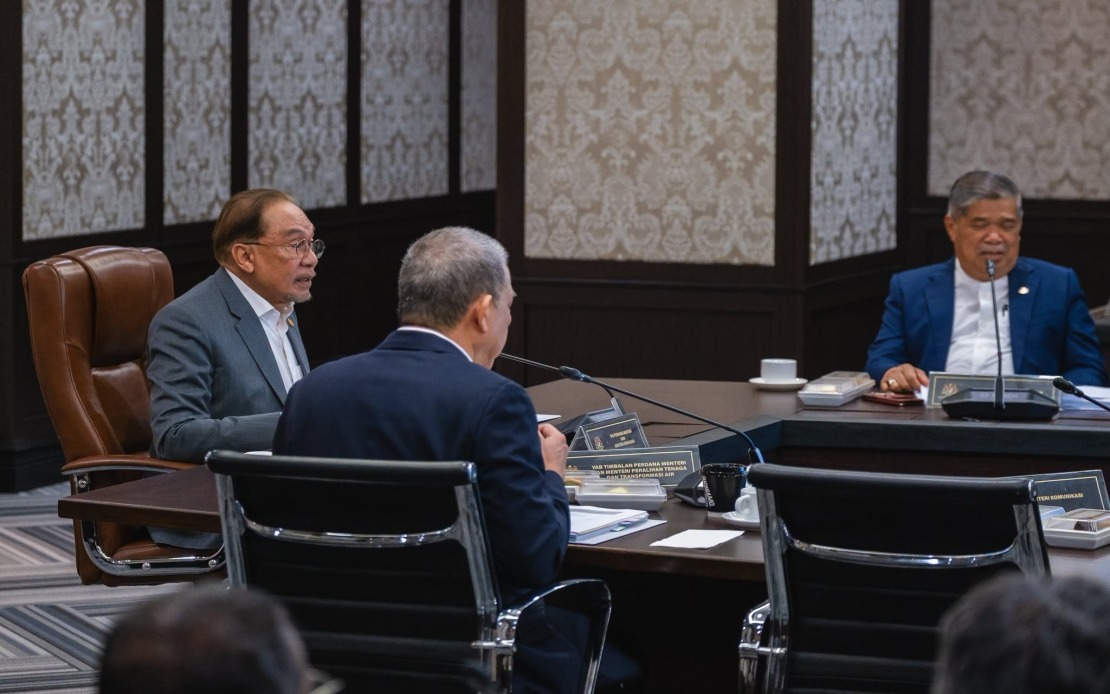
Malaysia's government is pursuing direct engagement with Thailand to resolve lingering trade friction affecting its aquaculture sector, as Agriculture and Food Security Minister Datuk Seri Mohamad Sabu disclosed discussions at the National Food Security Council Meeting chaired by Prime Minister Datuk Seri Anwar Ibrahim. The bilateral negotiations centre on dismantling Thai restrictions on Malaysian shrimp that have remained in place for nearly a decade, alongside advancing a stalled application for market access to Thailand's livestock product sector that has been pending since 2024.
The trade barriers on shrimp exports, which have constrained Malaysian producers since 2017, represent a significant constraint on earnings from one of the country's key aquaculture commodities. Beyond these longstanding impediments, the government faces the newer challenge of reciprocal Thai restrictions on shrimp imports that took effect on June 1, adding further complexity to the bilateral food trade relationship. These cumulative barriers underscore the increasingly intricate nature of regional agricultural trade dynamics, where protectionist measures can compound across multiple product categories and restrict market opportunities for exporters in competing nations.
The dialogue occurring at the highest levels of Malaysia's government demonstrates official recognition that food trade relationships require sustained diplomatic attention and strategic coordination. Minister Mohamad's inclusion of these issues in the formal national food security agenda signals that agricultural trade complications are being elevated beyond sectoral concerns into matters of strategic national importance. This governmental positioning reflects understanding that export-dependent agricultural producers require consistent policy support to navigate bilateral trade disputes effectively.
Parallel to shrimp market access efforts, Malaysia is also confronting strict inspection protocols imposed on its barramundi, or siakap, shipments entering Thailand. These inspection regimes, while ostensibly designed to ensure food safety compliance, can function as de facto trade barriers when standards are applied inconsistently or disproportionately burden one nation's suppliers. The accumulation of restrictions across multiple seafood categories suggests a pattern of Thai protectionism that extends beyond any single commodity, potentially reflecting broader agricultural policy orientations aimed at protecting domestic producers.
The national food security council convened by Prime Minister Anwar Ibrahim addressed not only bilateral trade impediments but also the country's exposure to climate-induced agricultural vulnerabilities. Discussions incorporated the ongoing implications of the El Niño phenomenon and broader climate change patterns, which risk generating sustained drought conditions that could compromise domestic food production capacity. This integration of climate resilience concerns within trade negotiation discussions reflects sophisticated understanding that food security encompasses both market access dimensions and production stability challenges.
In response to climate-related production risks, Malaysia's Ministry of Agriculture and Food Security has developed comprehensive strategies spanning prevention, adaptation, and protective measures designed to sustain agricultural sector productivity despite environmental pressures. These multi-layered approaches recognise that individual farmers and agribusiness operators require institutional support mechanisms to navigate production uncertainties while maintaining economic viability. The government's proactive positioning of such support demonstrates commitment to maintaining sectoral resilience amid converging pressures from both external trade barriers and environmental stress.
Beyond immediate trade disputes and climate adaptation, the government is exploring strategic diversification opportunities through alternative protein source development. This forward-looking initiative positions Malaysia to potentially reduce dependency on traditional commodity exports while developing new value-added product categories that could command premium pricing in regional markets. Alternative protein industries, ranging from plant-based substitutes to cultured meat technologies, represent emerging sectors where Malaysia could establish early-mover advantages if adequate research infrastructure and regulatory frameworks are developed systematically.
Competitiveness enhancement within the local agricultural industry forms another strategic pillar under discussion, recognising that Malaysian producers ultimately require productivity improvements and cost efficiencies to remain viable in open markets regardless of trade negotiation outcomes. Strengthening operational capacity and service delivery through institutions such as the Malaysian Fisheries Development Authority (LKIM) represents institutional investment in producer support infrastructure. The specific focus on LKIM slipway services expansion indicates targeted investment in critical supply chain infrastructure that directly impacts producer convenience and product handling quality.
The government also advanced planning for MAHA 2026, the biennial Malaysian Agriculture, Horticulture and Agro-tourism Exhibition scheduled from August 28 to September 6 at the Malaysian Agricultural Expo Park (MAEPS) Serdang. This major industry showcase functions as both a domestic platform for sector transformation messaging and an international venue for business development and trade promotion opportunities. MAHA events historically attract regional and international buyers, providing Malaysian agricultural enterprises direct market access to potential customers and investor networks.
Minister Mohamad emphasised that food security constitutes a national priority requiring collaborative implementation across government, private sector, and agricultural stakeholders. This articulation frames food security policy as requiring integrated institutional coordination rather than siloed sectoral management, acknowledging that market access, domestic production, climate adaptation, and industry competitiveness operate as interconnected systems requiring holistic strategic direction. The framing reflects recognition that Malaysian agricultural resilience depends simultaneously on resolving trade friction, supporting domestic producers, investing in infrastructure, and positioning the sector for future competitiveness amid global transformation.
The government's multifaceted approach to agricultural policy development demonstrates evolving sophistication in understanding regional food trade complexity. Rather than treating bilateral disputes with Thailand in isolation, policymakers are contextualising trade negotiations within broader frameworks encompassing climate resilience, industry modernisation, export diversification, and institutional capacity building. This comprehensive perspective positions Malaysia to address immediate trade barriers while simultaneously constructing longer-term sectoral competitiveness and food system resilience.

