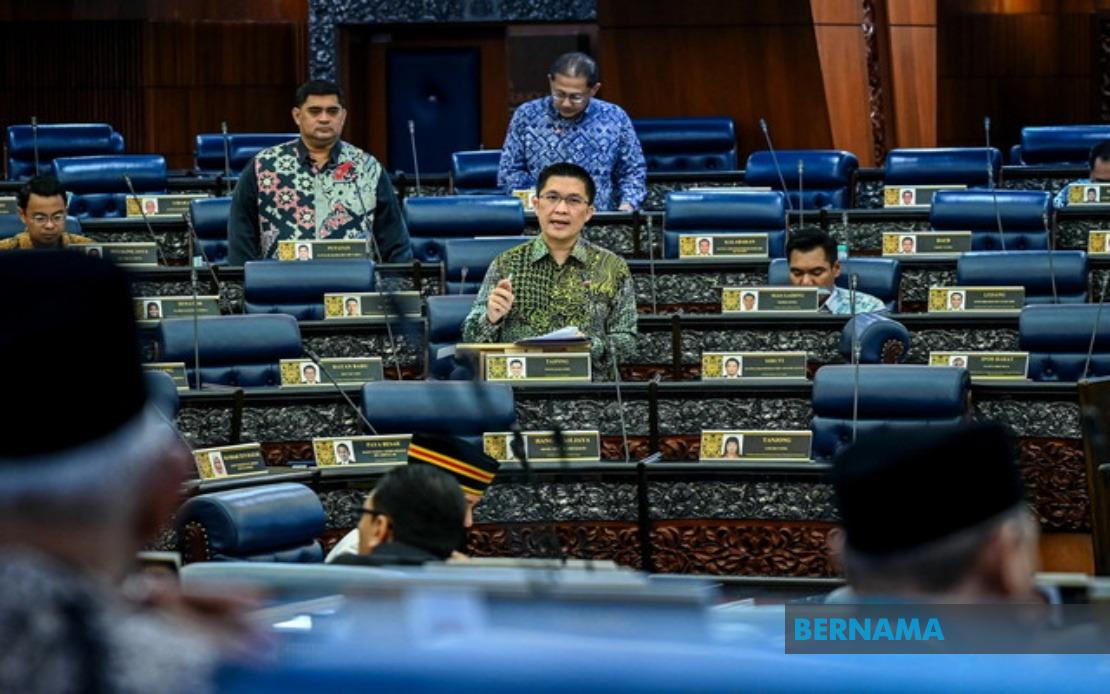
Malaysia's Education Ministry has achieved near-complete staffing of its preschool teaching workforce, with 99.8 per cent of designated positions filled as of July 1 this year. The milestone represents a significant step in the government's commitment to expanding early childhood education across the nation. Deputy Minister Wong Kah Woh announced in Parliament that 10,478 preschool teachers have been deployed nationwide, providing instruction and care to over 217,000 young learners in approximately 10,500 classes currently operating from state to state.
The acceleration of teacher recruitment reflects mounting recognition within Malaysian policymaking circles that robust investment in the foundational years of education yields substantial long-term returns. Between 2023 and 2025 alone, the ministry has enlisted 1,202 new preschool educators into its ranks, a deliberate deployment strategy designed to respond to shifting population demographics and rising parental demand for formal early learning opportunities. Rather than implementing mass recruitment in a single sweep, Wong indicated that the ministry would continue filling vacancies through phased, methodical processes that account for projected enrolment growth across different regions and communities.
Beyond mere numerical sufficiency, the government has invested considerable effort in professionalising the preschool teaching cadre. The Education Ministry has substantially overhauled its training architecture, encompassing both pre-service programmes for trainee educators and continuous in-service development for practising teachers. These initiatives ensure that Malaysia's preschool workforce meets internationally recognised early childhood education standards and possesses the pedagogical competencies required to deliver age-appropriate, developmentally sound instruction. By fortifying teacher quality through structured professional development, policymakers aim to guarantee that expanding access to government preschools translates into genuine educational benefit rather than mere enrolment expansion.
The geographical distribution of new classes follows a strategic methodology rather than ad-hoc placement. Wong explained that the Education Ministry evaluates multiple interconnected factors when determining where to establish or enlarge preschool facilities, particularly the local concentration of children within eligible age groups and demonstrated community demand. This evidence-based approach seeks to prevent the wasteful scenario of opening preschools in areas with insufficient numbers of prospective pupils, while conversely ensuring that high-demand localities receive proportionate allocations of resources and teaching capacity.
Looking ahead, the ministry has articulated ambitious though measured expansion targets designed to broaden access progressively over the coming half-decade. Wong committed to opening 300 additional preschool classes within the next twelve months, a figure that, if realised, would represent a meaningful acceleration of provision. Aggregating these near-term additions with existing and planned classes, the ministry projects establishing 1,040 new facilities throughout the subsequent five-year period, fundamentally reshaping the landscape of early childhood education availability across Malaysian states and federal territories.
For six-year-old children who have not yet secured places in government preschools, the ministry's expansion strategy offers concrete pathways to access. Wong acknowledged this cohort explicitly and committed to sustained efforts to incorporate them into the formal preschool system. The approach extends beyond the Education Ministry's direct operations to encompass collaborative partnerships with State Education Departments, the Community Development Department (KEMAS), and other government bodies. This networked approach recognises that early childhood provision involves multiple stakeholders and institutional actors, making inter-agency coordination essential for closing coverage gaps.
The parliamentary question from Hassan Abdul Saad raised the critical issue of whether the ministry possessed sufficiently clear targets and realistic timelines to guarantee universal access to government preschool education for all eligible Malaysian children. Wong's response, while outlining concrete numerical commitments, did not explicitly answer whether the five-year projection constitutes a comprehensive solution to the access challenge. This ambiguity suggests that despite robust progress, the government may fall short of achieving universal provision within the immediate future, potentially leaving some communities and families reliant on private or informal alternatives.
For Malaysian parents and educators, the staffing achievement holds practical significance. Adequate teacher numbers represent the essential foundation for quality service delivery; without sufficient trained personnel, even well-designed curricula and modern facilities cannot deliver optimal early learning experiences. The commitment to training excellence therefore matters tremendously, as a nation's early childhood workforce shapes children's cognitive, social, and emotional foundations during irreplaceable developmental windows.
The regional context amplifies the relevance of Malaysia's preschool expansion. Across Southeast Asia, governments increasingly recognise that formal early childhood education strengthens school readiness, narrows socioeconomic achievement gaps, and builds human capital foundations for economic participation. Malaysia's systematic approach to filling teacher vacancies, establishing clear expansion targets, and professionalising pedagogy positions the nation competitively within regional conversations about educational excellence and equity.
Yet sustainability challenges remain beneath the surface of these positive metrics. Maintaining teacher morale and preventing attrition requires competitive compensation, manageable workloads, and professional respect—dimensions not addressed in the parliamentary statement. Additionally, rapid expansion could strain in-service training capacity if the ministry lacks sufficient trainer resources and infrastructure to upskill newly hired educators at scale.
The constituency question originating from Baling, a state in Kedah, underscores that preschool access remains a live political concern in rural and semi-rural Malaysian constituencies. Hassan Abdul Saad's supplementary query specifically probed whether target-setting and timeline clarity would ensure comprehensive coverage, hinting at potential frustration regarding the pace of rural expansion. This dynamic suggests that while national-level statistics show impressive progress, ground-level perception in underserved communities may lag behind official narratives of achievement.

