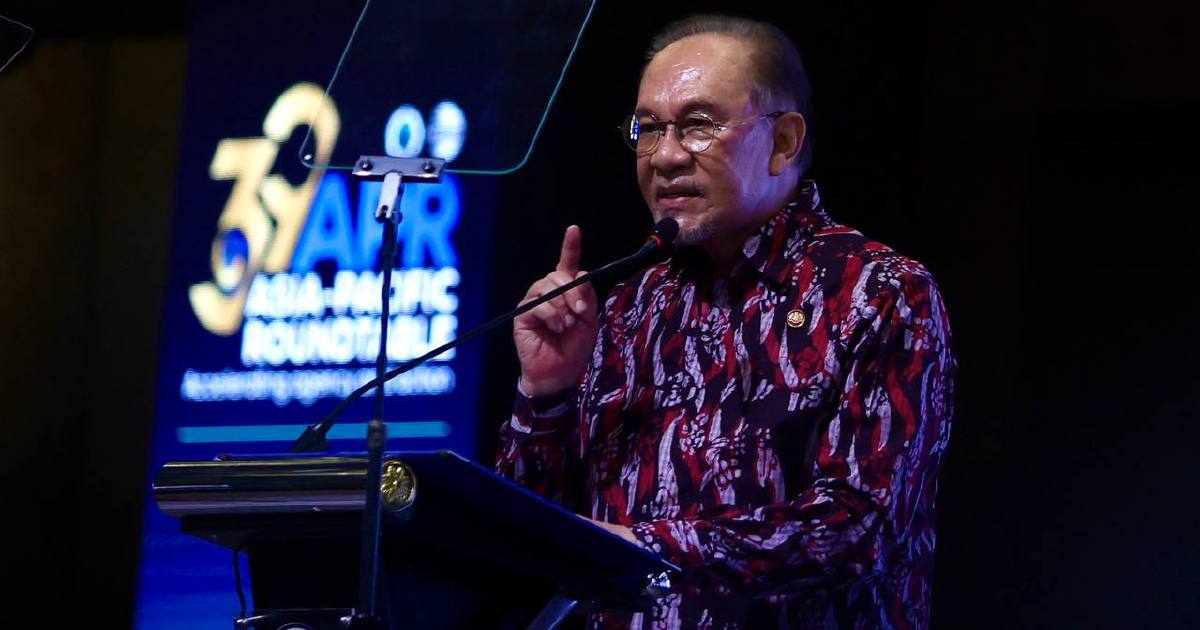
Prime Minister Datuk Seri Anwar Ibrahim has reaffirmed Malaysia's commitment to maintaining an independent foreign policy that reflects the nation's non-aligned stance in international relations. The declaration underscores the government's intention to navigate global challenges while preserving strategic autonomy and avoiding entanglement in major power rivalries.
Malaysia's foreign policy orientation has historically been rooted in the principles of non-alignment, a doctrine that gained prominence during the Cold War and continues to define the country's approach to international diplomacy. Under Anwar's administration, this foundational commitment remains central to how the nation engages with the broader international community, balancing relationships with various global powers while prioritizing national interests.
The emphasis on independence reflects Malaysia's geographical position in Southeast Asia, a region increasingly caught between competing strategic interests. As a middle power with significant economic and political influence, Malaysia seeks to maintain diplomatic flexibility, allowing it to cooperate selectively with different nations and multilateral organisations without being bound to any particular bloc or alliance structure. This approach enables Malaysian policymakers to adapt responses to shifting regional dynamics while protecting national sovereignty.
Anwar's restatement comes at a critical juncture when Southeast Asian nations face mounting pressure from great powers seeking to expand their influence across the region. The United States, China, India, and other major economies have intensified their engagement with ASEAN members, promoting competing visions for regional order. Malaysia's non-aligned posture provides a framework for engaging constructively with all parties without sacrificing independence or appearing to favour any single power.
The proactive dimension highlighted by the Prime Minister suggests that Malaysia will not merely react passively to international developments but will actively shape outcomes favourable to its interests. This contrasts with a purely defensive non-alignment and indicates willingness to participate in multilateral forums, pursue bilateral partnerships, and contribute to regional initiatives that advance shared prosperity and stability. Such engagement reflects Malaysia's recognition that isolation is impractical in an interconnected world.
Regional security concerns, including maritime disputes, competing territorial claims, and transnational threats, make Malaysia's non-aligned stance particularly valuable. By maintaining good relations with all claimants in regional disputes while refusing to take sides, Malaysia can position itself as an honest broker in regional disputes and contribute to conflict prevention. This diplomatic flexibility proves especially important given Malaysia's own maritime interests and its role as a key ASEAN member.
Economic considerations also reinforce Malaysia's commitment to non-alignment. The nation's prosperity depends substantially on trade relationships with multiple partners, ranging from advanced economies to developing countries across Asia, Europe, and beyond. A firmly non-aligned position allows Malaysian policymakers to negotiate from a position of relative strength in trade agreements and economic partnerships, avoiding the risks of economic dependency that could arise from exclusive alignment with any single power or bloc.
Within ASEAN, Malaysia's approach aligns with the broader regional consensus favouring consensus-based decision-making and non-interference in member states' internal affairs. The organization itself maintains a cautious distance from strategic alignment, preferring instead to engage external powers on terms that protect member sovereignty. Malaysia's reaffirmation of non-alignment reinforces this collective regional position during a period when external pressures to choose sides have intensified.
The timing of Anwar's statement holds significance as regional geopolitical tensions show no signs of abating. Developments in the South China Sea, evolving defence partnerships, and competition over technology standards and digital governance all present challenges that a non-aligned Malaysia must navigate carefully. The government's reassurance to both domestic audiences and international partners that Malaysia will not be pressured into exclusive commitments reflects confidence in this approach's continued relevance.
For Malaysian citizens and businesses, the non-aligned policy carries practical implications. It facilitates access to diverse markets and investment opportunities, protects against becoming a proxy for great power competition, and preserves policy space for addressing national development priorities without subordinating them to external powers' strategic objectives. This flexibility has historically allowed Malaysian administrations to pursue ambitious economic programmes while maintaining diplomatic peace.
ANWAR's emphasis on proactivity rather than passive non-alignment also signals recognition that modern non-alignment requires active engagement rather than detachment. Malaysia will pursue regional leadership roles, participate in solving transnational challenges, and contribute meaningfully to international institutions while maintaining the independence to make autonomous decisions that serve national interests.
Looking forward, Malaysia's non-aligned posture will continue defining its approach to emerging global issues ranging from climate change and pandemic preparedness to artificial intelligence and digital security. These transnational challenges demand cooperative responses that transcend traditional alignment patterns, making Malaysia's commitment to independent, proactive non-alignment increasingly relevant to regional and global problem-solving.

