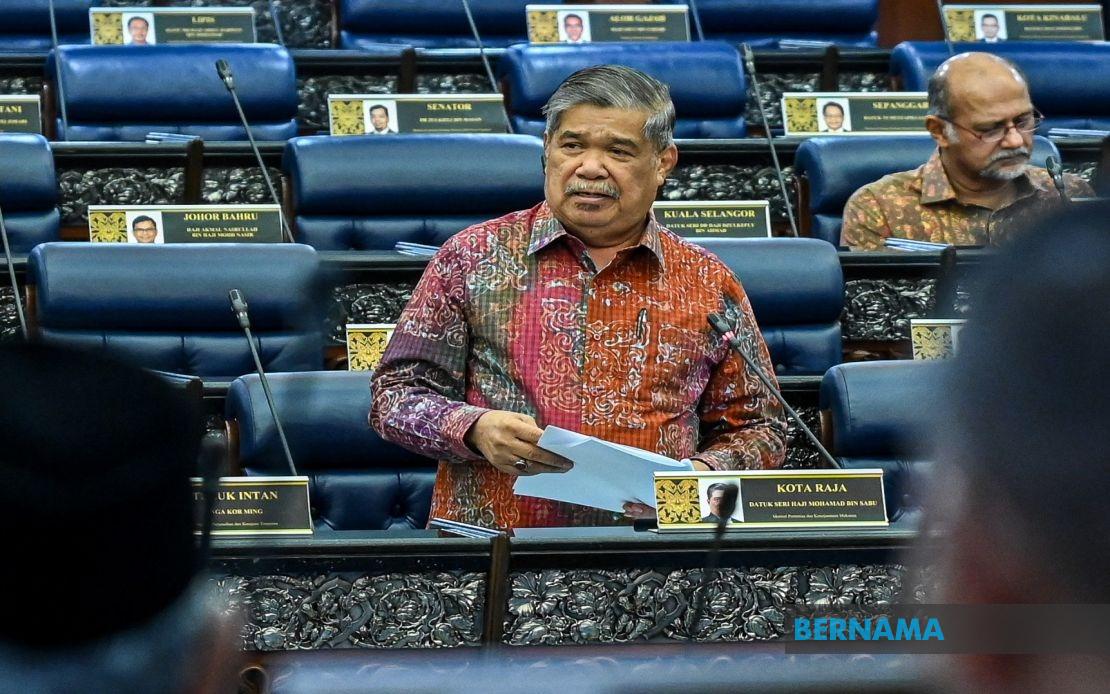
The Malaysian government has unveiled a comprehensive strategy to fortify the nation's food security against the emerging El Niño threat, combining technological innovation with direct financial support to protect domestic agricultural production and rice supplies. Speaking during parliamentary question time, Minister of Agriculture and Food Security Datuk Seri Mohamad Sabu detailed an integrated approach spanning water infrastructure, crop research, and relief measures designed to minimise disruptions to the vital agro-food sector that underpins national food sovereignty and rural livelihoods across the country.
Central to Malaysia's defensive posture is an enhanced water management framework that moves beyond traditional dam monitoring to embrace precision agriculture technologies. The ministry is implementing continuous surveillance of water levels across critical dams and catchment areas, coupled with integrated water resource management protocols that coordinate supply across competing agricultural and municipal demands. The deployment of smart irrigation monitoring systems and drip irrigation infrastructure represents a significant upgrade aimed at dramatically reducing water consumption while maintaining crop yields, a critical adaptation as the atmospheric pressure patterns associated with El Niño typically create drier conditions across Southeast Asia.
Complementing infrastructure investments are substantial research initiatives led by the Malaysian Agricultural Research and Development Institute (MARDI), which is accelerating the development of drought-resistant paddy varieties engineered to thrive under moisture stress. This breeding programme reflects a strategic recognition that technological resilience in seed stock offers long-term protection against cyclical climate phenomena. The ministry is also mobilising cloud seeding operations during suitable weather windows to artificially induce precipitation, demonstrating a willingness to deploy geoengineering tactics alongside conventional agronomic methods to combat anticipated rainfall deficits.
The financial commitment to affected farmers underscores the government's acknowledgement of El Niño's potential to inflict immediate hardship on rural communities. During the initial assistance phase, the government channelled RM45.24 million to 8,224 rice farmers beginning in 2024. These disbursements escalated substantially, reaching RM38.53 million distributed to 55,058 rice farmers by June 30, 2026, covering 16,933 hectares of drought-affected agricultural land predominantly located in the northern and eastern regions of Peninsular Malaysia, traditional rice-growing zones particularly vulnerable to moisture deficits.
Minister Mohamad's response to parliamentary concern raised by Bakri Jamaluddin regarding super El Niño impacts emphasised the government's existing buffer mechanisms. Malaysia maintains approximately six months of rice supply in strategic reserves, a stockpile designed to cushion supply disruptions while domestic production recovers or imports accommodate demand. This reserve strategy reflects lessons learned from previous climate-induced food price volatility that had exposed the vulnerability of nations lacking adequate buffer stocks.
Expanding agricultural capacity represents another pillar of the broader food security architecture. The government is actively promoting large-scale rice field development projects in Sarawak and Pahang, leveraging geographical diversity and underutilised arable land to gradually increase domestic rice production and reduce import dependency. This geographic diversification strategy acknowledges that El Niño effects manifest unevenly across Malaysia's distinct climatic zones, with some regions experiencing manageable impacts while others face acute stress.
Controlled environment agriculture has emerged as a strategic growth area, with the ministry encouraging expansion of greenhouse and protected cultivation systems that insulate crops from external weather variability. These capital-intensive facilities enable year-round production of high-value horticultural commodities while minimising water consumption and climatic vulnerability, particularly important for vegetables and specialty crops that command premium prices in regional markets.
Beyond rice-specific measures, the government confronts emerging agricultural market pressures exemplified by durian price collapse stemming from oversupply. Minister Mohamad outlined plans to stabilise commodity prices through geographic market expansion, particularly targeting China where Malaysian durians currently penetrate primarily metropolitan centres. The ministry perceives significant untapped demand in smaller Chinese cities, where premium tropical fruit represents a relatively novel consumer category with substantial growth potential.
Government efforts to facilitate durian exports involve negotiating improved logistics pathways and streamlined customs procedures with Chinese authorities, addressing practical barriers that currently inhibit trade flow. By expanding export volume and geographic reach, officials anticipate stabilising domestic prices while generating additional income for farmers and traders, effectively creating demand-side relief for oversupplied domestic markets.
The multifaceted approach reflects sophisticated understanding that food security encompasses production resilience, supply stability, price sustainability, and farmer income protection operating simultaneously across multiple temporal horizons. El Niño represents a medium-term climatic disruption requiring defensive postures that operate across seasons and years, necessitating both immediate relief mechanisms and long-term capacity enhancements.
For Malaysian policymakers, the El Niño challenge intersects with broader regional vulnerabilities affecting Southeast Asian food systems. The region's heavy reliance on monsoon-dependent agriculture makes it particularly susceptible to precipitation anomalies, while international rice market concentration and export restrictions by major producers create geopolitical vulnerabilities affecting import-dependent nations. Malaysia's strategy of combining domestic production strengthening with strategic reserves positioning represents a pragmatic middle path acknowledging both the imperative of agricultural self-sufficiency and the practical reality of sustained import requirements.
Implementation success will ultimately determine whether these measures translate from policy documents into tangible farmer resilience. The RM38.53 million distributed to 55,058 farmers represents meaningful but thinly distributed assistance, suggesting that individual farmer benefits remain modest relative to production losses El Niño may impose. Scaling assistance mechanisms and accelerating technological adoption across smallholder farms will require sustained investment and coordinated extension support from agricultural agencies operating at state and district levels.

