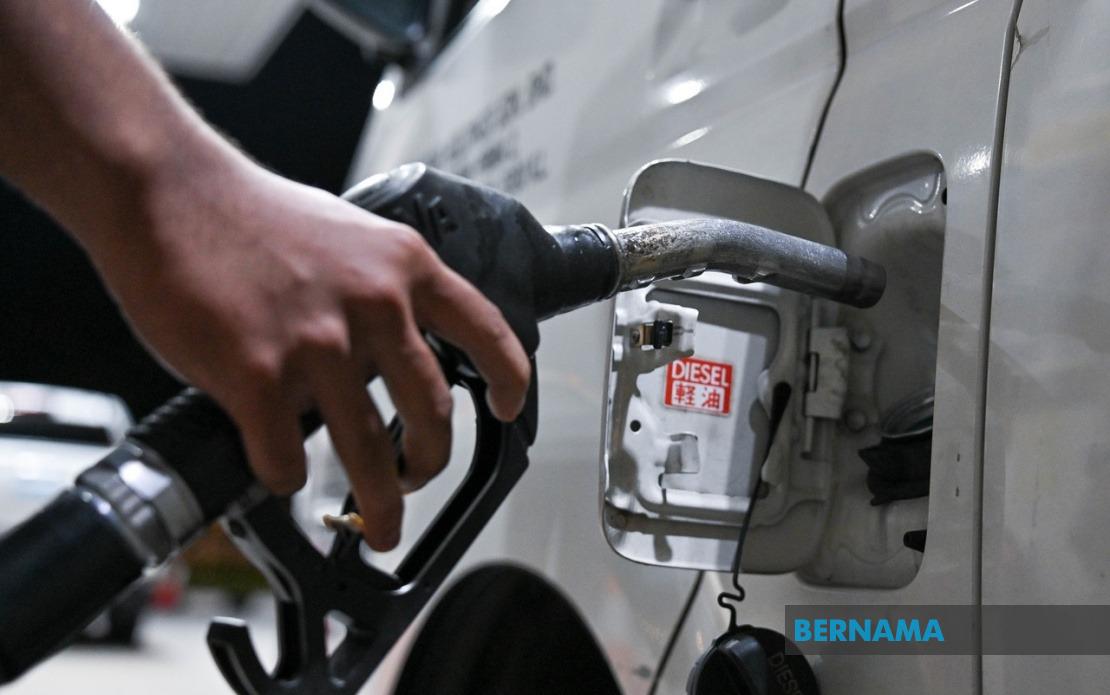
Malaysia is removing long-standing restrictions on diesel purchases in its three easternmost territories starting July 1, marking a significant shift in how the government manages fuel subsidies across Sabah, Sarawak, and the Federal Territory of Labuan. The Ministry of Domestic Trade and Cost of Living announced on Sunday that it is revoking the directive that previously limited diesel sales to land transport vehicles and imposed purchase caps of 50, 100, and 150 liters depending on vehicle classification.
The decision follows Prime Minister Datuk Seri Anwar Ibrahim's announcement on June 21 that subsidised diesel prices would be standardised at RM2.10 per litre nationwide under the BUDI Diesel Programme. By unifying fuel pricing across all states and federal territories, the government aims to reduce regional disparities and simplify administration of fuel subsidies that have become increasingly complex to monitor. This standardisation removes the previous justification for tighter controls in the eastern territories, where fuel subsidies had been managed differently from peninsular Malaysia.
Datuk Azman Adam, the KPDN's Director-General of Enforcement, stated that the cancellation represents a modernisation of subsidy distribution mechanisms. Rather than relying on manual verification and volume restrictions at petrol station pumps, the government is transitioning to a technology-driven approach using MyKad digital authentication. This shift from analogue to digital verification is expected to enhance the accuracy of subsidy targeting while reducing opportunities for misuse or smuggling of subsidised fuel across state borders.
The new MyKad-based purchasing system takes effect simultaneously with the removal of purchase limits, creating an integrated verification framework intended to ensure that subsidies reach only eligible consumers. When motorists purchase subsidised diesel, their MyKad will be scanned at the pump to confirm eligibility and track consumption patterns. This approach theoretically allows the government to monitor fuel purchases across all three territories in real time, providing granular data on subsidy usage that was previously unavailable under the manual system.
For Sabah and Sarawak, this development holds particular significance given their geographic distance from peninsular Malaysia and historically higher fuel costs. Residents and businesses in these states have long advocated for improved access to fuel subsidies to offset transportation costs and maintain competitive pricing for goods produced locally. The removal of purchase caps addresses a longstanding grievance, particularly among logistics operators and commercial vehicle owners who previously faced cumbersome restrictions when refuelling large fleets.
The government has instructed all petrol station operators holding retail scheduled controlled goods licenses in the three territories to comply with the new framework immediately. KPDN emphasised that retailers must update their systems to accommodate the MyKad verification requirement and discontinue enforcement of the previous volume restrictions. This coordination requirement places administrative responsibility on both the government and private sector to ensure seamless transition without disrupting fuel supply during the implementation period.
The timing of this policy change reflects broader government efforts to improve subsidy efficiency across Southeast Asia's most complex fuel subsidy programme. Malaysia distributes approximately RM40 billion annually in fuel subsidies, making precise targeting critical to fiscal sustainability. By implementing digital verification instead of relying on physical purchase limits, policymakers hope to reduce leakage while maintaining affordability for ordinary consumers who depend on subsidised fuel for daily transportation.
Regional observers note that the shift towards standardised pricing and digital verification could serve as a model for other subsidy programmes in Malaysia, from cooking gas to flour. If the MyKad system proves effective in controlling fuel subsidy abuse whilst maintaining consumer access, the government may extend similar mechanisms to other essential commodities. This potential expansion underscores the significance of successfully implementing the new diesel framework without creating shortages or widespread evasion during the transition.
However, implementation risks remain substantial. Digital systems depend on reliable infrastructure, consistent power supply, and regular system maintenance—challenges that can be more acute in remote areas of Sabah and Sarawak. Petrol stations in less populated regions may struggle with integration of new verification technology, potentially creating access disparities between urban and rural consumers. The success of this transition will largely depend on how comprehensively KPDN conducts pre-implementation testing and provides technical support to retailers operating in challenging geographic conditions.
The removal of purchase restrictions also raises questions about monitoring subsidy leakage through unofficial channels. Previously, the 50, 100, and 150 litre caps created an artificial constraint that, while frustrating for legitimate users, provided a natural brake on bulk purchases intended for resale or smuggling. With these caps eliminated, the MyKad system becomes the sole mechanism preventing circumvention. Should the digital verification system prove vulnerable to fraud or technical failures, the government may face significantly higher subsidy costs than anticipated when formulating this policy change.
For Malaysian businesses operating across the three territories, the policy shift removes operational friction that previously complicated fleet management and logistics planning. Commercial operators can now purchase fuel without worrying about daily visit caps or volume restrictions, potentially improving efficiency in supply chain operations. This benefit is particularly important for industries including agriculture, palm oil production, and fishing, which depend on reliable fuel access to maintain competitiveness in regional markets.
The Ministry has encouraged all stakeholders to support full compliance with the new mechanism, framing standardised pricing and digital verification as essential modernisation of Malaysia's subsidy architecture. Successful implementation would demonstrate that the government can reduce fiscal drain whilst improving service delivery through technology adoption. Conversely, implementation difficulties could provide evidence supporting arguments for further subsidy reform, potentially shifting policy away from universal price controls towards more targeted assistance mechanisms in coming years.

