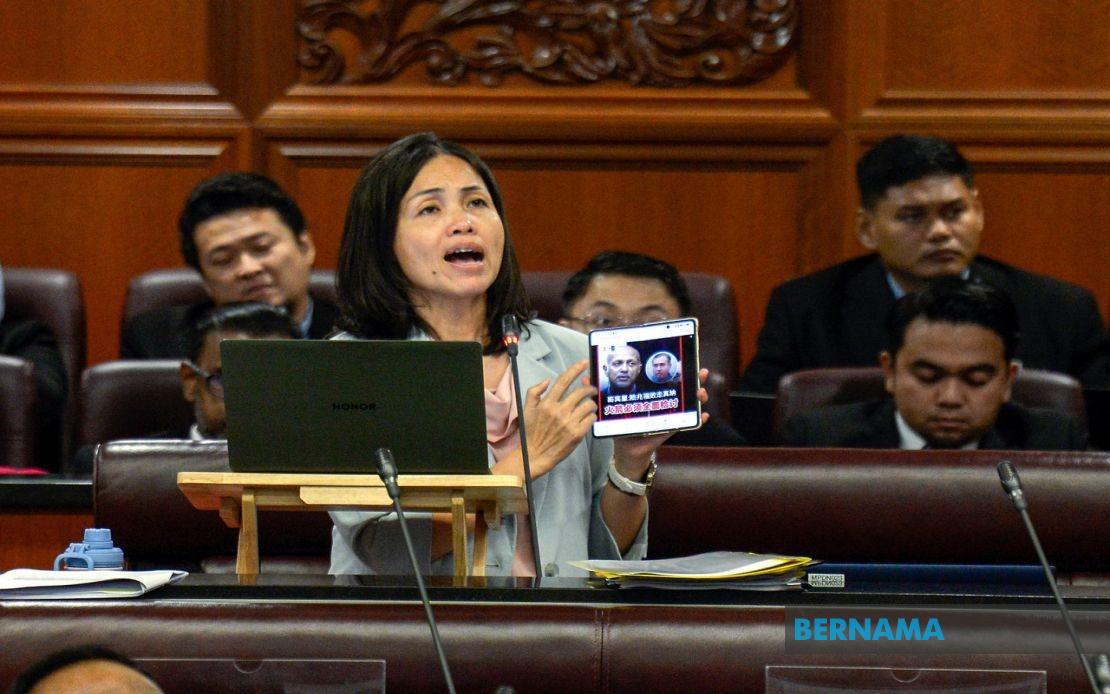
Malaysia's digital enforcement agencies have intensified efforts against online scams, with Deputy Communications Minister Teo Nie Ching reporting that 99,693 fraudulent content items had been removed from social media platforms by July 31, 2026. This figure already surpasses the 98,503 items taken down throughout the entire 2025, underscoring the accelerating challenge posed by scam operations targeting Malaysian internet users. The cumulative removal rate demonstrates both the growing scale of online fraud and the increased vigilance of Malaysian authorities in monitoring and responding to malicious content distributed across digital channels.
The trajectory of content removals reveals a striking escalation in enforcement activity over recent years. In 2024, authorities removed 63,652 scam-related items, while 2023 saw just 6,297 removals and 2022 recorded only 242 instances. This exponential growth reflects either a dramatic increase in scam activity itself or substantially improved detection and removal mechanisms—most likely a combination of both factors. The data presented by Teo during the Dewan Negara's debate on the Communications and Multimedia (Amendment) Bill 2026 illustrates that online safety has transitioned from a peripheral concern to a central priority in Malaysia's digital governance agenda.
The legislative response to these challenges came through the Communications and Multimedia (Amendment) Bill 2026, which the Dewan Negara approved following debate by 15 senators. This legislative framework introduces the National Universal Service Provision (NUSP) initiative, designed to strengthen national security infrastructure within Malaysia's communications ecosystem. The amendments grant the minister explicit authority to direct the Malaysian Communications and Multimedia Commission (MCMC) to support NUSP implementation efforts, effectively creating a more cohesive regulatory apparatus for addressing threats to digital infrastructure and citizen safety.
A critical component of the amendments involves clarifying MCMC's legal mandate and operational scope. By amending Section 202 of the Communications and Multimedia Act 1998, lawmakers provided the commission with more robust statutory grounding to undertake interventions related to network services and digital applications. This legal clarification is particularly significant because it establishes clear authority for actions that might otherwise face constitutional challenges or procedural disputes. The amendment ensures that MCMC's enforcement activities rest on solid legislative foundations rather than interpretive grey areas that could undermine effectiveness or invite judicial scrutiny.
Responsibility and accountability mechanisms have been deliberately embedded within the amended legislation to address concerns about government overreach or arbitrary decision-making. Teo outlined that any party affected by MCMC decisions or ministerial directives possesses the right to appeal to an Appeals Tribunal established under the Communications and Multimedia Act 1998. This tribunal is chaired by a High Court judge, ensuring judicial independence and expertise in reviewing administrative decisions. Furthermore, dissatisfied parties may pursue judicial review through the courts, creating multiple layers of oversight and maintaining rule-of-law principles within the regulatory framework.
Senator Datuk Seri Prof Dr Noor Inayah Ya'akub raised important governance questions during parliamentary debate, emphasizing that determinations regarding national security must rest upon clearly defined criteria and measurable parameters. This position reflects growing awareness among Malaysian legislators that enhanced regulatory powers, while necessary for protecting citizens from scams and digital threats, must operate within transparent and accountable frameworks. Without explicit standards and transparent processes, even well-intentioned regulatory initiatives risk becoming instruments of arbitrary authority, potentially undermining public confidence in government institutions.
Senator Sheikh 'Umar Bagharib Ali articulated an alternative perspective on the relationship between effective governance and citizen cooperation. He characterized Malaysia's communications sector as strategic national infrastructure that simultaneously underpins digital economic development and safeguards public safety. His observation that citizen confidence in fair, transparent, and lawful exercise of government power correlates directly with voluntary cooperation in security matters suggests an enlightened approach to governance. When residents trust that authorities act within legal constraints and pursue genuine protective objectives, they become willing partners rather than reluctant subjects, thereby amplifying the effectiveness of regulatory initiatives.
The scam-removal statistics carry particular significance for Malaysia's broader digital economy narrative. As the country continues pursuing digital transformation goals and expanding e-commerce participation, online fraud represents both an immediate threat to consumer protection and a potential obstacle to broader digital adoption. Citizens hesitant about online transaction security may avoid digital platforms altogether, constraining economic growth in Malaysia's technology and fintech sectors. The government's demonstrated commitment to removing fraudulent content signals reassurance to both domestic consumers and international investors that Malaysia takes digital security seriously.
Regional context further amplifies the importance of Malaysia's enforcement response. Scam operations frequently operate across Southeast Asian borders, with perpetrators exploiting inconsistent regulatory standards and enforcement capabilities across jurisdictions. Malaysia's escalated removal rates and legislative updates position the country as increasingly serious about digital security, potentially encouraging regional coordination on cross-border fraud investigations. Enhanced capacity in MCMC and clearer legal frameworks may facilitate intelligence-sharing with counterparts in Singapore, Thailand, and other regional neighbors, creating network effects that magnify enforcement impact beyond Malaysia's borders.
The NUSP initiative embedded within these amendments represents a strategic shift toward proactive rather than reactive digital governance. Rather than simply responding to fraud incidents after they occur and affect consumers, the framework appears designed to create preventive infrastructure protecting communications networks and applications at their foundation. This preventive orientation aligns with international best practices in cybersecurity and digital safety, where upstream interventions prove more cost-effective than downstream remediation.
For Malaysian businesses and digital platform operators, the amended communications framework establishes clearer expectations and boundaries regarding content moderation responsibilities. Social media companies, financial technology firms, and other digital service providers now operate within a more explicit regulatory environment where removal obligations and ministerial directives possess clear statutory authority. While this may impose operational requirements on platforms, it also eliminates ambiguity and reduces exposure to conflicting demands from multiple government actors.
Looking forward, the passage of this legislation sets foundation for Malaysia's digital governance in coming years. Scam proliferation and online fraud will likely continue evolving as criminals adapt techniques and exploit emerging technologies. The Communications and Multimedia (Amendment) Bill 2026 provides legal and institutional tools for responding to these evolving threats. However, success ultimately depends on consistent implementation, transparent decision-making by MCMC, and ongoing parliamentary oversight ensuring that enhanced powers remain appropriately constrained.

